Introduction
The 19th century was a tumultuous era for Mexico, one of growth and development, of trying to find its place on the world stage.
The late 18th through 19th century was also the era of the travel narrative. Travel literature was sometimes penned by established authors (e.g., Anthony Trollope, Mark Twain) or already well-known travelers, but it just as often made the name of naturalists (e.g., Charles Darwin, Alfred Russell Wallace), sailors (e.g., Richard Henry Dana, Herman Melville), and colonial administrators who left Europe for “exotic” destinations in the Near and Far East (that is, the Middle East and Asia), Africa, and the Americas.
These travel books brought the world to a Western readership. But they were also generally written by outsiders to the cultures and landscapes they reported on, leading to some distortions. When it comes to books about Latin America, even works produced by cultural insiders — for example, Castro’s México y Sus Alrededores, included below — are shaped by their need to appeal to curious Americans and Europeans.
Just as much, they are shaped by the identities of their creators and the lens through which they viewed the country. Below we look at examples from explorers, artists, and soldiers.
Explorers
The field of archaeology developed in the late 18th and early 19th centuries, as the era of “natural history” and the gentleman scholar began to evolve into to a more modern view of science and the empirically driven scientist. Once antiquarians had delighted in finding artifacts of the past, and interested parties had simply dug up what they wanted and taken it away. Now a method was developing for excavating more systematically, toward a newer goal of understanding cultures rather than simply finding and/or acquiring new objects.
For context, the Rosetta Stone, which was instrumental in deciphering Egyptian hieroglyphics, was discovered in 1799 and translated in 1822. The Behistun Inscription, which did the same for Sumerian cuneiform, was translated in 1835. Interest in exploring these and other ancient civilizations of the Aegean, Anatolia, the Levant, Mesopotamia, Persia, and the Indus Valley continued into the 20th century. In South America, the Inca complex Machu Picchu, in Peru, was excavated in 1911.
In Mexico, many ancient cities were never lost — they remained occupied during and after the colonial period or were near population centers — but some of their ruins had not been explored. Major Mayan sites in the Yucatán like Palenque and Chichen Itza were brought to the world’s attention in the 1840s and first excavated in the 1880s. Cholula, near modern Puebla, and its Great Pyramid were first explored in the 1880s and excavated in the 1930s. Tenochtitlan, the Aztec capital, was destroyed by the Spanish in the 16th century and subsumed into Mexico City; its main temple complex was rediscovered in the early 20th century. Teotihuacan, northeast of Mexico City, underwent a major excavation in the early 20th century. Tula, a Toltec city northwest of Mexico City, and the Pyramid of Quetzalcoatl were not studied until the 1950s.
Humboldt, [Views of the Cordilleras], 1816
Alexander von Humboldt (b. 1769) was a German aristocrat and intellectual, known especially for his work as a explorer, naturalist, and geographer. He traveled in the Americas at the turn of the 19th century and he described what he saw in multiple volumes over two decades. Before this volume on natural history and archaeology, he penned the widely read Political essay on the kingdom of New Spain (1811). When Humboldt explored the region, it was still under colonial Spanish rule, but he had the permission and assistance of the king’s viceroy, which gave him great access to Mexico City and the Aztec and other ruins in that region. His book also covers locations in South America, based on an earlier visit; the American Cordillera, referenced in the title, a mountain chain system that begins in Alaska and runs through the western U.S. and Mexico down into western South America, ending at Tierra del Fuego. For example, below, the Natural Bridge of Icononzo is a rock arch in modern Columbia; and Chimborazo and Carihuairazo are volcanic peaks in the Andes in Ecuador.
Captions are from the images themselves, here translated from the French. Click on the thumbnail to view a larger version.
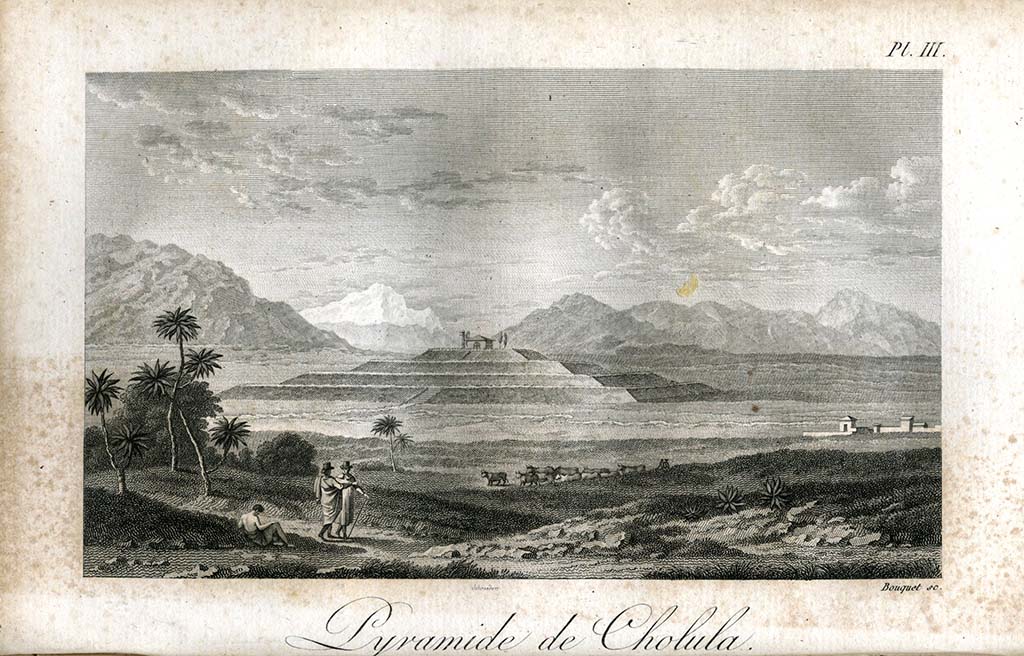
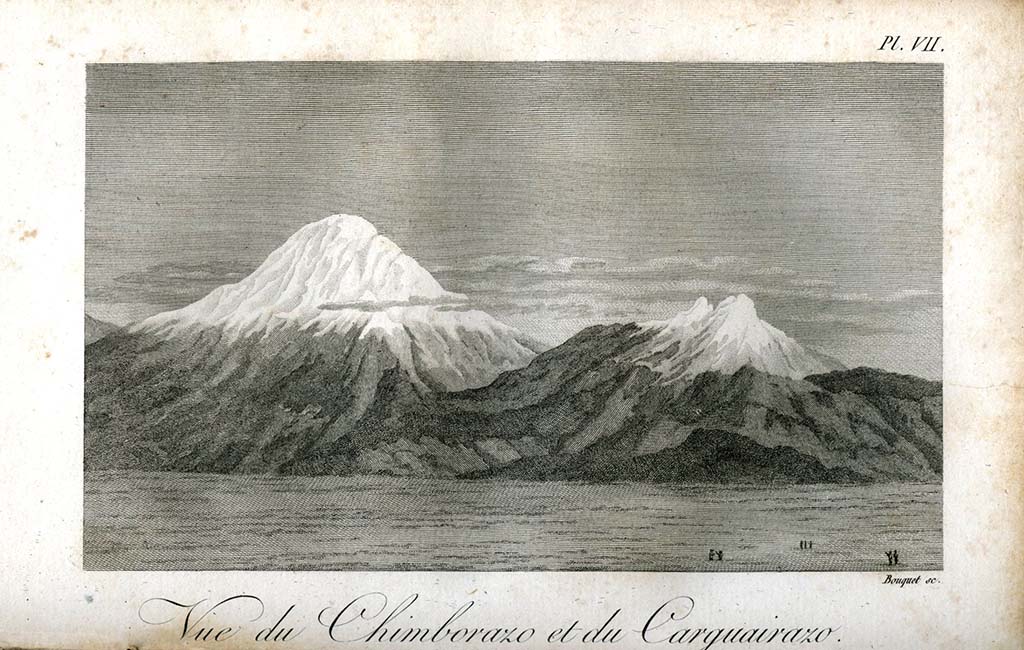
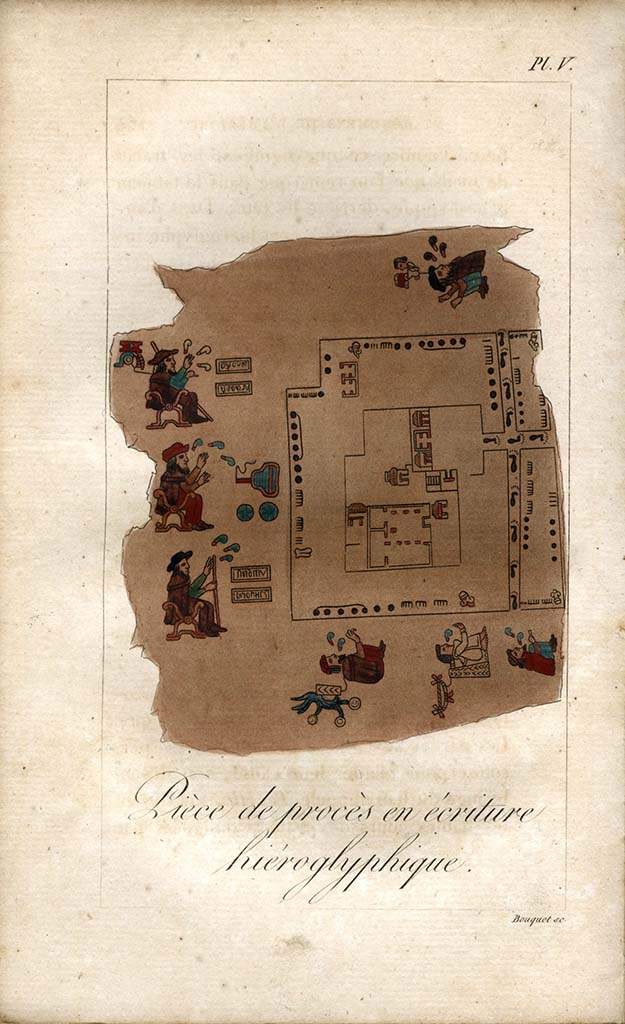
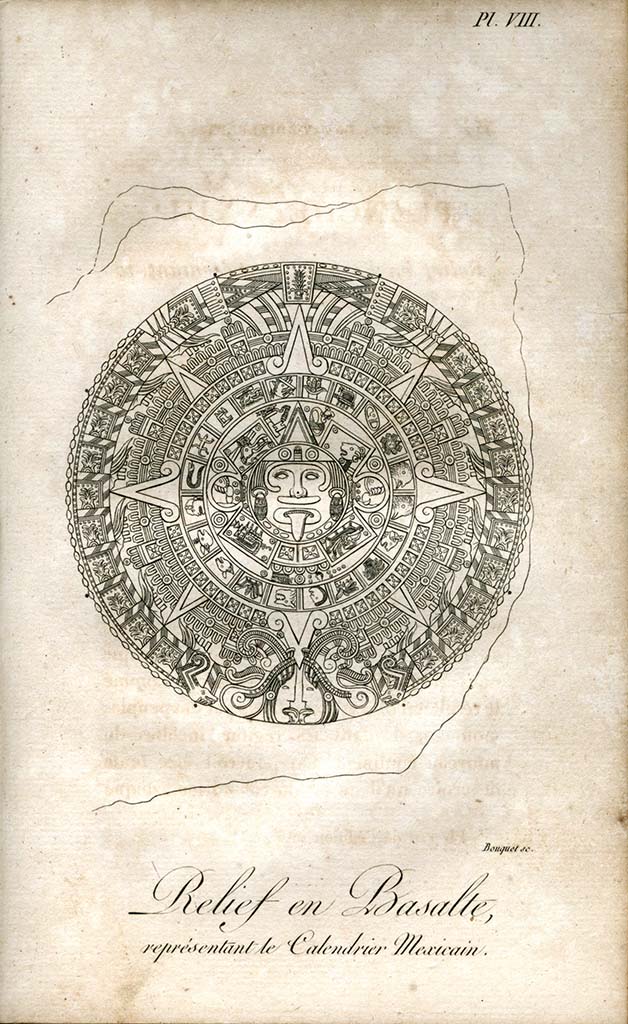

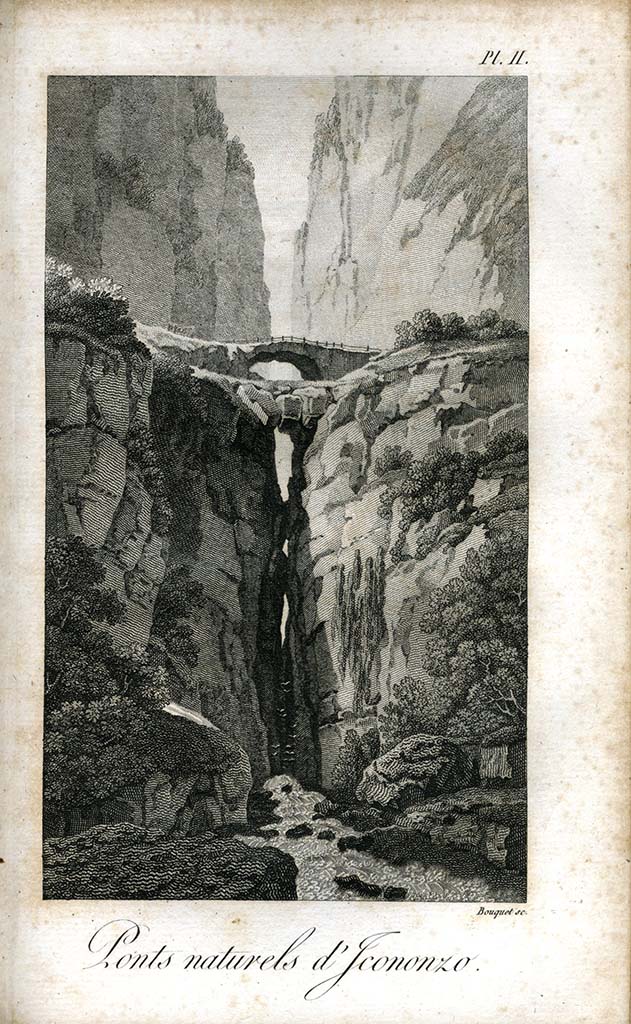
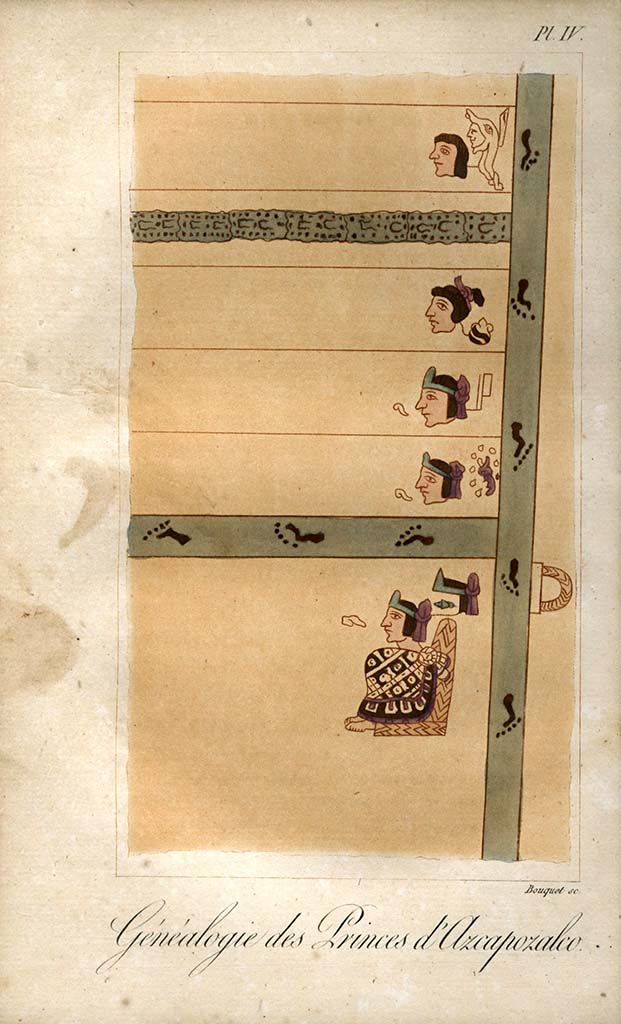
Von Humboldt, Alexander. Vues des Cordillères, et monumens des peuples indigènes de l’Amérique. Paris, N. Maze, 1816.
Bullock, Six Months’ Residence and Travels in Mexico, 1824
William Bullock (b. 1773) was an English naturalist and antiquarian. His Museum of Natural Curiosities and later the Egyptian Hall exhibition space contained thousands of items, including art, artifacts, and natural specimens from Spanish America and Polynesia. He made two visits to Mexico, first in 1822 as part of silver mining scheme and later in 1827 as part of a trip to the U.S., during which he attempted to found a utopian community in Kentucky.
Captions are from the images themselves. Click on the thumbnail to view a larger version.
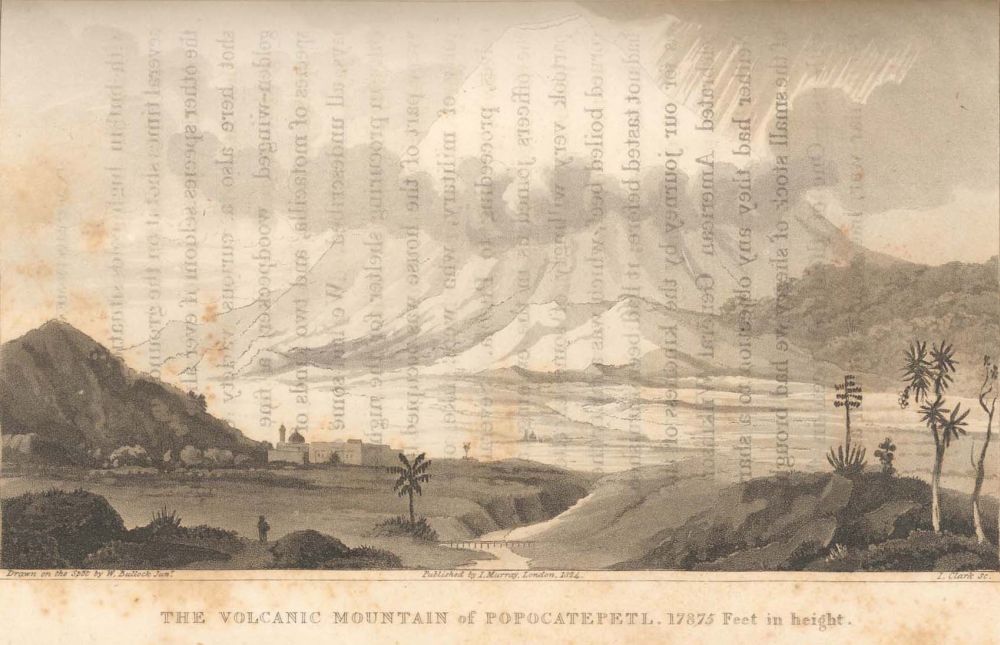
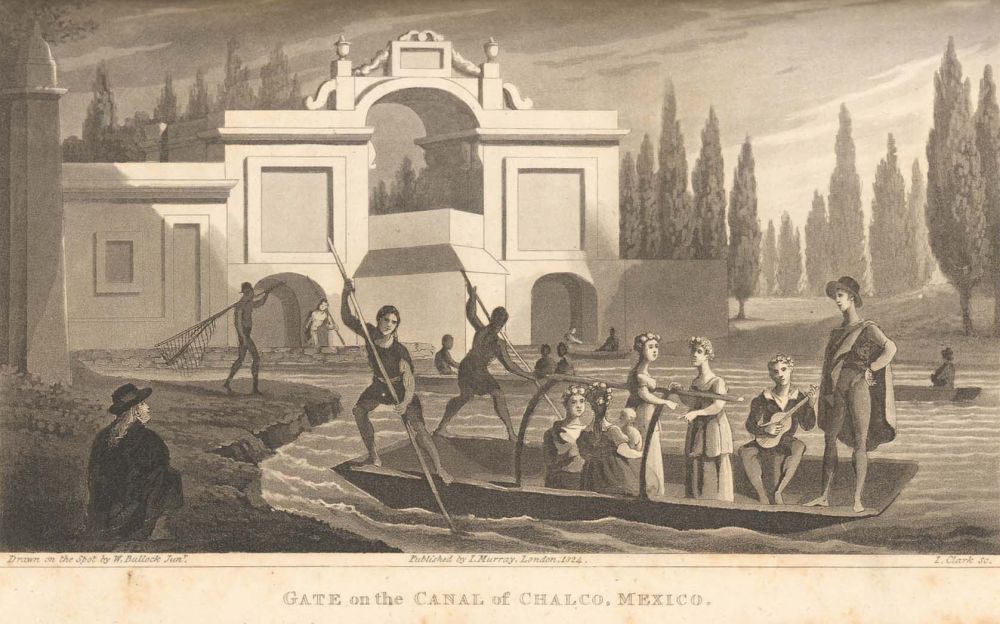
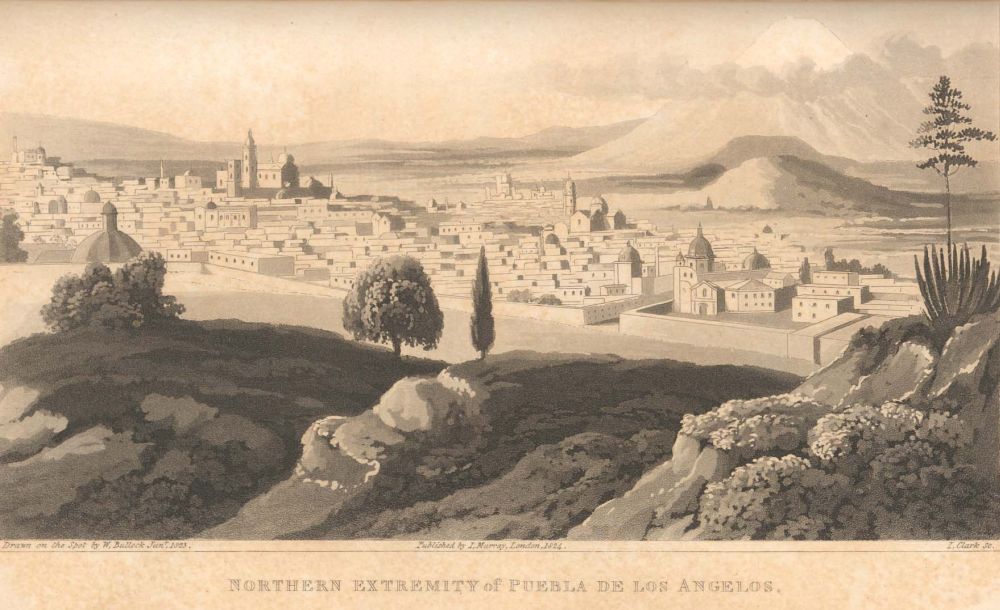
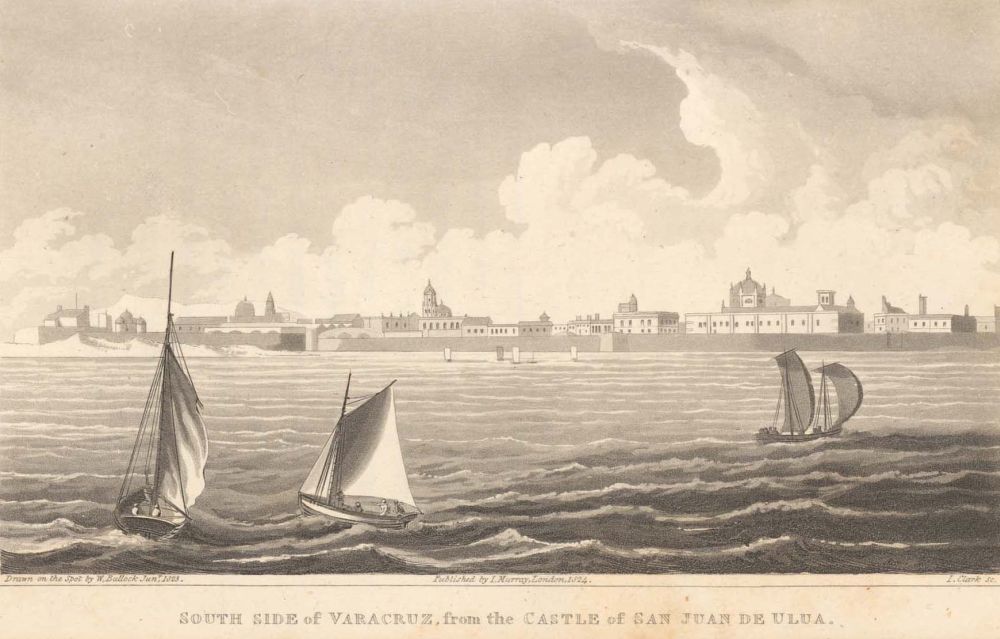
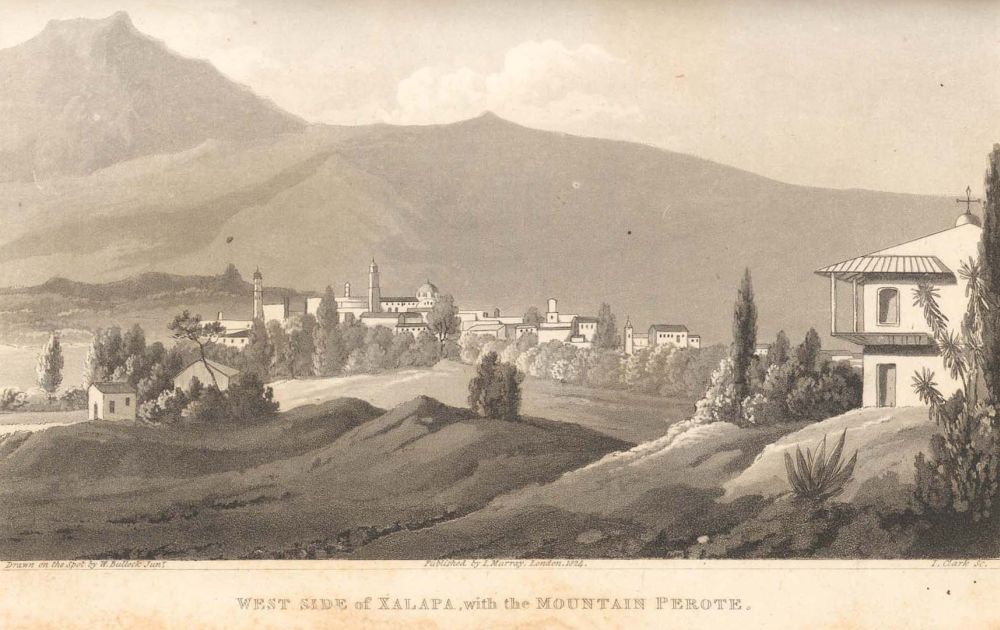
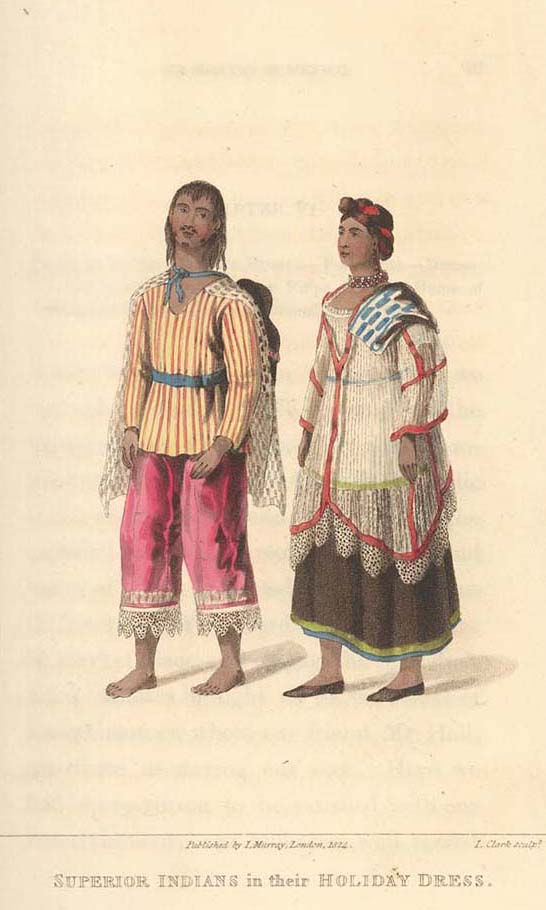
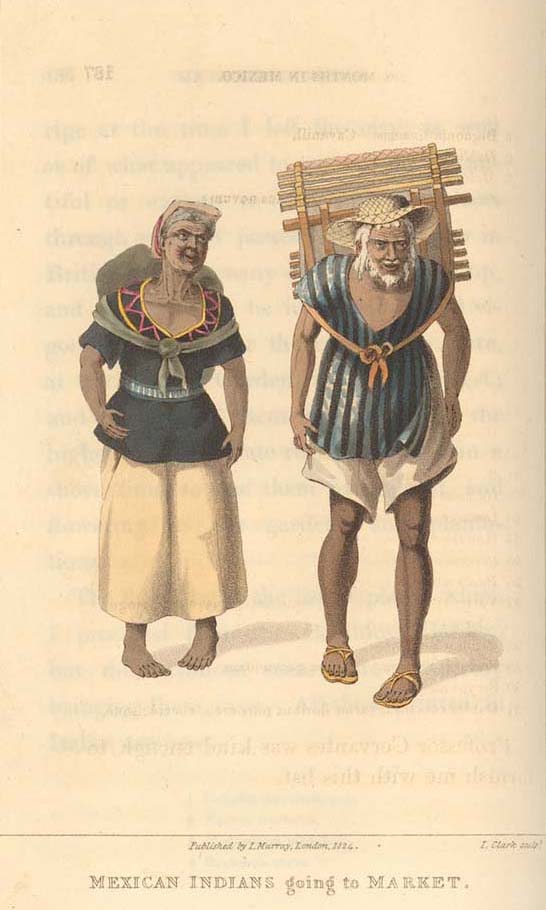
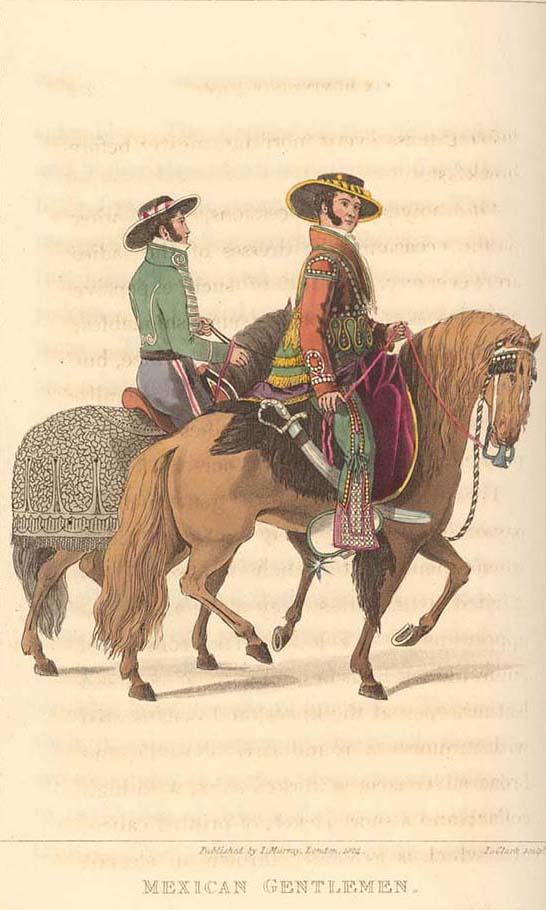
Bullock, William. Six months’ residence and travels in Mexico: containing remarks on the present state of New Spain, its natural productions, state of society, manufactures, trade, agriculture, and antiquities, &c. London, John Murray, 1824.
Stephens, Incidents of Travel in Central America, 1841
John Lloyd Stephens (b.1805) was an American explorer from New Jersey. He was also a lawyer and writer. In 1839, he traveled to Central America as a special ambassador sent by President Van Buren. In the mid-1830s, he traveled abroad in the Middle East and Europe, which he described in Incidents of travel in Egypt, Arabia Petraea, and the Holy Land (1837) and Incidents of travel in Greece, Turkey, Russia and Poland (1838). Stephens was one of the first westerners to explore and publish about the ruins of the Maya civilization. He and his artist, Frederick Catherwood, visited sites across the Yucatán, including Mayapán, Uxmal, Chichen Itza, and Tulum in modern Mexico. He wrote extensively about Palenque, a city that existed from the 3rd century BCE through the 8th century CE. It was first described by Juan Galindo in 1832.
Captions are from the images themselves. Click on the thumbnail to view a larger version.
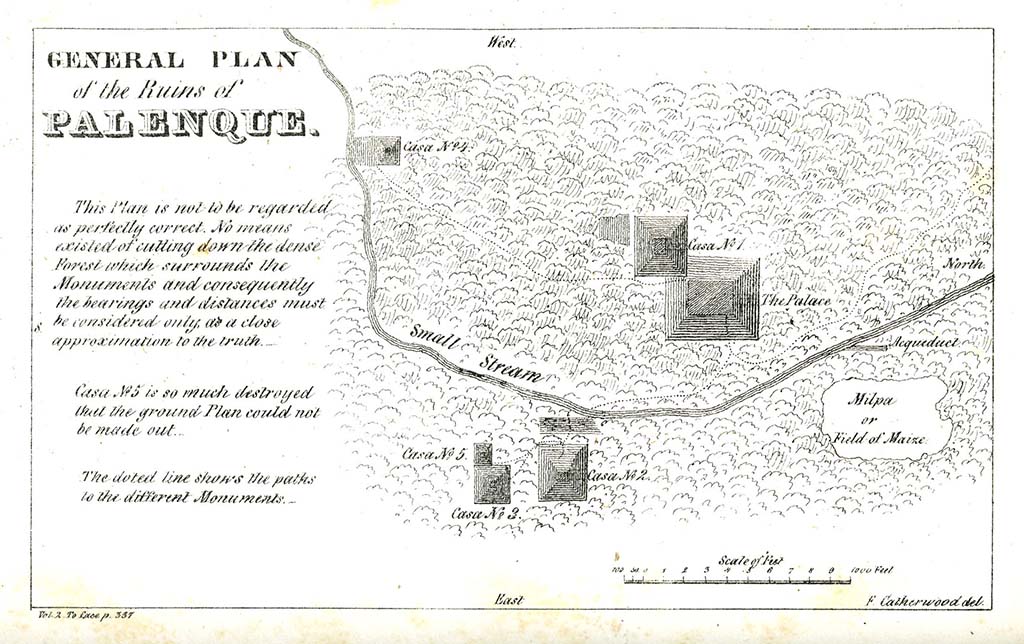
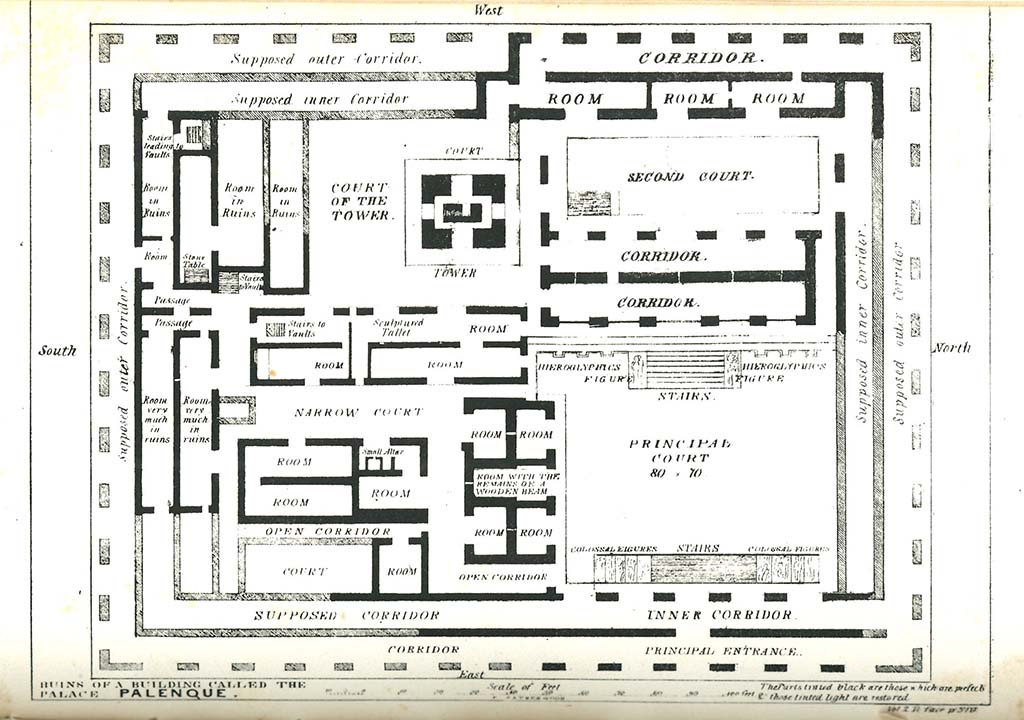
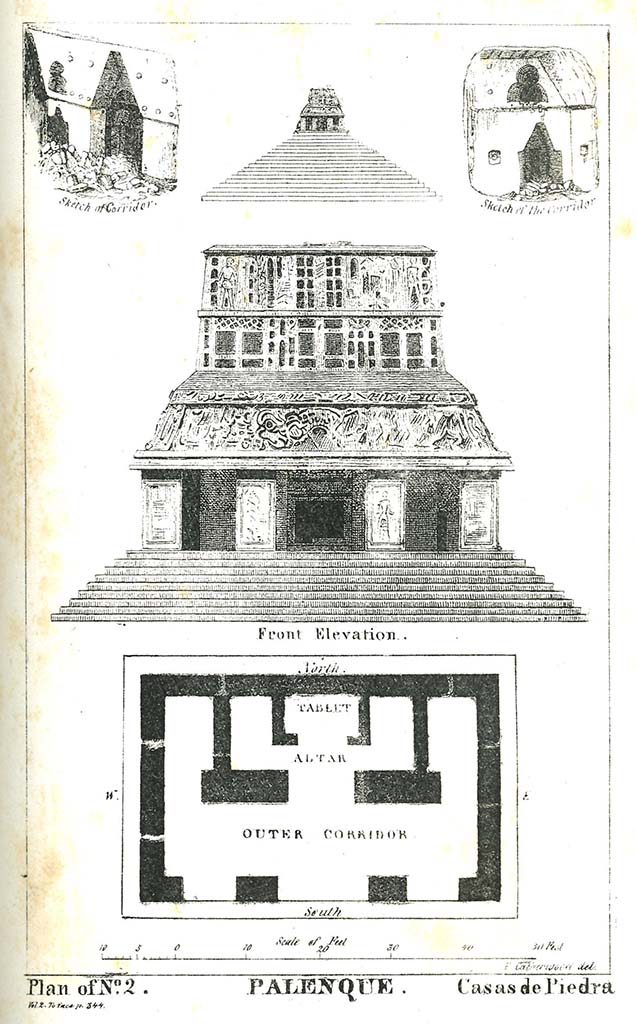
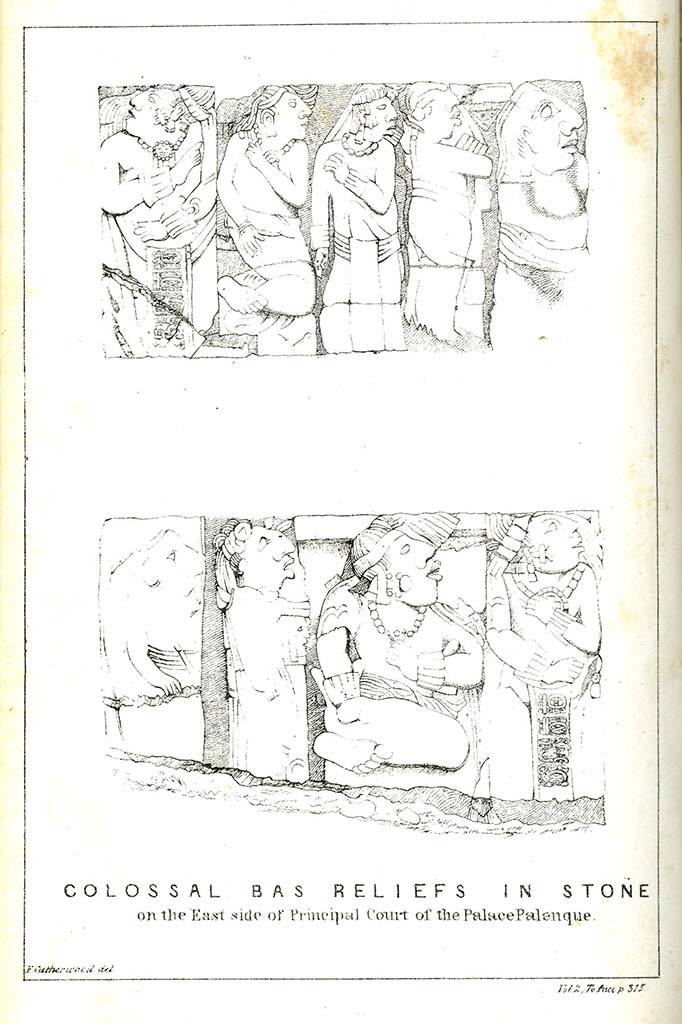
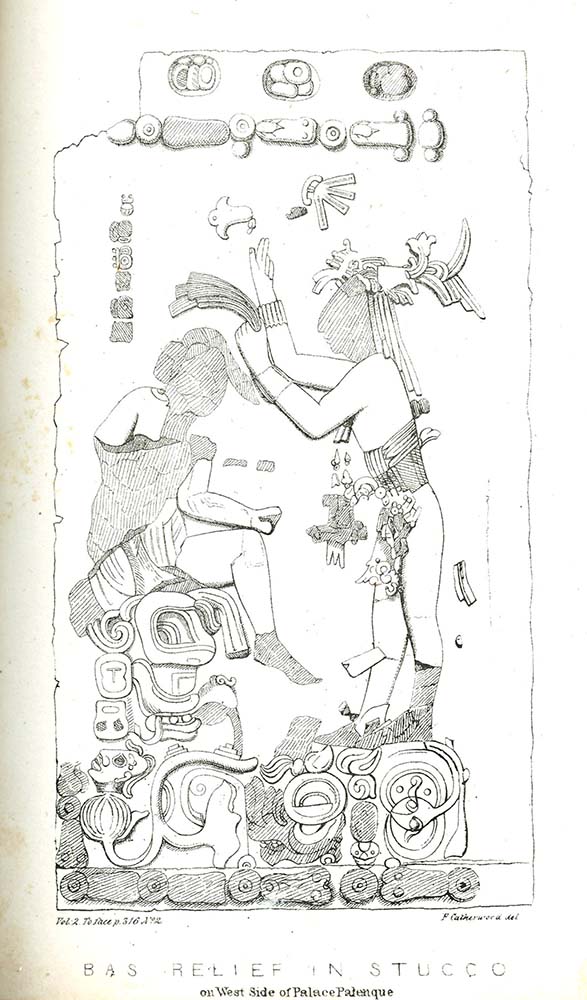
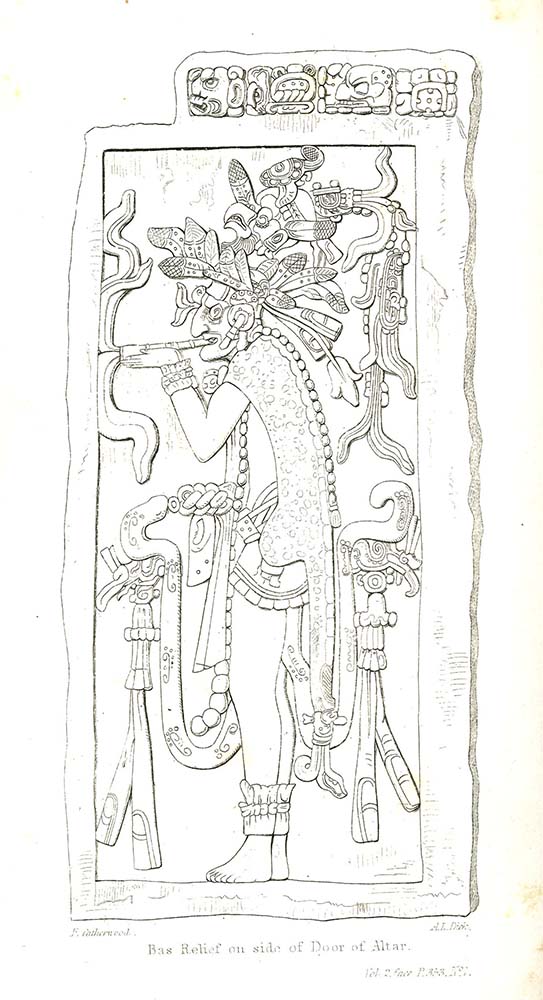
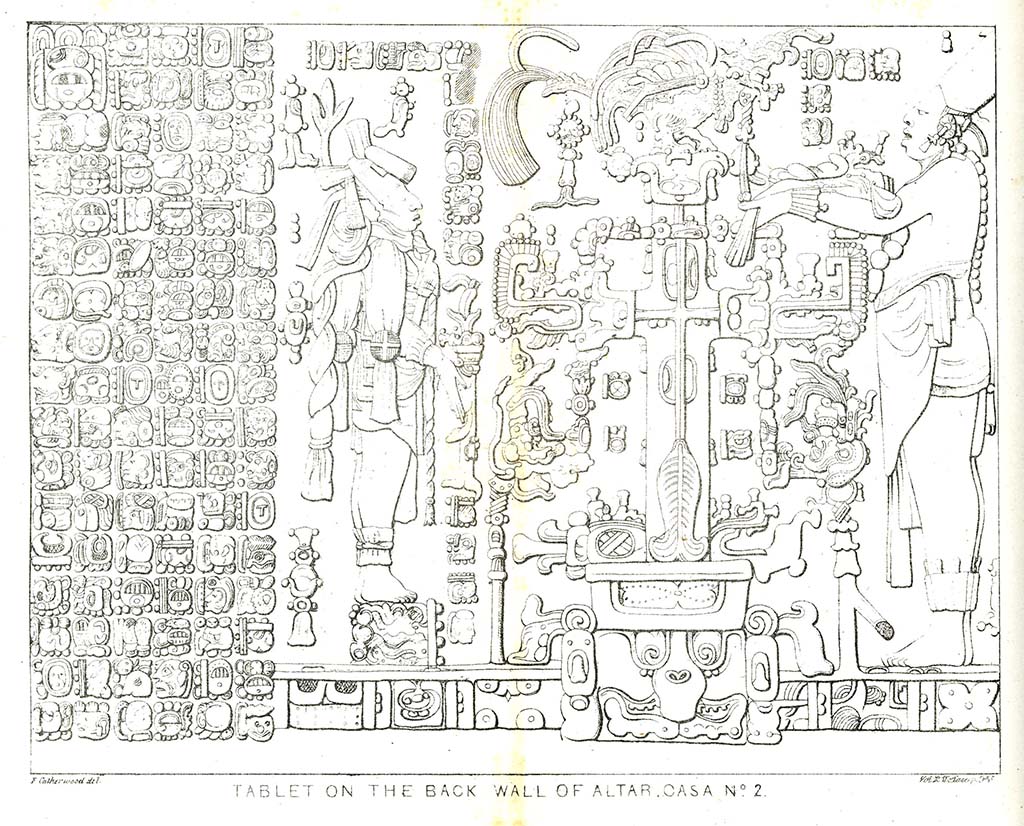
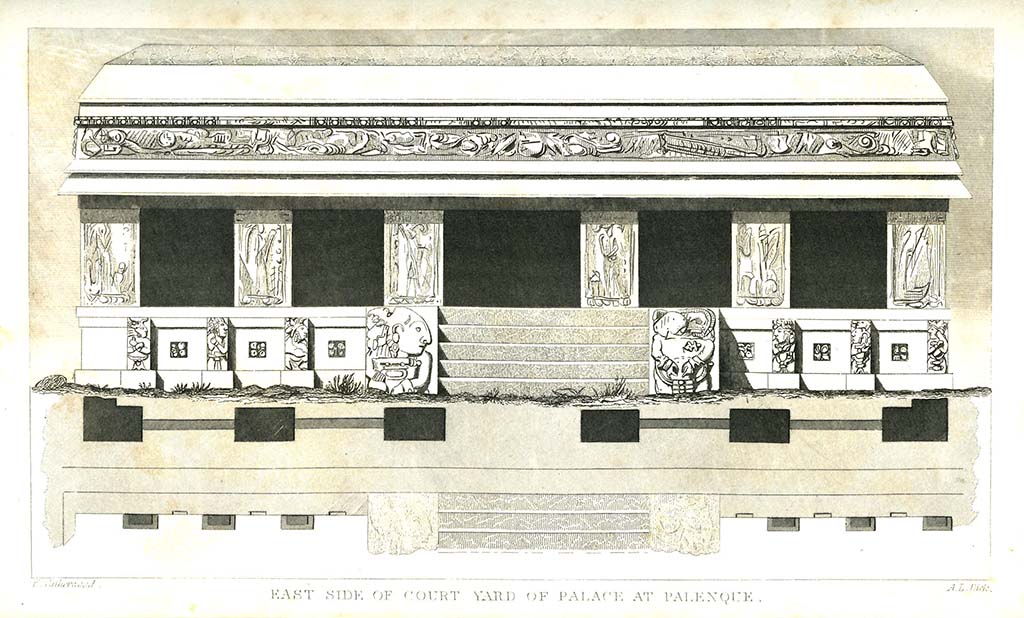
Stephens, John Lloyd. Incidents of travel in Central America, Chiapas, and Yucatan, vol. II. New York, Harper & Brothers, 1841.
Artists
Before the 18th c., book illustrations would have been rendered in one of the well-established processes that involves scoring an image into a metal plate. In engraving, this is done physically, with a tool. Etching, a chemical process, is done with an acid. In either case, ink is applied to the plate and wiped from all but that scored image.
In the first half of the 19th c., a faster and easier process came to dominate the print market. In lithography, a wax- or oil-based crayon is used to mark a stone plate, then the plate is chemically treated so that the stone will soak up water and repel ink — except where it was marked. The plate is then wiped clean with a solvent, treated with water, and inked. All three books in this section feature lithographs.
Original illustrations or photographs had to be reproduced on the printing plate, a process that required its own expertise, necessitating additional artists contributing to the project. Though both engraving and lithography could be done in color, using multiple plates, this was prohibitively difficult and time-consuming. In many cases, color was applied after printing – by hand, to each copy. The color lithographs below are generally labeled chromolithographs, whether they were printed in color or colored separately.
Lehnert and López, Album Pintoresco, 1850
Of the two-thirds of plates in this volume where the original artist is clear, the color pieces are by French painter and engraver/lithographer Pierre Frédéric Lehnert (b. 1811), with others by Urbano López, Ferdinand Bastin, or Chénot. (Though unsigned, some of the plates appear to be based on work by Pietro Gualdi and Carl Nebel.) Several lithography studios were involved, including Lithographie Prodhomme, Imprimerie Lemercier, and Lithographie Vayron. It was published in Mexico by Julio Michaud and Jean Baptiste Thomas.
Captions are from the images themselves, translated from the Spanish. Click on the thumbnail to view a larger version.


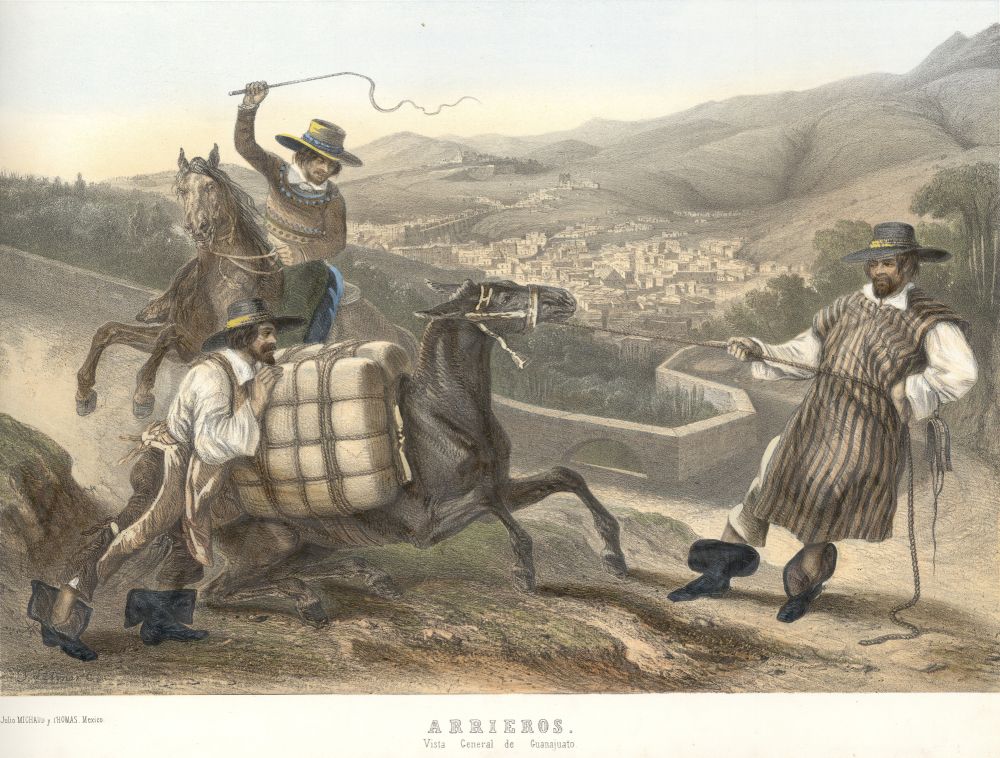


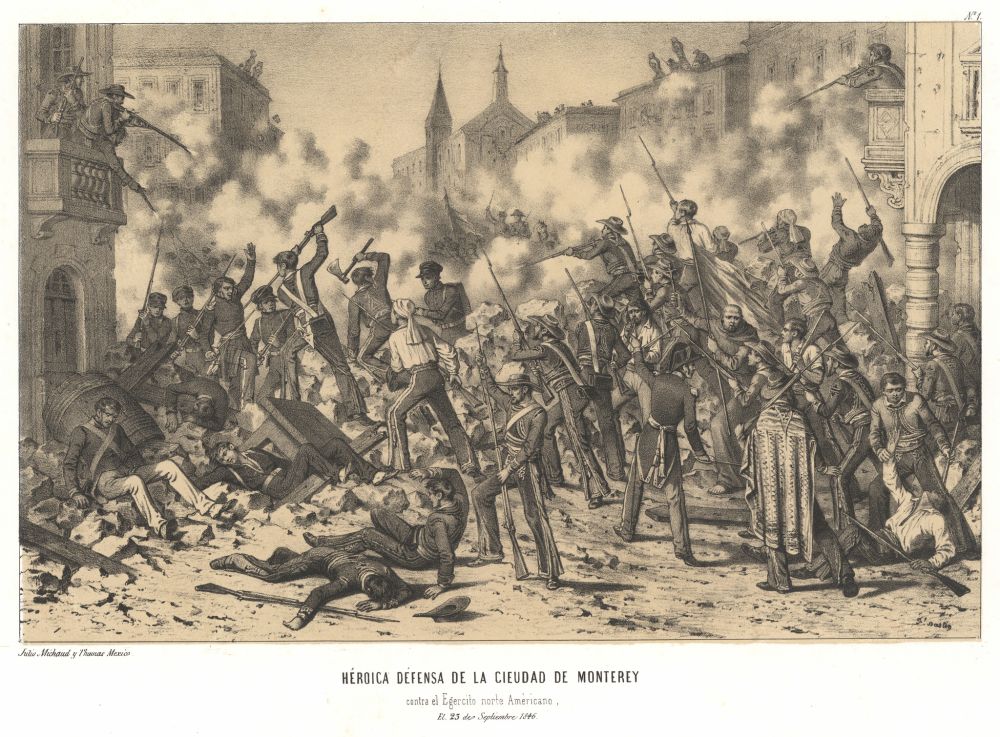
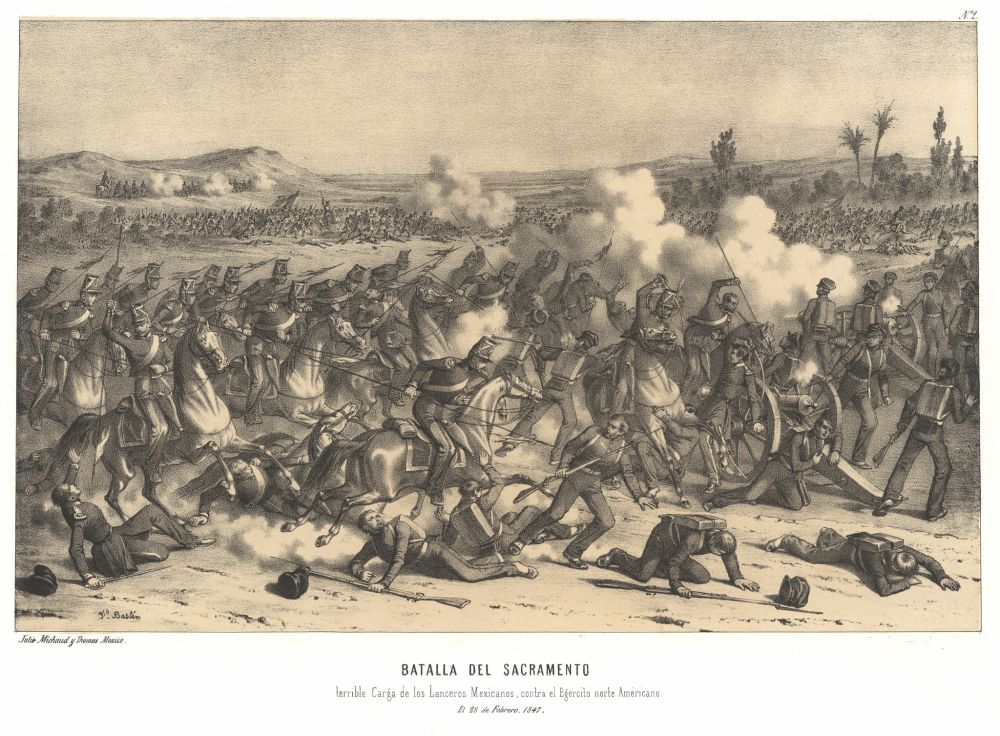
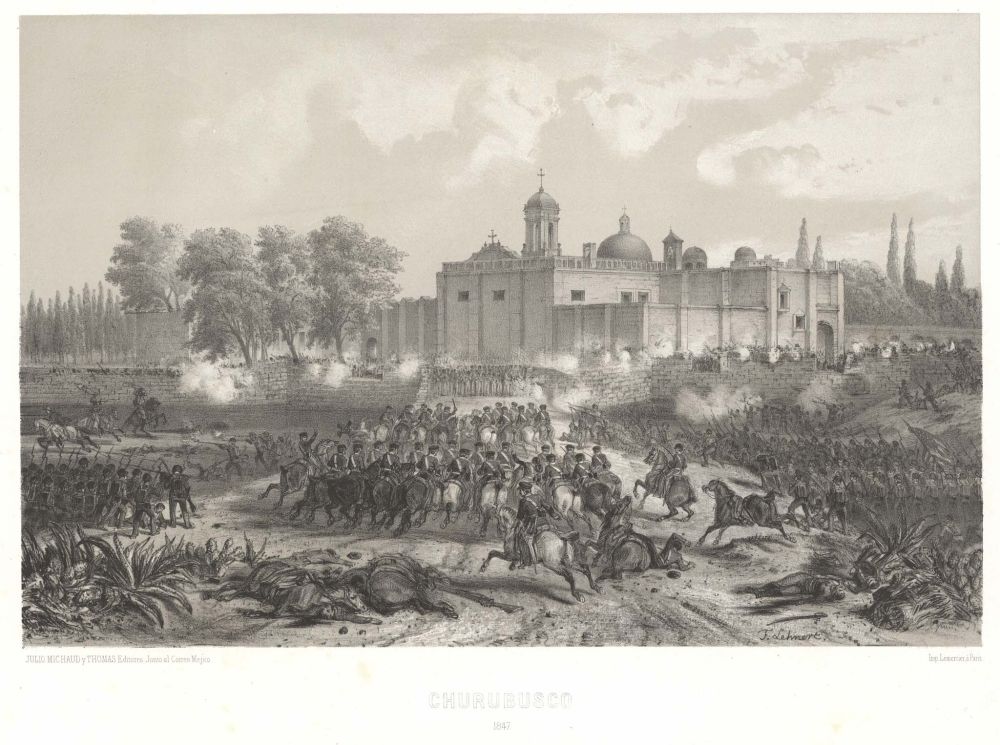

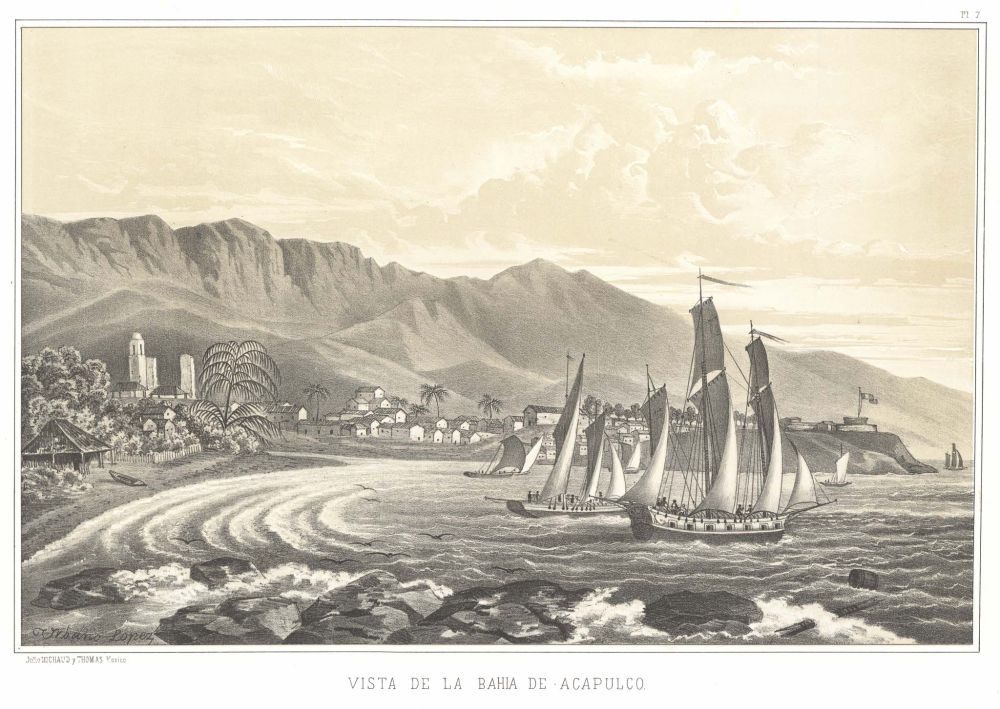
Lehnert, Pierre Frédéric, Urbano López, F. Bastin, and Chénot, artists. Album pintoresco, de la Republica Mexicana. Mexico, printed by Julio Michaud y Thomas, 1850.
Rosti, [Travel Memories from America], 1861
Pál Rosti (b. 1830) was a Hungarian geographer and photographer. After a trip to the Americas, specifically Cuba, Venezuela, and Mexico in the late 1850s, he put his photographs from these trips into photo albums, one of which was gifted to Alexander von Humboldt. Some of the lithographs in his book were created based on those photos, rendered by Gustav Klette. Others were based on images in Casimiro Castro’s México y Sus Alrededores, a later edition of which is featured below, or elements from both sources were cleverly combined by Klette. Some of the smaller inset images in the book appear to be engravings, like the second row of images below (Tlamacas and the topography of Mexico City).
Captions are from the images themselves, here translated from the Hungarian. Click on the thumbnail to view a larger version.


Rosti, Pál. Uti emlékezetek Amerikából. Pest, Hungary, Kiadja Heckenast Gusta, 1861.
Castro, Mexico and Its Surroundings, 1864
Casimiro Castro (b. 1826) was a Mexican painter and lithographer. He is best known for this work, the images of which were originally published separately in 1855-1856. Of the 42 plates in the final collected version, 31 were by Castro; other artists include Luis Auda, Julián Campillo, and G. Rodríguez. It was printed in Mexico by Decaen and Debray.
Captions are from the images themselves. Click on the thumbnail to view a larger version.
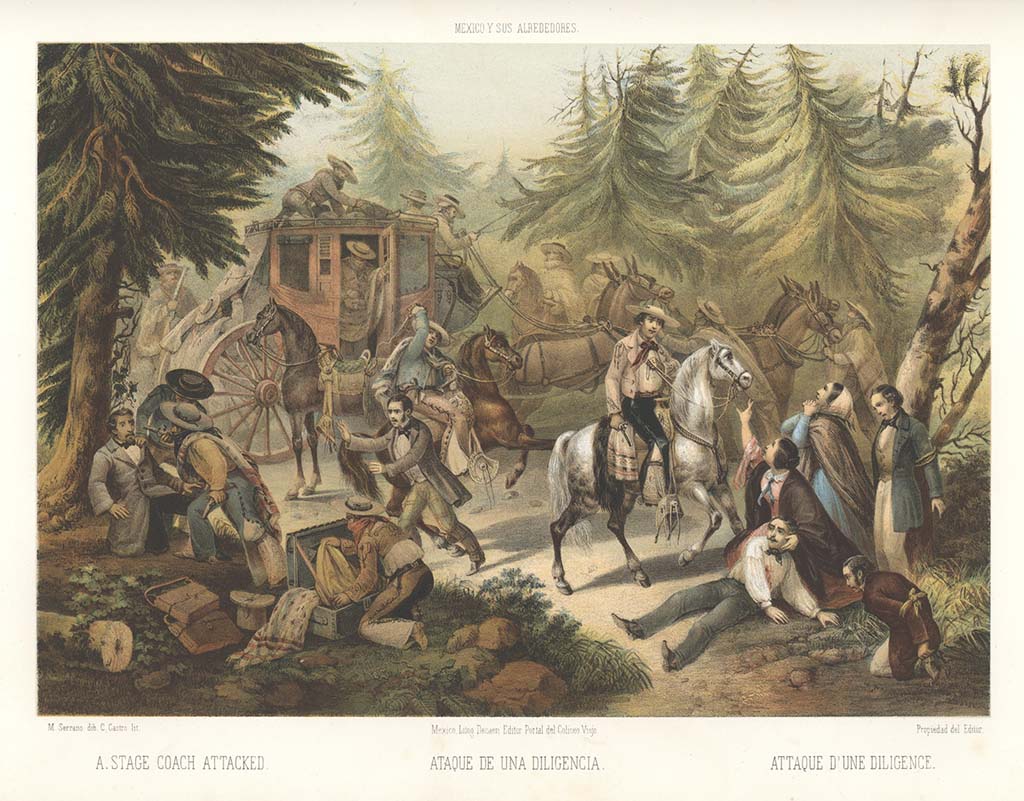
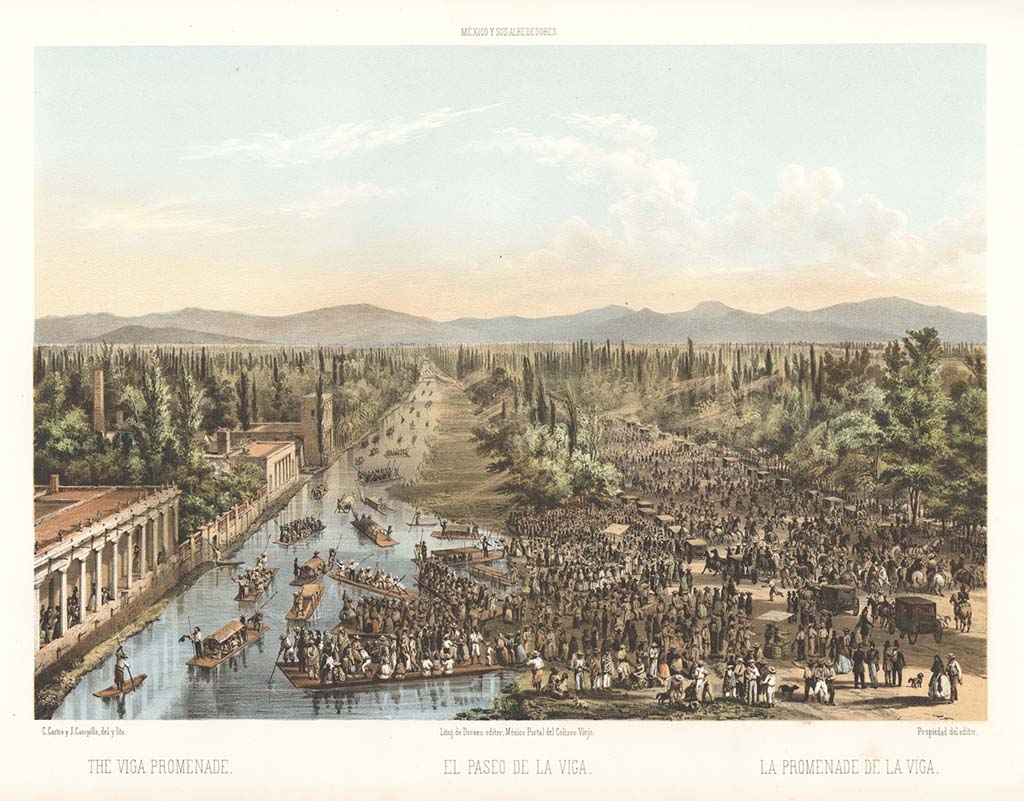
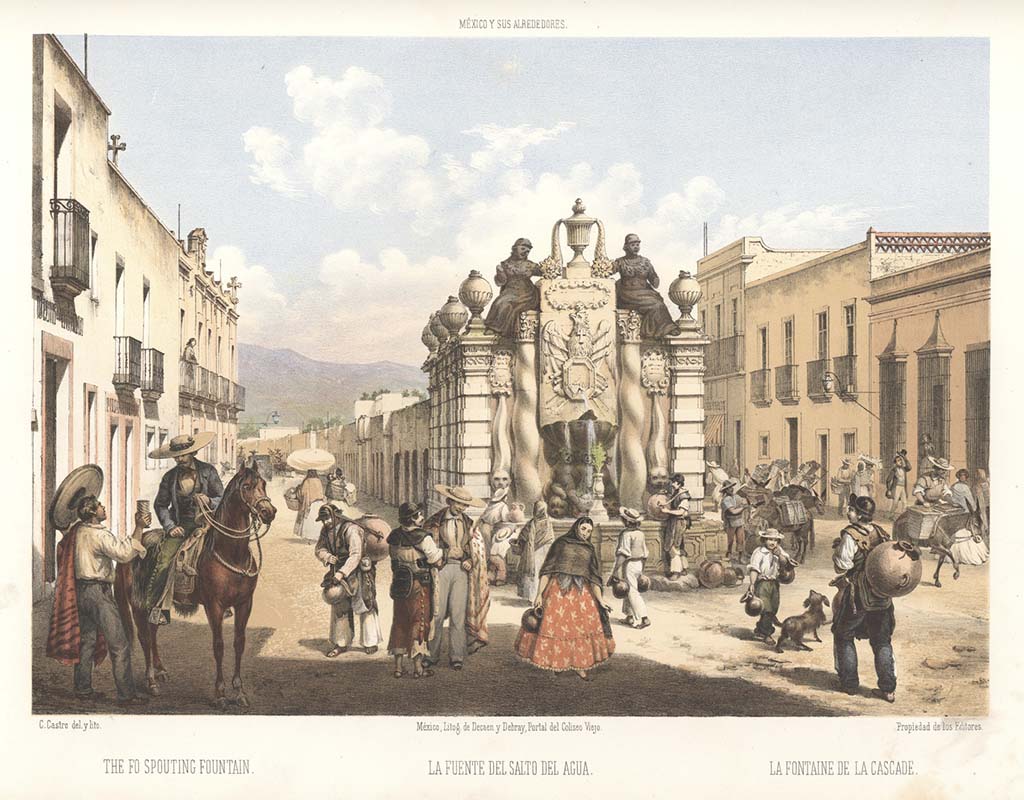
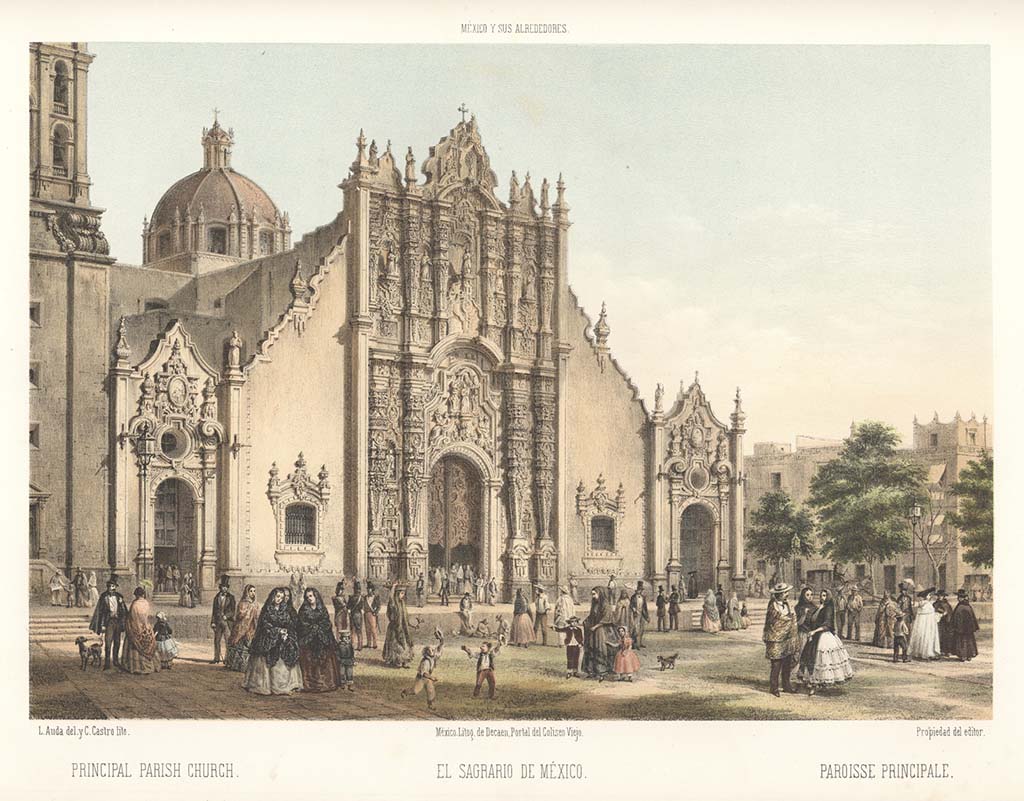
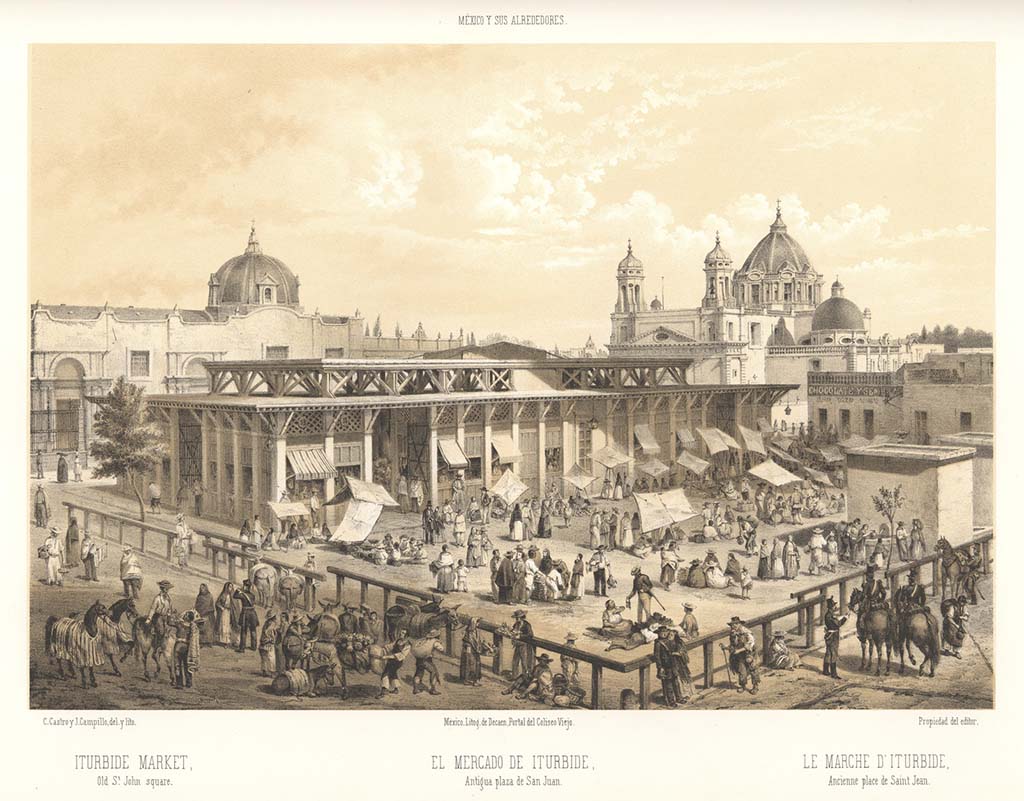
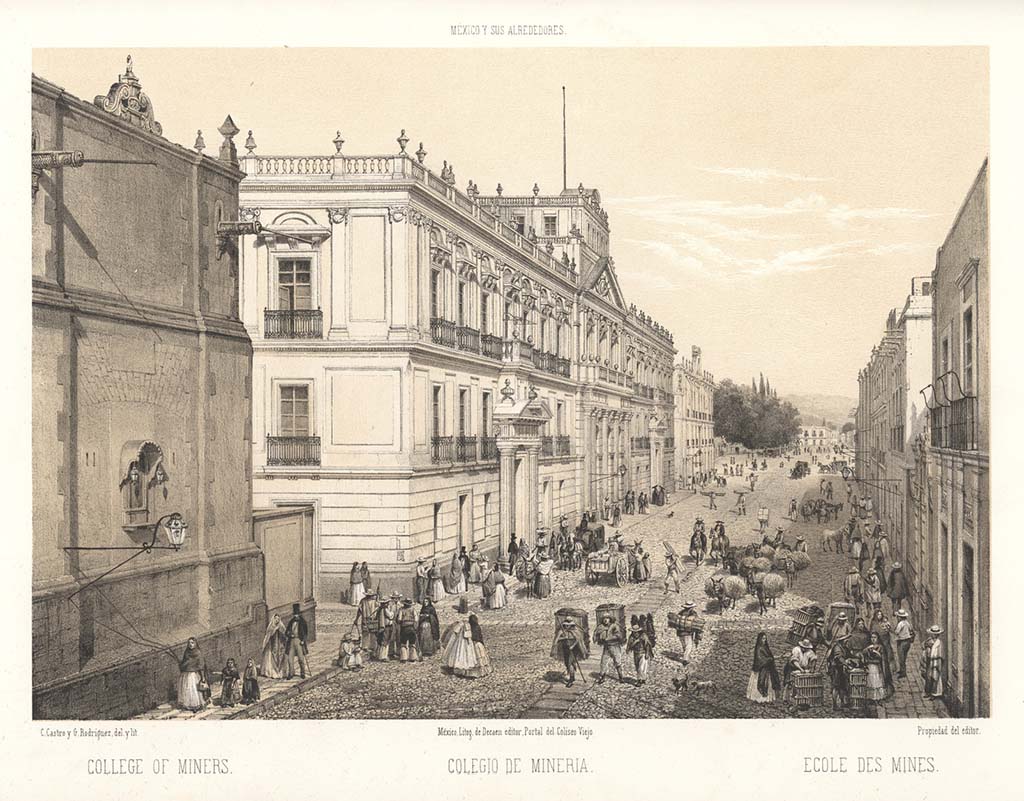
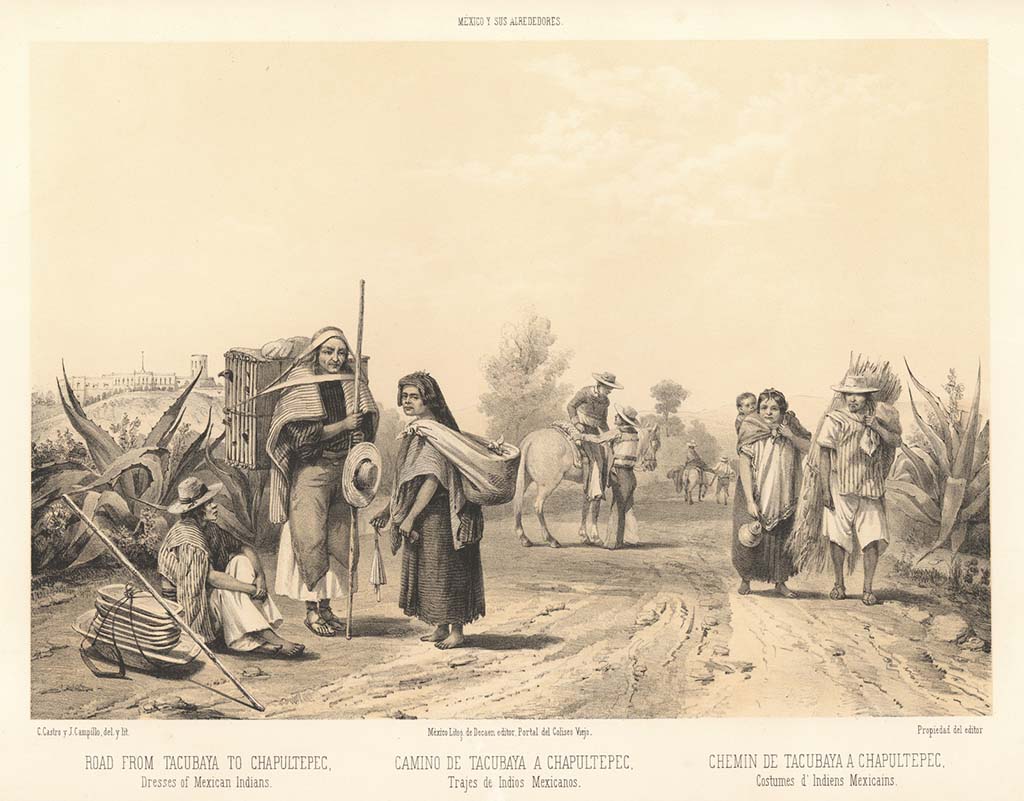
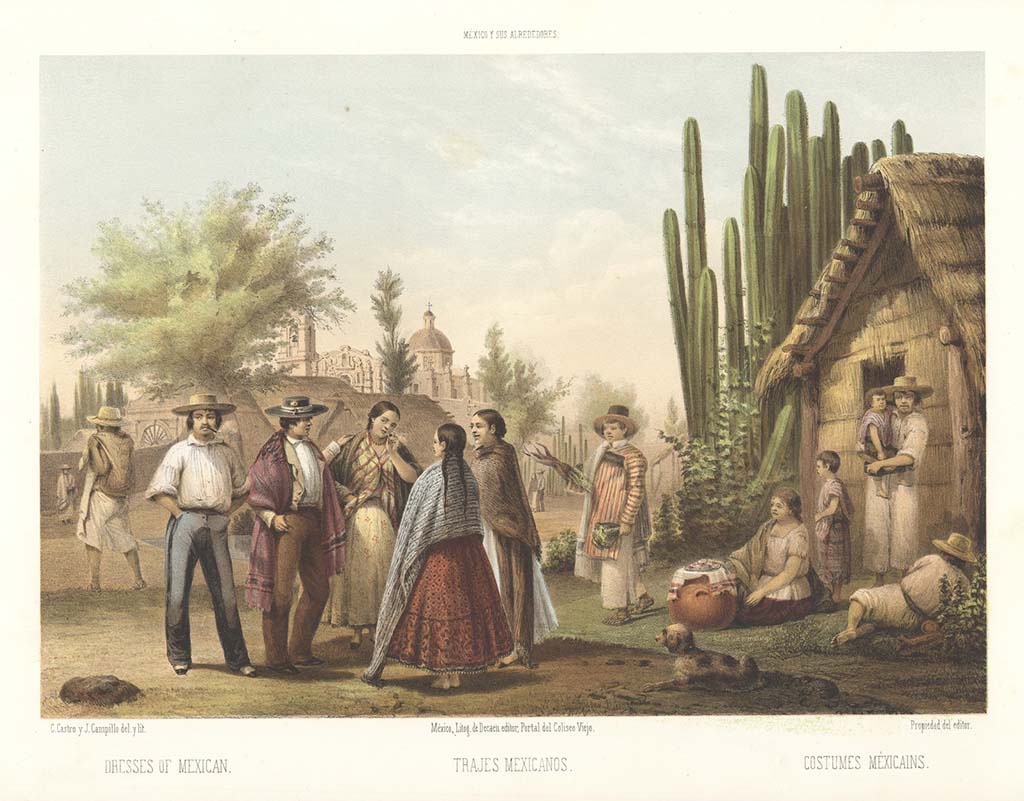
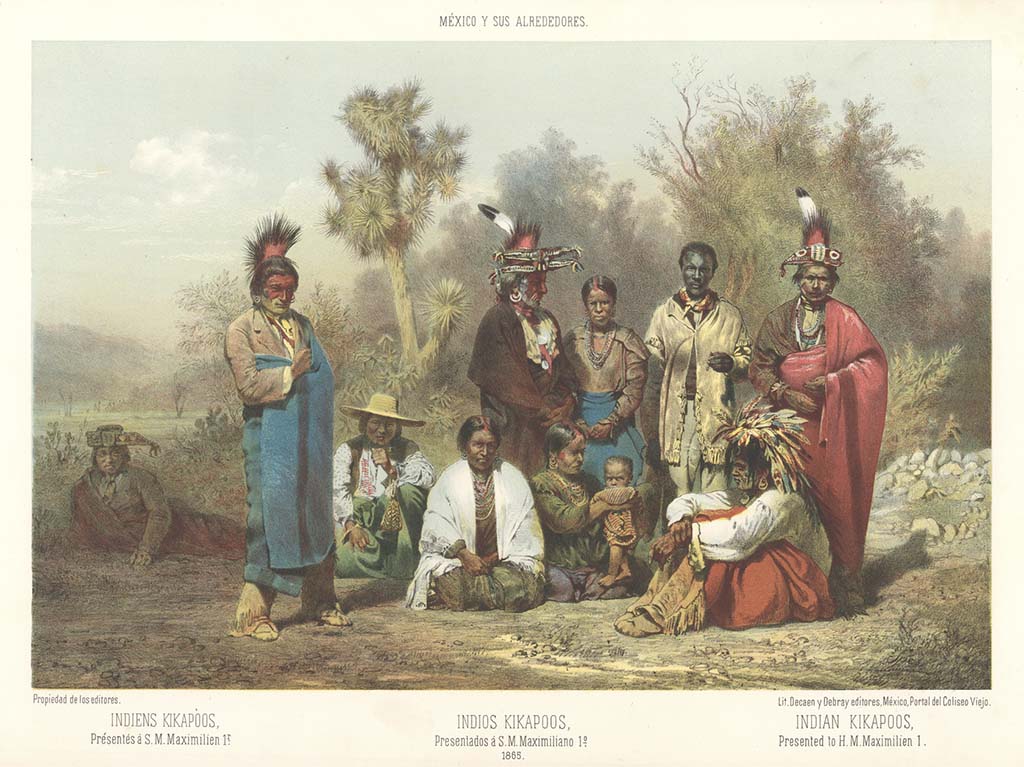
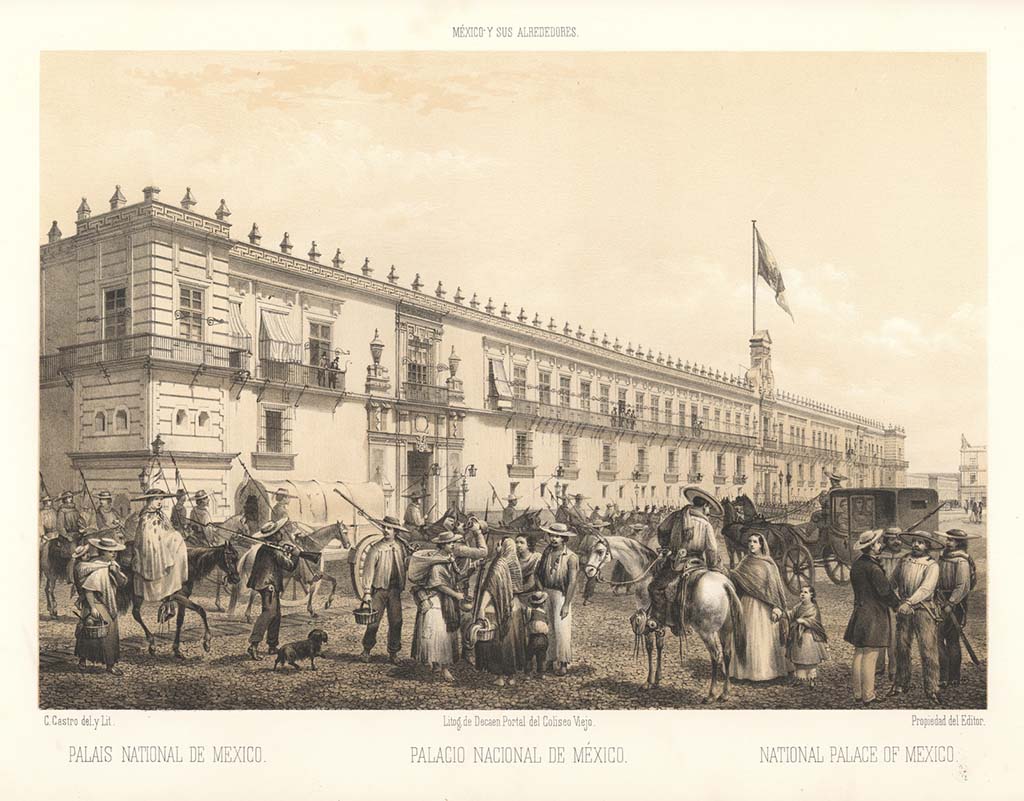
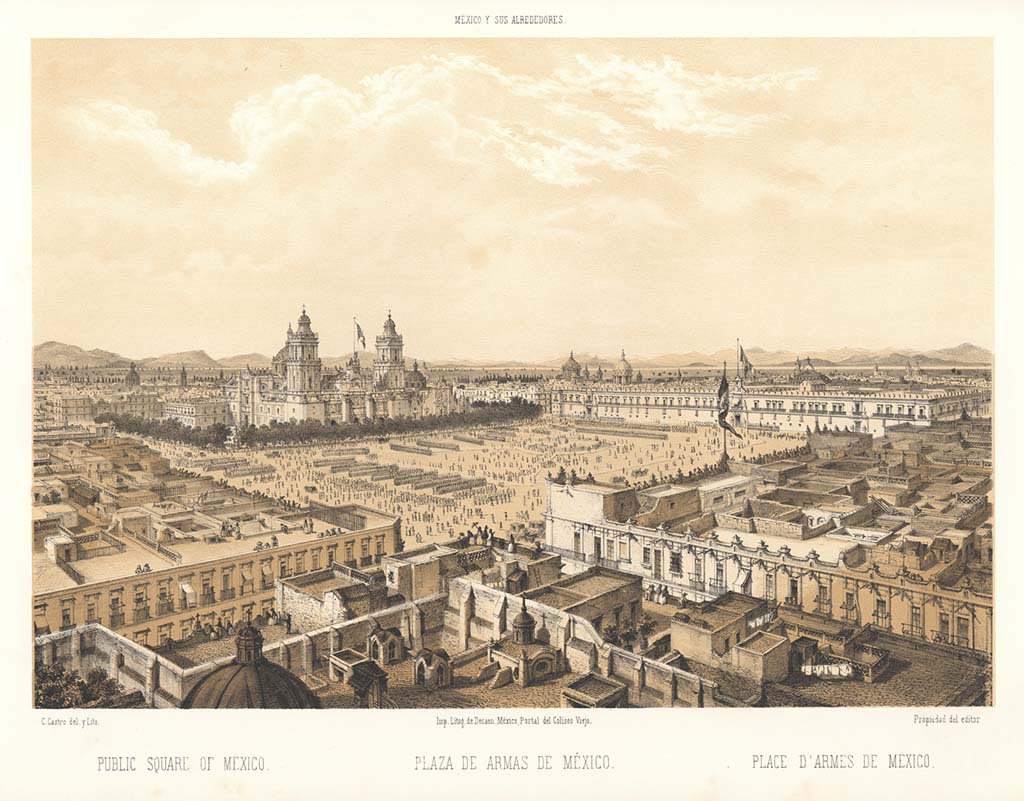
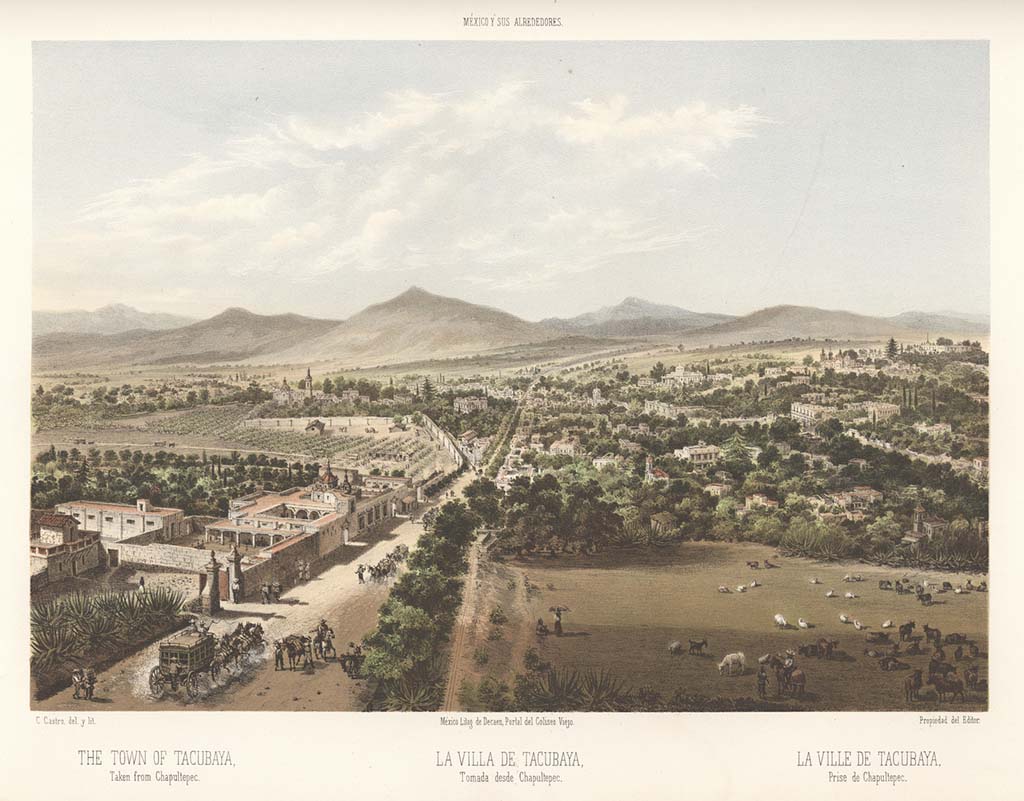
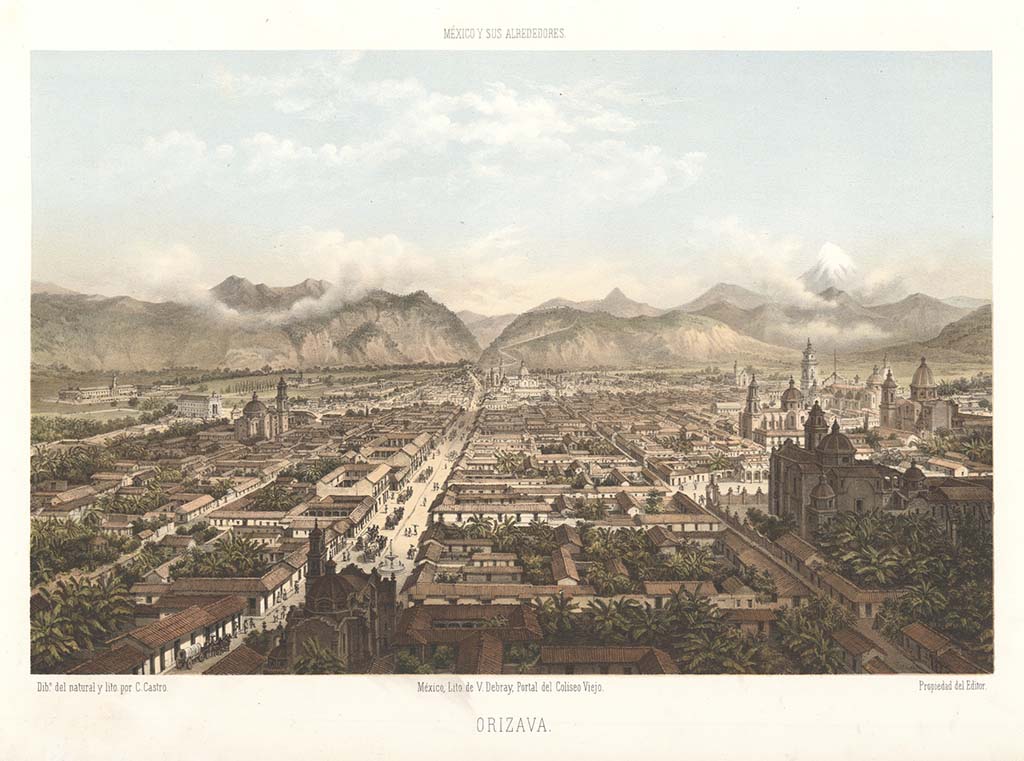
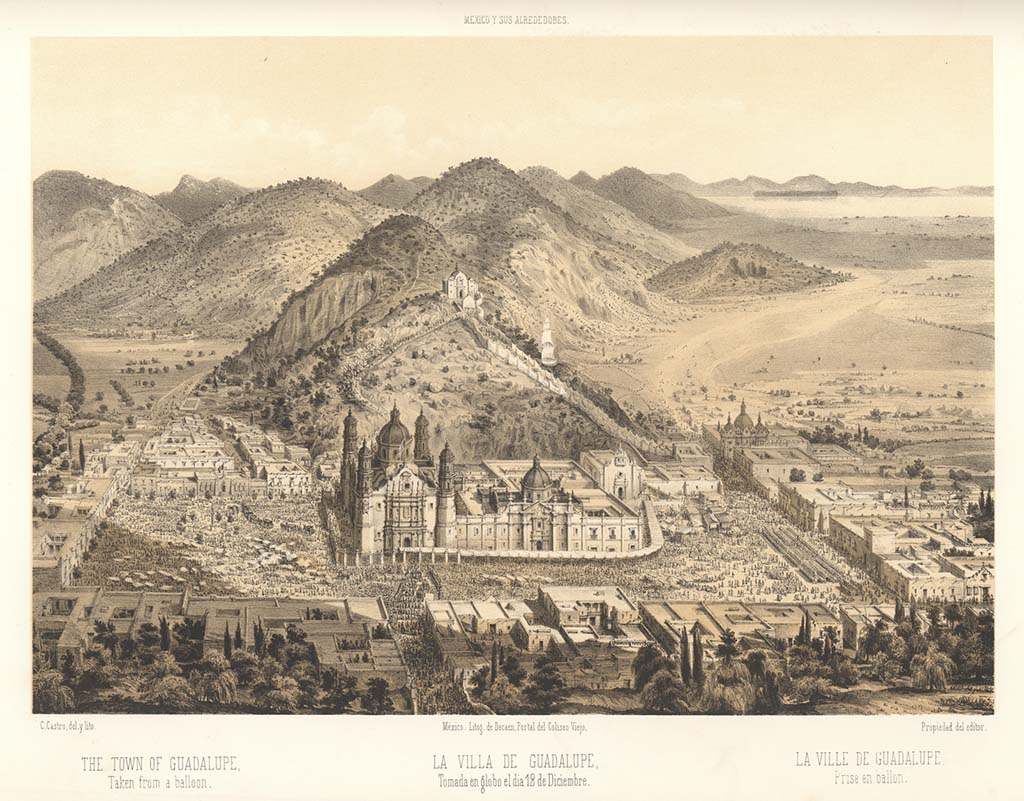
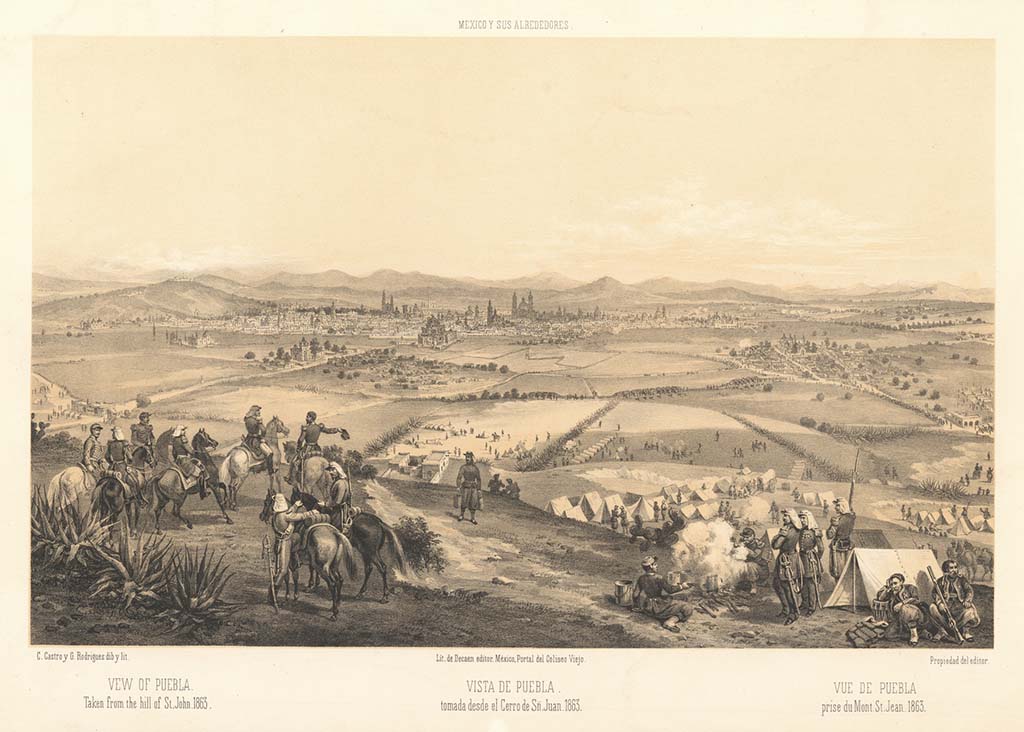
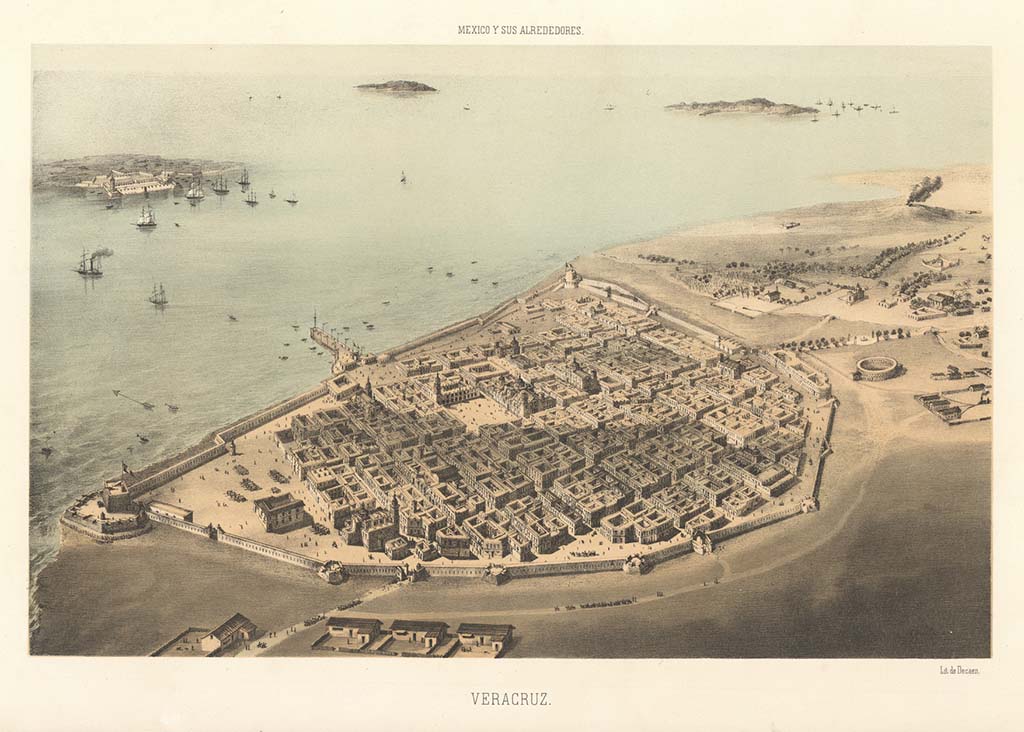
Castro, Casimiro, G. Rodriguez, J. Campillo, and L. Auda, artists, and J. Decaen, editor. México y sus alrededores: colección de monumentos, trajes y paisajes, dibujados al natural y litografiados por los artistas mexicanos. 2nd Edition. Mexico, Imprenta Litográfica de Decaen, 1864.
Soldiers
The Intervención Estadounidense en México, or as we in the U.S. know it, the Mexican-American War, was fought from spring 1846 through fall 1847. It followed a decade of disagreement over the territory that would become the U.S. state of Texas.
In 1836, after the Battle of San Jacinto, the rebellious province of Texas signed two treaties with Mexican General Antonio López de Santa Anna. The Texans hoped to now be an independent country, and Santa Anna, to save his life, agreed to argue for just that when he returned to Mexico City. But Mexico never ratified those treaties, signed under duress, and in 1845 when the U.S. decided to annex Texas, Mexico disputed their claim.
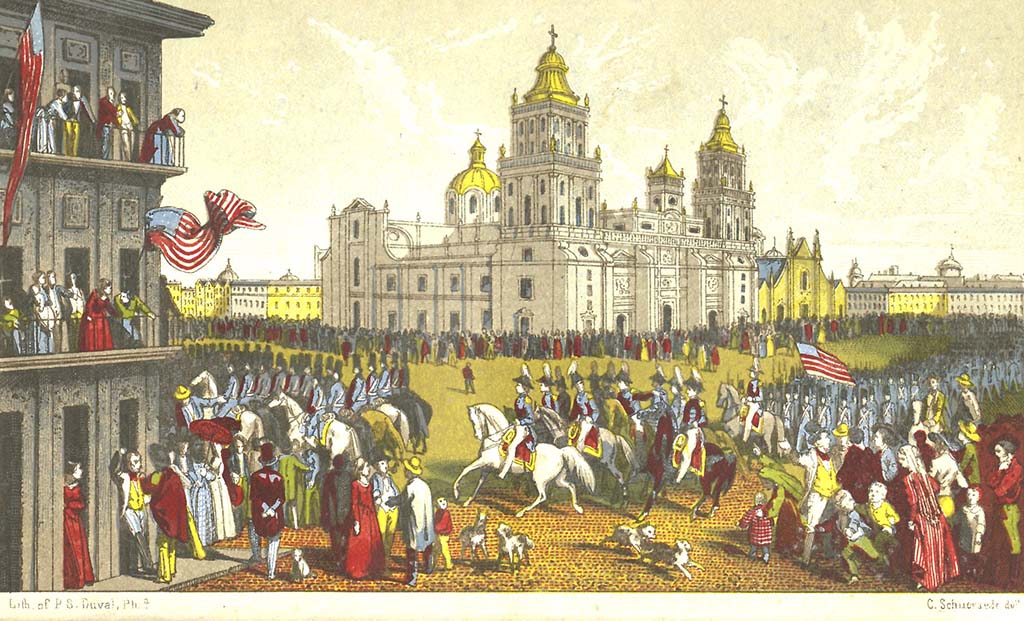
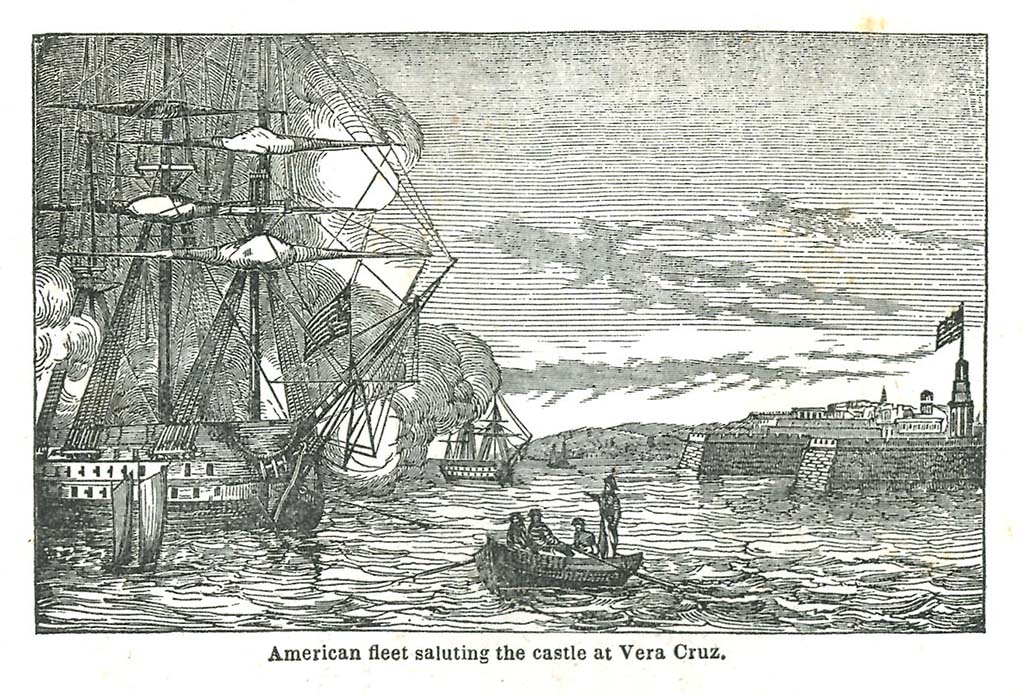
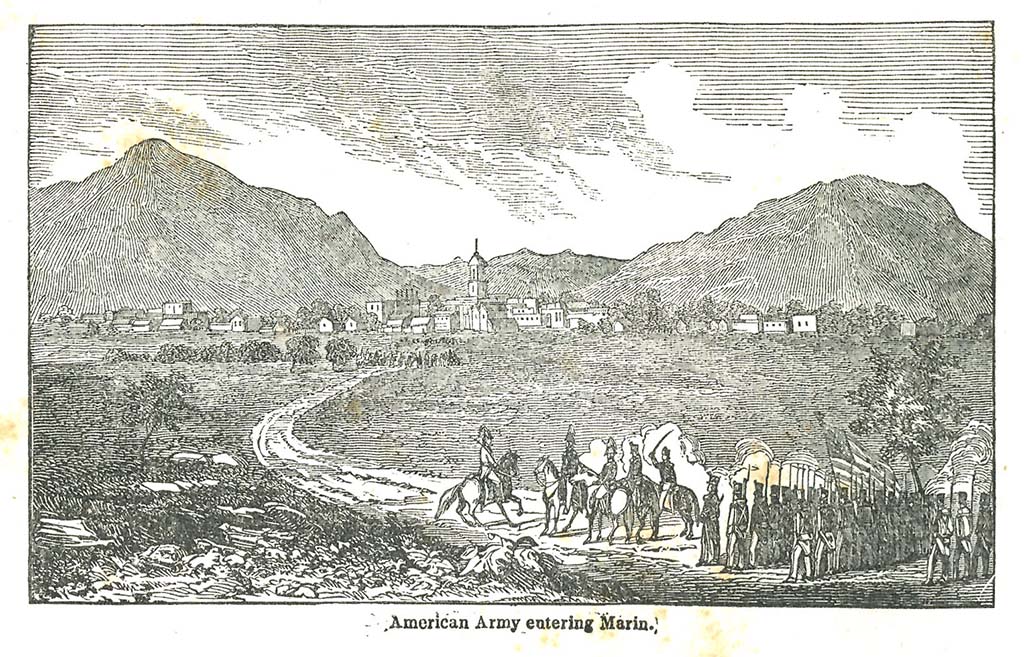
At first, it was just a conflict over the precise border between the two countries. The U.S. Army sent troops to the area in dispute, between the Rio Grande and Nueces Rivers, hoping Mexico would attack. Early fighting took place in Texas (Battles of Palo Alto and Resaca de Palma, May 1846), but eventually the U.S. invaded Mexico proper, first at its farthest reaches (territory now part of the U.S.) and then at its heart. After battles in the north at Monterrey (Sept. 1846) and Buena Vista (Feb. 1847), and in the southeast at Tabasco (Oct. 1846), the army headed to central Mexico, in a battle at Veracruz (Mar. 1847) on the Pacific coast. The army took Puebla without a fight (May 1847) and finally the occupied the capital, Mexico City, in Sept. 1847, after the battles of Contreras, Churubusco, and Molino del Rey. In the Feb. 1848 Treaty of Guadalupe Hidalgo, which formally ended the war, the border with Texas was established at the Rio Grande, and Mexico ceded 338 million acres of its territory.
Reid, McCulloch’s Texas Rangers, 1847
Samuel C. Reid (b. 1818) was an American lawyer, born in New York and later living in Mississippi and Louisiana. He served in the Mexican-American War, was editor of the New Orleans Picayune, and acted as a Confederate newspaper correspondent during the Civil War. According to the book’s preface, Reid volunteered for service after the Battles of Palo Alto and Resaca de la Palma. He was originally with a Louisiana regiment, but after deciding they were likely to remain at the rear, he joined a Texas unit under Capt. Benjamin McCulloch. This is how he describes the book:
Long habituated to writing a journal, the author kept up his notes while in Mexico, which he has been induced to give to the public, at the solicitation of his friends, and has thought that their presentation would prove most acceptable in their original form. It is, then, but a simple journal of events, that he offers to the public as they occurred, from the embarkation of his regiment, including the storming of Monterey, up to the time of his return to New Orleans, with an account of the celebrated scouts of McCulloch at Buena Vista.
Most of the images in the book are related to the Battle of Monterrey, Sept. 21-24, 1846.
Captions are from the images themselves. Click on the thumbnail to view a larger version.
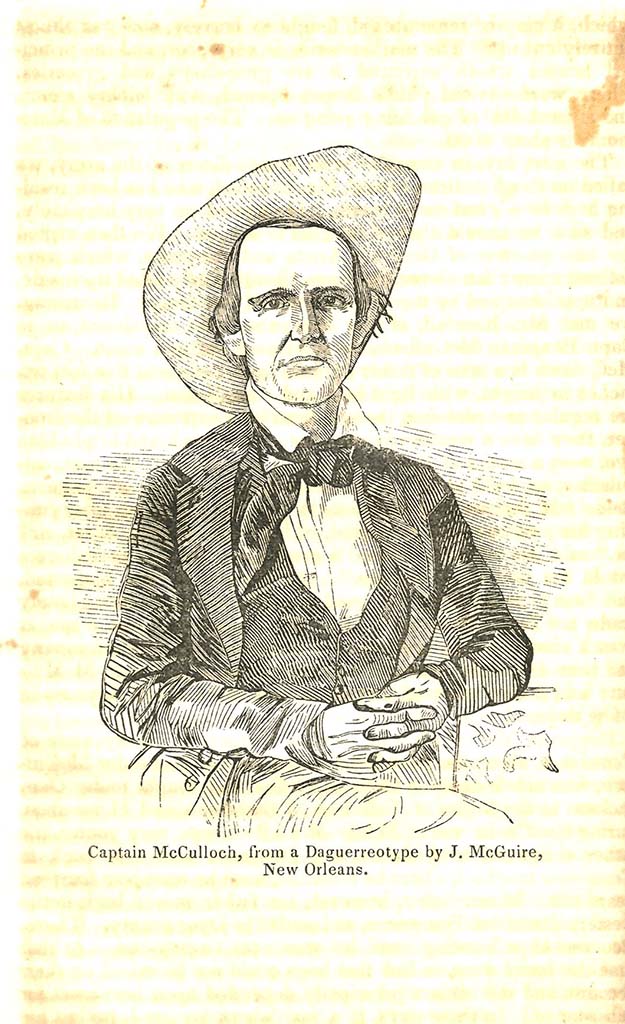
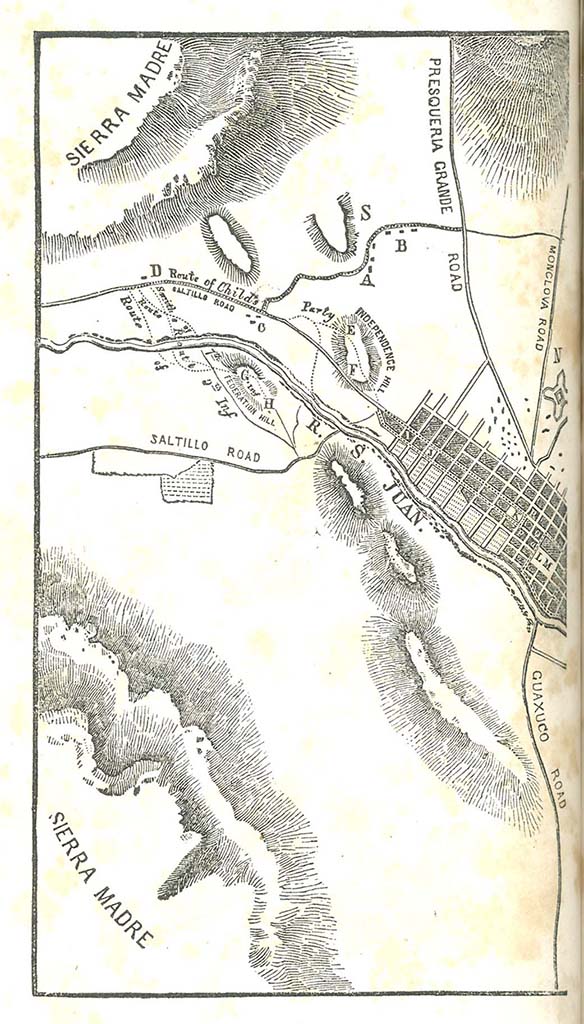
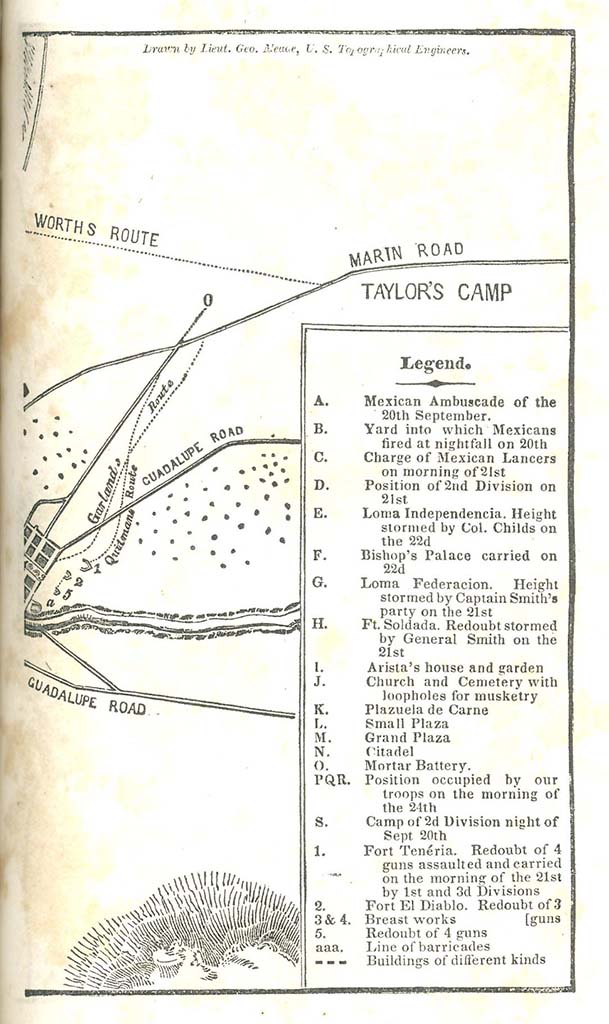
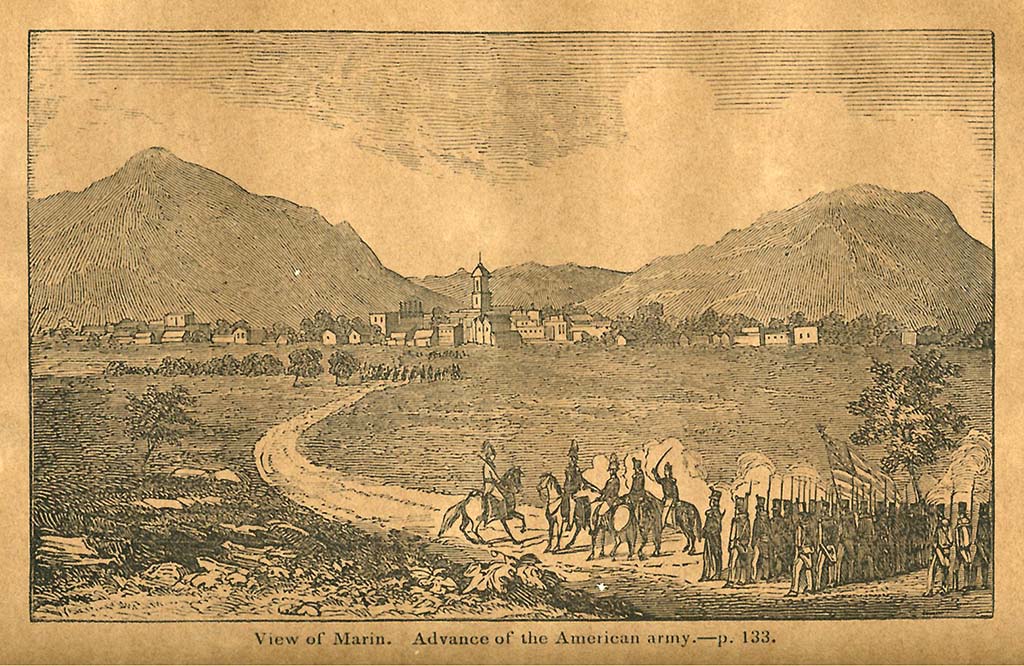
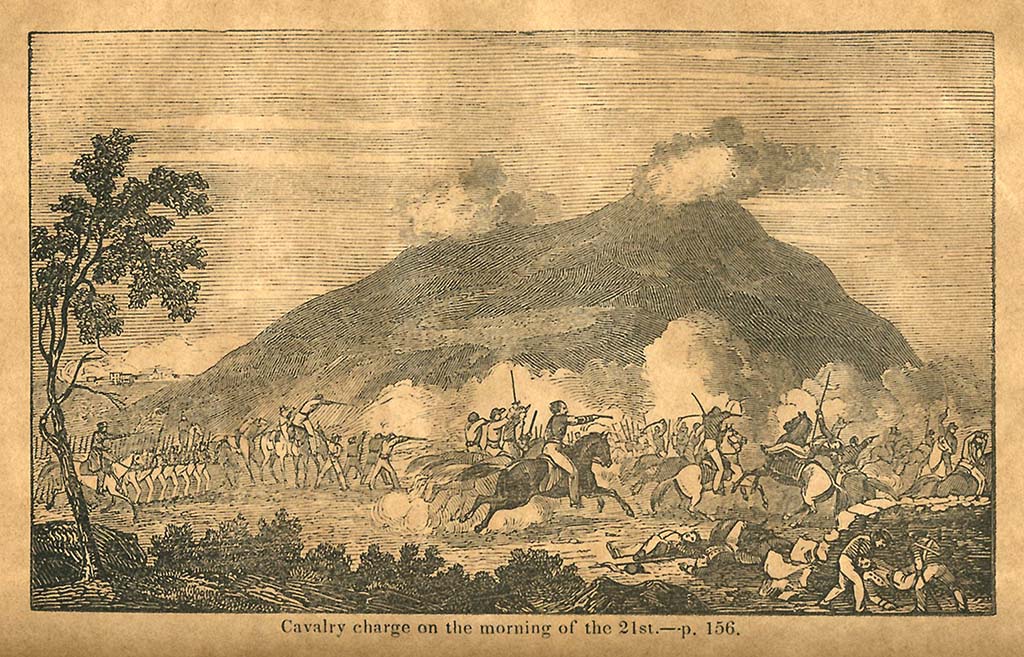
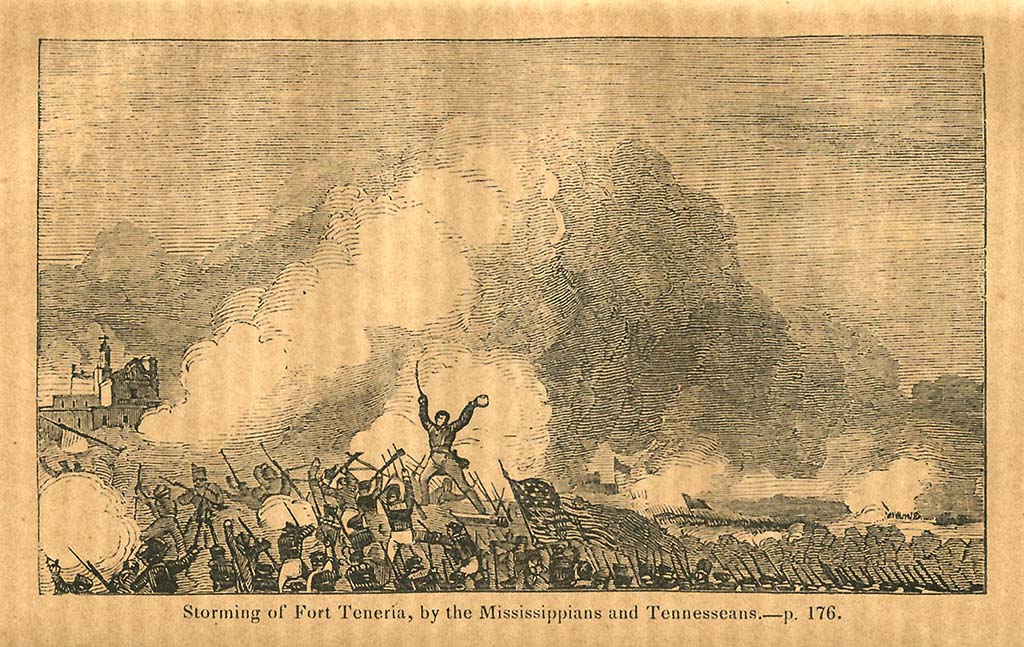
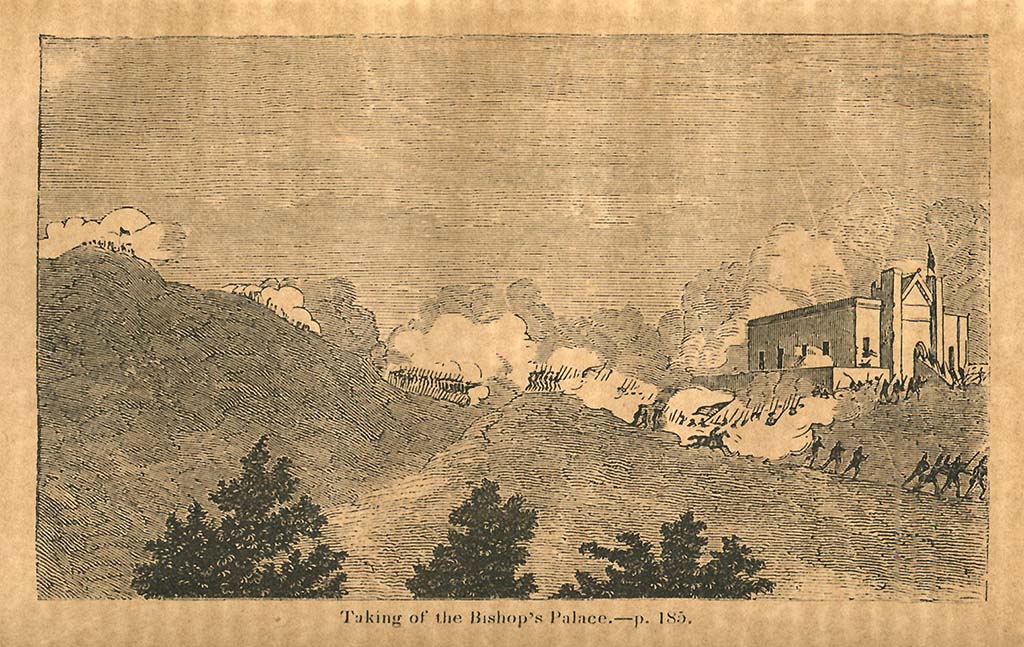
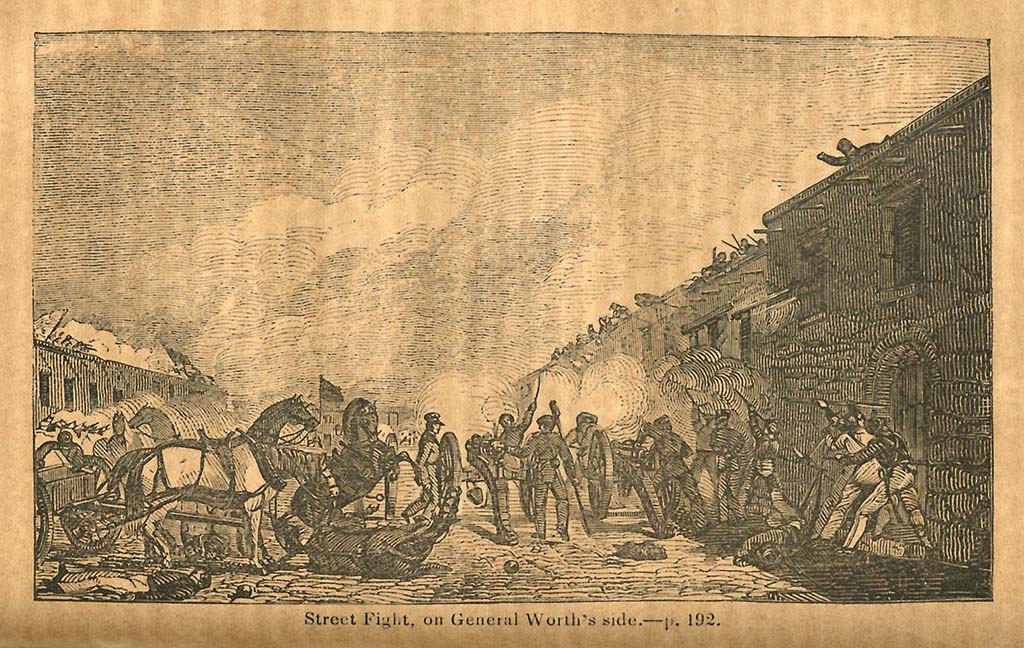
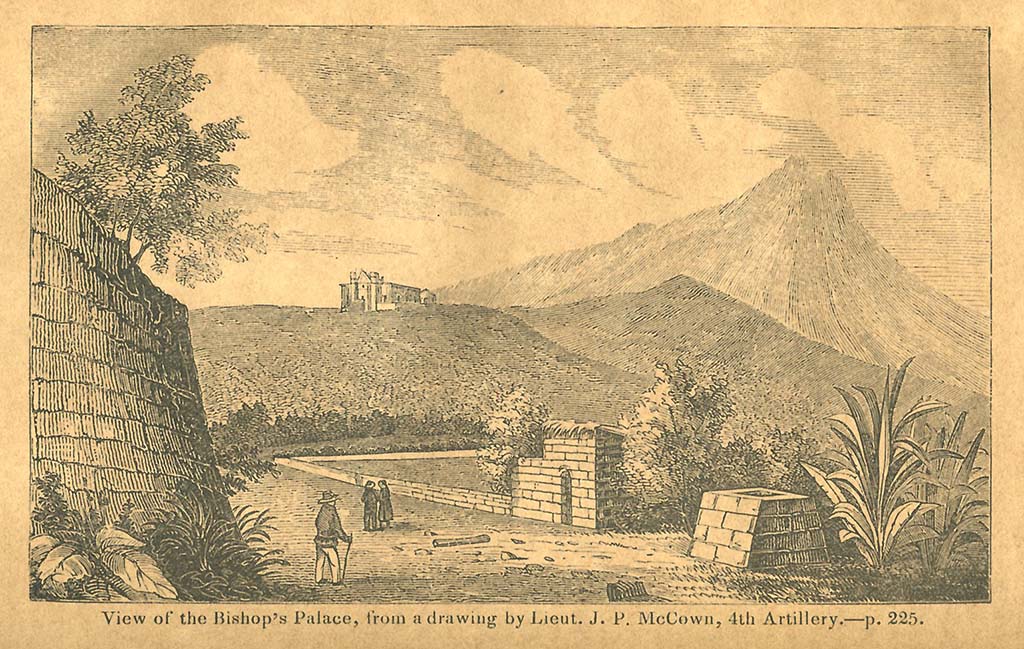
Reid, Jr., Samuel C. The scouting expeditions of McCulloch’s Texas rangers; or, The summer and fall campaign of the army of the United States in Mexico–1846; including skirmishes with the Mexicans, and an accurate detail of the storming of Monterey; also, the daring scouts at Buena Vista; together with anecdotes, incidents, descriptions of country, and sketches of the lives of the celebrated partisan chiefs, Hays, McCulloch, and Walker. Philadelphia, G. B. Zieber and Co., 1847.
Frost, The Mexican War and Its Warriors, 1849
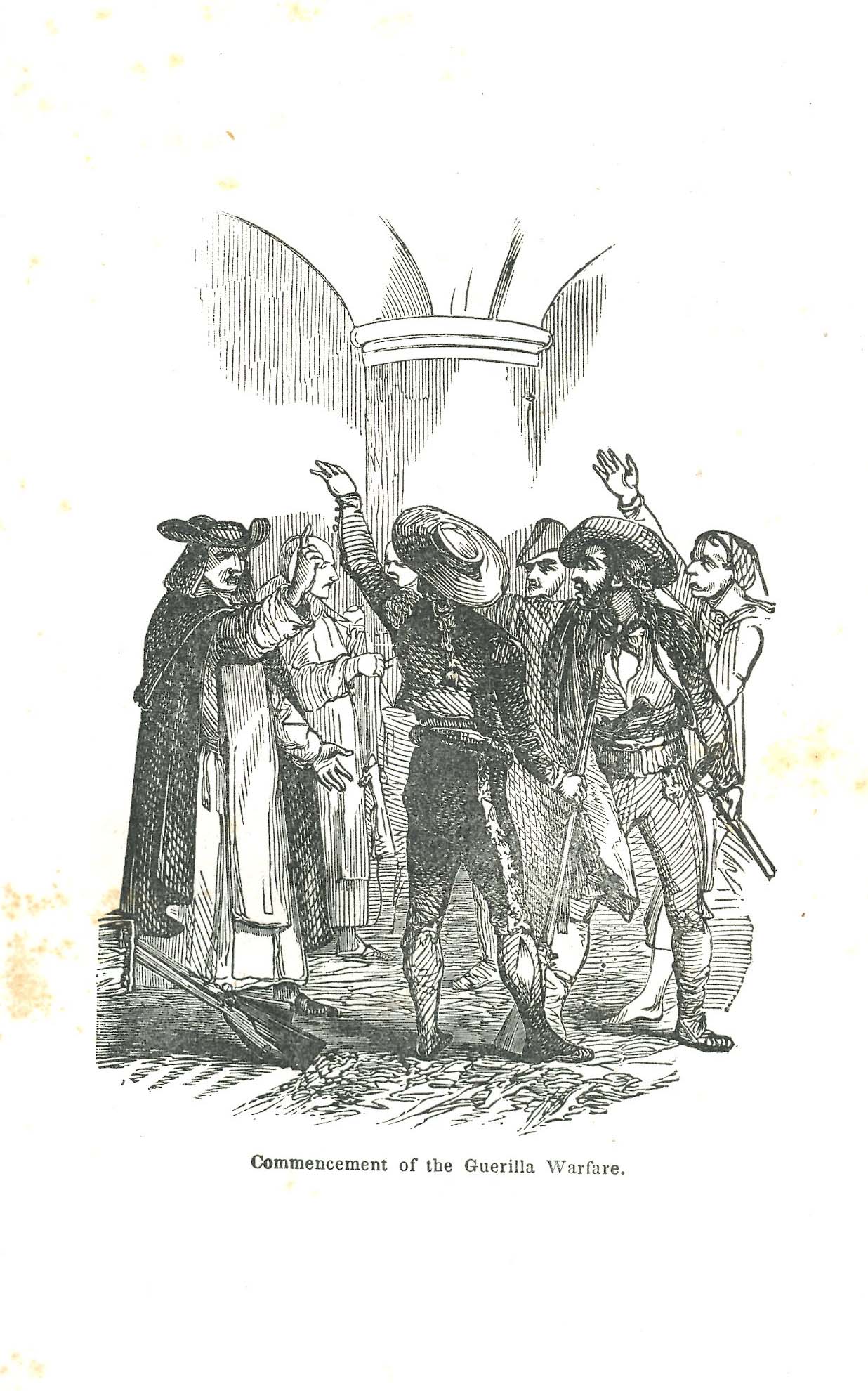
Images are from various stages of the war, including actions in Texas (Palo Alto), northern Mexico (Marin, Buena Vista), and central Mexico (Veracruz, Mexico City). Note: Col. Clay is Henry Clay Jr., son of the famous senator, who died at the Battle of Buena Vista.
Captions are from the images themselves. Click on the thumbnail to view a larger version.

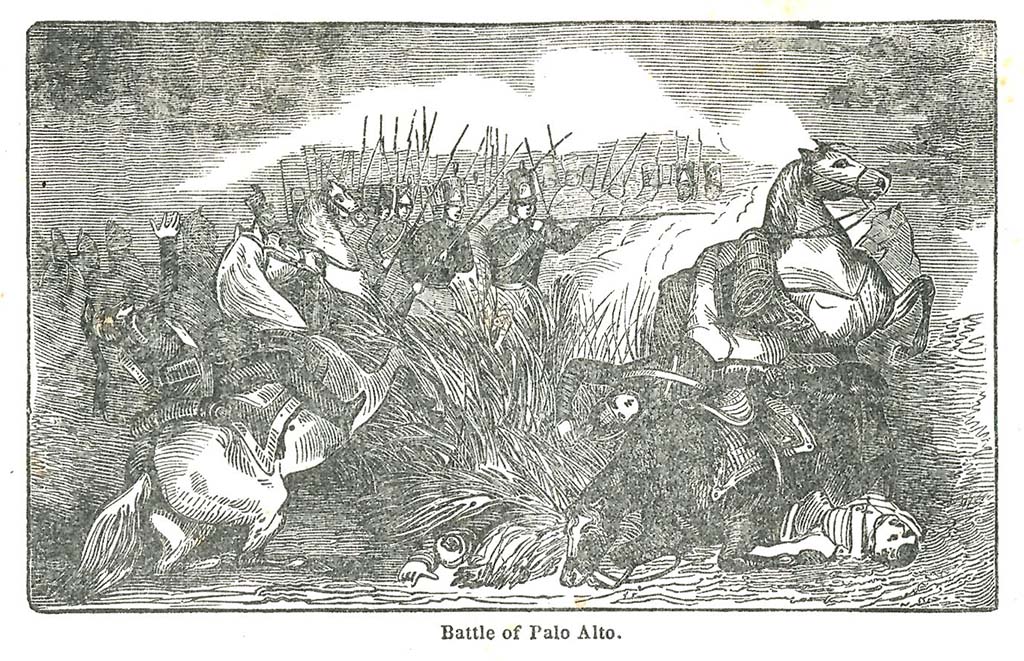
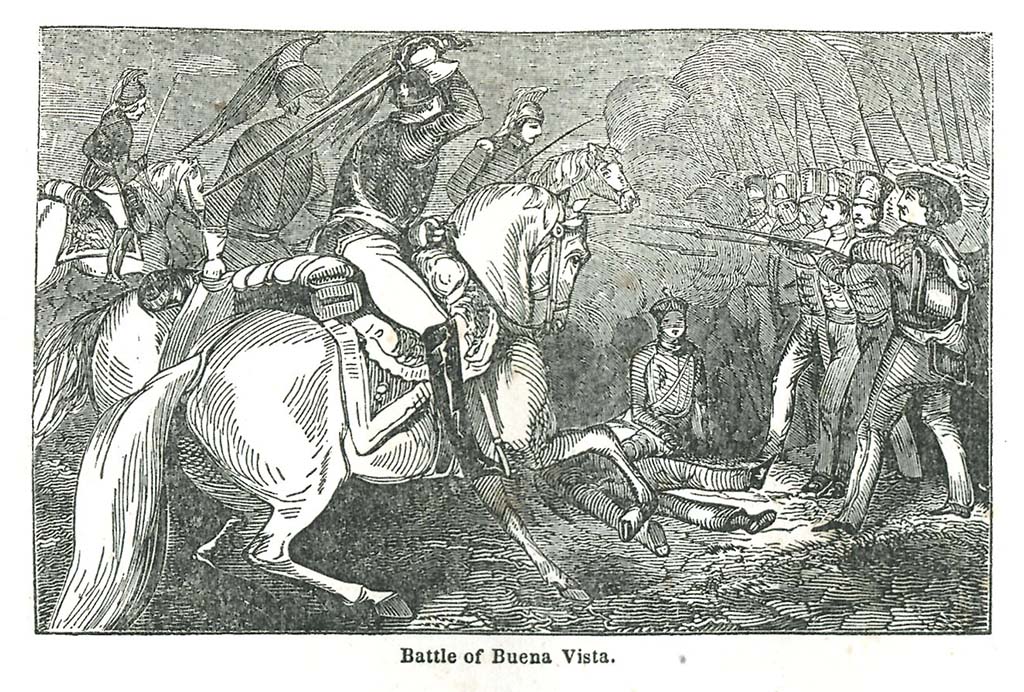
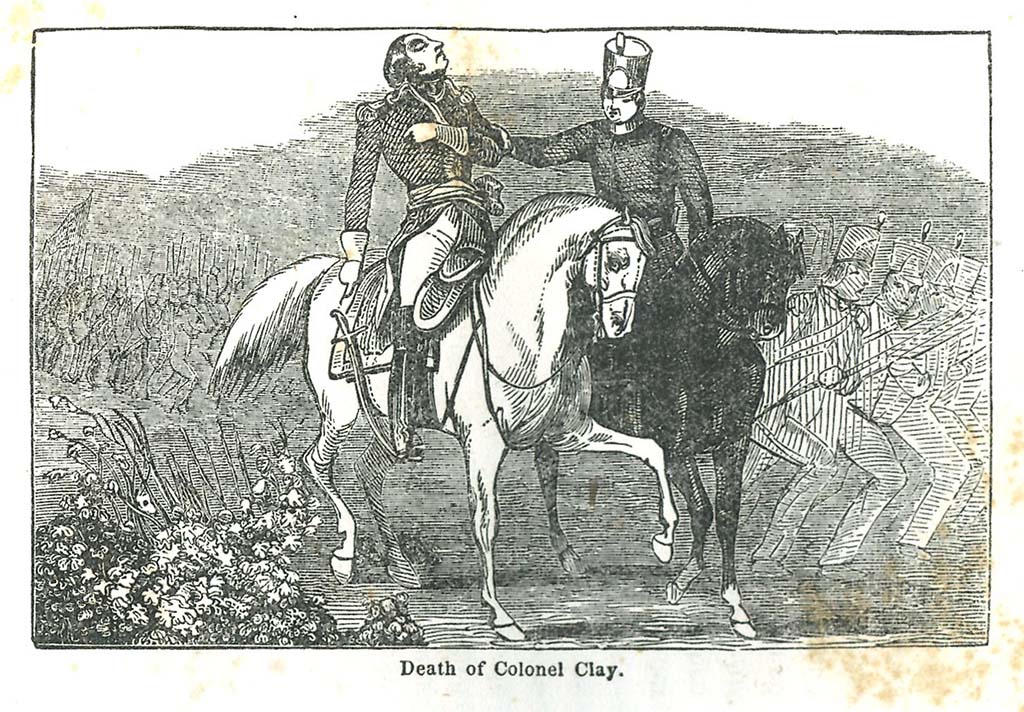
Frost, John. The Mexican war and its warriors; comprising a complete history of all the operations of the American armies in Mexico; with biographical sketches and anecdotes of the most distinguished officers in the regular army and volunteer force. New Haven and Philadelphia, H. Mansfield, 1850.