Cool@Hoole

What about digital preservation at libraries, museums, and archives?

What digital preservation topics interest YOU?

The three ASERL (Association of Southeastern Research Libraries) webinars I did last February are still getting hits (see the “Intro to Digital Preservation” entries here), so we’re planning to do another round this coming spring. However, rather than simply repeat the ones I did,
which were almost completely drawn from the Digital Preservation Outreach Education modules, I’m hoping we can fine-tune the next round to better meet the needs of our audience.

If you’re interested, please take our survey and let us know what we should focus on for these next webinars: http://www.surveymonkey.com/s/DPNeeds.

We would be grateful for your feedback. You need not be member of ASERL to submit the survey or to attend the (free) webinars.

Thank you!

Digital Preservation for Everyone!

These days, everyone creates digital content, often without thought as to keeping it around for very long.
As librarians and information scientists, however, we need to be mindful that some of this information will need to be accessible for awhile — possibly a long while!  Think of research work that you (or someone else) might want to build on in the future.  Or family photos that you'll want to still look at in your old age, or share with your grandchildren.
 
Does the professor or student you're working with want to be able to access his own research 10 years from now?  If so, he will be grateful for some recommendations from YOU as to how he can safeguard his hard work!
 
To assist in this, I've put together a wiki page with a list of resources that I hope you will find helpful.  If you have suggestions for other additions (or even deletions or changes!) please let me know.  You can find the list here:  http://www.lib.ua.edu/wiki/digcoll/index.php/Recommendations_for_Authors_and_Creators

Small Photo Collections: James Harry Cowan scrapbook

The James Harry Cowan photograph scrapbook is a unique document, and uniquely presented. Each page contains multiple photographs of student life at UA — especially athletics — about a hundred years ago. In Acumen, when you click on the thumbnail for each page, it opens into its own browser window. That way you can see each of the photographs individually and up close, as well as the page as a whole.

Game day!

photo album page

Yep, that’s Woods Hall in the background of that last image. Did you know the Woods Quad was a common gathering place before games?

Woods Hall Quad

Below, the bottom right image shows the other Quad, adjacent to the athletic grounds.

photo album page

But who are those “Rats” in the other picture? You can get a closer look…

UA students

Small Photo Collections: Central Iron & Coal

The Central Iron and Coal Photograph Collection is a unique window on the mining industry in Alabama around the turn of the twentieth century. Composed of 70 images in four photo albums, this collection of images — depicting the construction of a mighty furnace and the people that made it possible — provides a focused, accessible entry point for scholars and amateur history buffs alike.

mine shaft

mining camp

mine furnace

mining construction

mining workers

mine train car

Happy October (Island)!

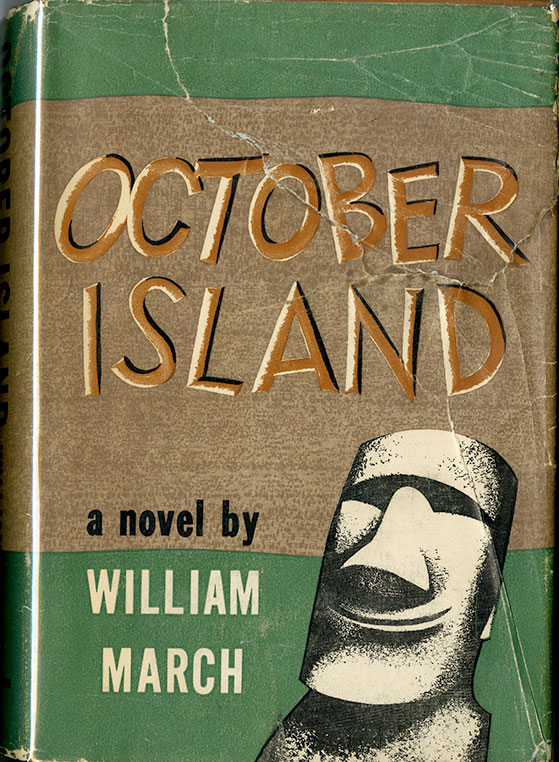
October Island by William March.  First Edition, Little Brown and Co., 1952.
March’s sixth novel, published in 1952, did not receive the same critical praise as some of his earlier works.  Some did like the novel, like the New York Times critic, Charles Poore, who praises March’s “novel of salt and savor” full of “quiet, uninsistent irony” and his “mordant undertones of commentary on what it truly means to be an outcast.”  But we love it, and we love our William March all the same.  And we really love this dust jacket, which is full of mid-century style. Happy October.

Small Photo Collections: Antebellum Architecture in Tuscaloosa

In the 1920s, student Sydnia Keene Smythe, at work on her master’s thesis, took photographs of several antebellum homes around Tuscaloosa, buildings that most likely don’t exist anymore but whose architecture was luckily captured for posterity. These images make up just one of many small but fascinating photo collections housed at W. S. Hoole Special Collections Library and delivered digitally in Acumen.

antebellum home

antebellum home

antebellum home

antebellum home

Celebrating our female athletes

Last year was a banner year for UA Athletics — especially because of our world-class female athletes! In celebration of our first national championships in softball and women’s golf, as well as back-to-back national titles for gymnastics, we take a glimpse into the past to see some of UA’s women athletes in action…

women's synchronized swimming
Synchronized Swimming, c. 1950

women's tennis
Tennis, 1963

women's volleyball
Volleyball, 1970s

women's golf
Golf, 1970s

women's basketball
Basketball, 1975

women's diving
Diving, c. 1980

These photographs and more can be found in the UA Photo Collection and in the UA Encyclopedia.

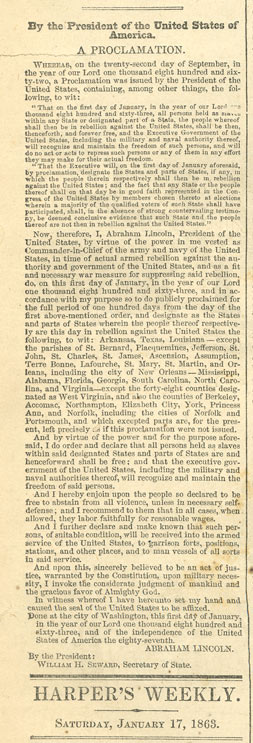
Whereas, on the twenty-second day of September…A Proclamation

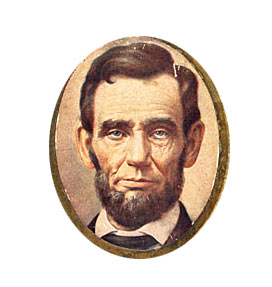
Detail from Abe Lincoln’s yarns and stories : a complete collection of the funny and witty anecdotes that made Lincoln famous as America’s greatest story teller (Publishers’ Bindings Online, and from the Wade Hall Collections of Southern History and Culture)

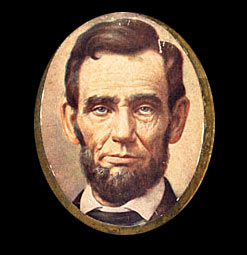
On September 22, 1862, President Abraham Lincoln signed the Emancipation Proclamation, which went into effect on January 1 of 1863.  This historic and immensely significant document is not just something to read about in a textbook, but it is something to experience.  To better understand history, we must take advantage of the primary sources around us, looking beyond interpretation of the past. Newspapers and journals from the period provide unique insight into the sentiment of the day, allowing researchers to look at the world through someone else’s eyes.  Editorials, political cartoons, and coverage from different parts of the country will show subtle and not so subtle differences in views. Special Collections Libraries and rich digital resources of primary materials allow you to do this.  So come by, or go online, and take a look at the newspaper and journal coverage of historic events.  A small display of the coverage of the Emancipation Proclamation is on display in the lobby of the Hoole Library — without interpretation.  Come by, and read a little bit.  Or Visit the National Archives website to see digitized pages of the original proclamation. You’ll be glad you did!


“And upon this act, sincerely believed to be an act of justice, warranted by the Constitution, upon military necessity, I invoke the considerate judgment of mankind, and the gracious favor of Almighty God.”    –Abraham Lincoln, Emancipation Proclamation


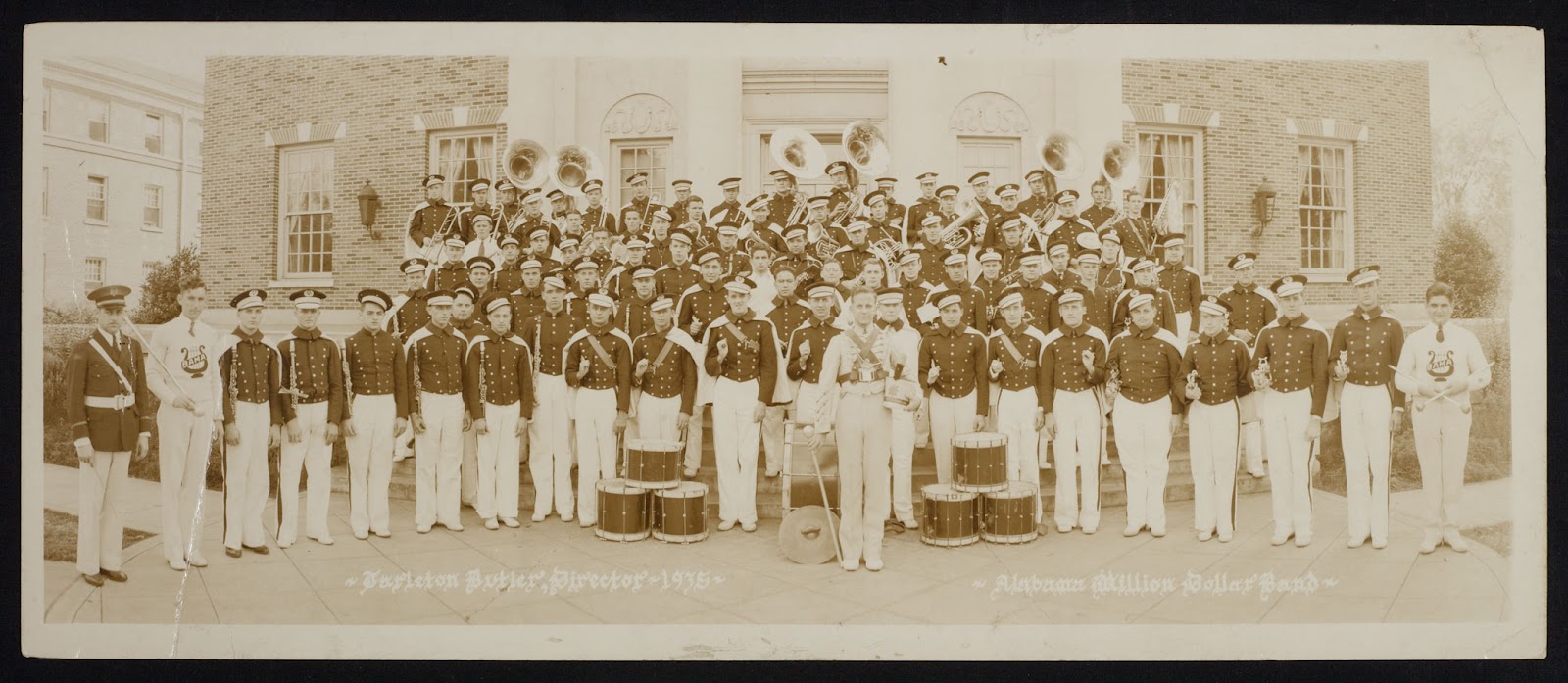
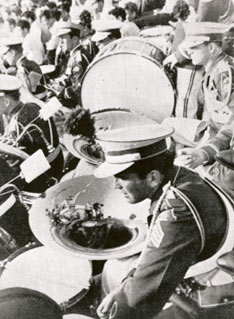
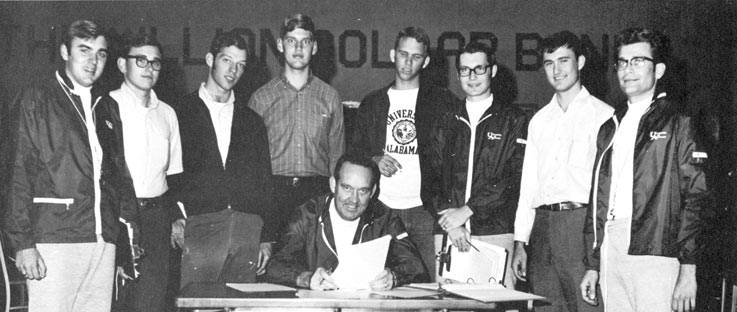
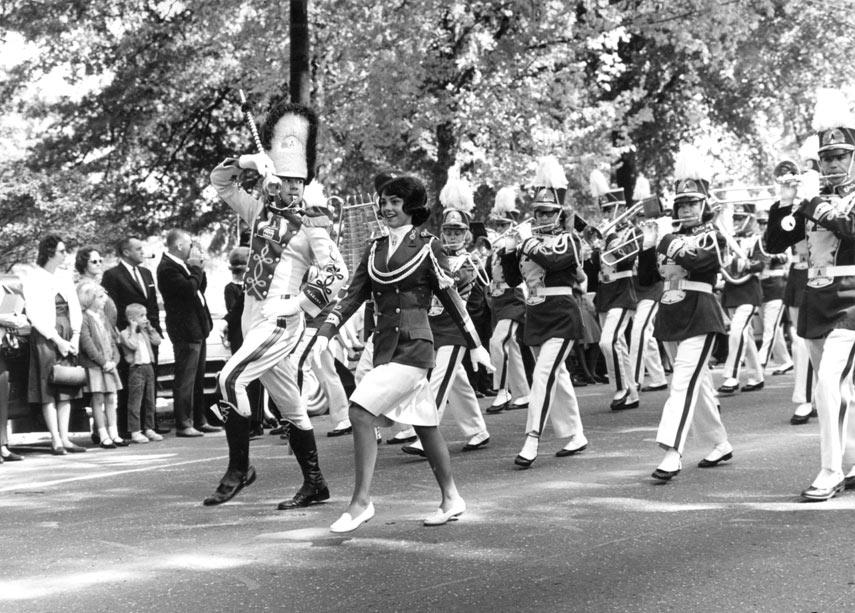
100 Years, A Million Dollars, 1000 Strong and a Few Cool Photos!

 
HAPPY 100TH ANNIVERSARY TO THE UNIVERSITY OF ALABAMA’S

The Million Dollar Band will be joined on the field tomorrow, September 22, 2012 by Million Dollar Band alums during the halftime show, making the band 1000 strong!

Bonus points if you can tell me the name of the Drum Major in that first picture!

Featured Collection: Roland Harper Railroad Timetables

You never know what you’ll encounter in a large manuscript collection! Even the seemingly predictable might surprise you.

The Hoole Special Collections Library holds a wealth of manuscript material from eminent botanist Roland Harper. Among his papers, you would expect to find information about plant life or just science in general (and there’s plenty of that!), but the collection also contains a large selection of railroad timetables. Harper collected these pamphlet-style train schedules during his travels over a 75 year period (1887-1962), so they’re a fascinating look into an ever-evolving — and now slowly disappearing — way of life.

Taking the country’s many regional lines, one could make it from west to east coast, starting in sunny California…

railroad timetable

…through the southwest to the Rockies.

railroad timetable

Chicago was a major hub, especially in 1892, just one year before the World’s Fair.

railroad timetable

This railway used images to represent stops along the way:

railroad timetable

The inventive PR office for this railway compared its routes to lines on a person’s palm:

railroad timetable

Harper even collected timetables abroad, like this one from Scotland, and another from Cuba!

railroad timetable

These timetables may seem like simply fascinating specimens of an age gone by, but they can also be of real help to researchers. How else might we understand, for example, what cities and regions were important in the past and how they were connected, and how drastically all that has changed since the advent of the automobile and the interstate highway system?