Cool@Hoole

Free webinars on basic digital preservation!

Last fall, I had the honor of being selected as one of 24 participants from across the country to be trained at the Library of Congress, in the inaugural Digital Preservation and Outreach Education (DPOE) Train-the-trainer initiative.

Those to be trained were selected from across the US, and asked to pass on the content of the training materials to others. We’re trying to build a network…

As a result, I’m giving a series of 3 1-hour webinars on basic digital preservation, based on the DPOE training, for the Association of Southeastern Research Libraries (ASERL). I just found out
that these webinars are open to anyone interested, for free. If you’d like to attend, just register and show up. Feel free to share this with anyone you think might want to be there! The target audience is libraries and other cultural heritage institutions who have digital content, but who don’t really know where to start in managing it for long-term access.

Here’s the scoop:

Webinar Series: Introduction to Digital Preservation (3 sessions)

Session #1 – Identifying & Selecting Content | February 7, 11am ET – 12n ET

More Info & Register

The first step in preparing for digital preservation is to identify all the potential content that may warrant this attention. This could include born-digital content arriving in special collections and archives, material digitized on site for online access, and content created by students, faculty, and researchers. This process will inform an organization about the categories of content and types of files it might need / want to preserve, as well as the challenges that might be encountered in doing so.

Once the possible scope of digital content is identified, the portion of digital content an organization is responsible for preserving needs to be specified. This process of selection may be known as appraisal in archives. It may be necessary to develop criteria for prioritizing selection, which can be a labor?intensive and resource?intensive process. Knowing the scope of digital content to be preserved, including the possible growth over time, is an important factor in developing an appropriate approach for managing digital content over time.

Session #2 – Considerations for Storage & Protection of Content |
February 14, 11am ET – 12n ET

More Info & Register

Digital content that has been selected for preservation needs to be stored in ways that align with good practice. It’s necessary to consider the file formats that are best suited for archiving, the requirements for processing, and the metadata needed to make use of this content in the future. Organizations also need storage management policies and procedures that ensure multiple copies in at least two locations. Once stored, content needs protection. This includes everyday concerns (such as who has access and whether files have changed), as well as emergency contingencies (business continuity and disaster planning). We will address how to manage roles and responsibilities for physical and virtual access to digital content throughout its life cycle.

Session #3 – Managing Content & Access Over Time | February 21, 11am ET – 12n ET

More Info & Register

Long-term access is the purpose of digital preservation – organizations preserve content to be able to make it available as needed or desired over time. In order to provide this access, we need to consider the concepts, roles, and challenges involved. Furthermore, managing digital content for the long term requires program planning, implementation, and sustainability. A core component of this is preservation planning, which includes organizational aspects (e.g., policy development, training, legal issues) and resources (e.g., designated funding and sustainability). This discussion will highlight some steps organizations can take to make long?term access to digital content more possible to achieve.

These webinars will be delivered using the GoToMeeting software — but you do NOT need to have a GoToMeeting account to view the webinar.
Here’s the GoToMeeting support page that lists the system requirements for attending.
Hope this helps, and hope to virtually “see” you soon!
Got a minute? Tag it! Crowdsourcing Comes to University Libraries!!!

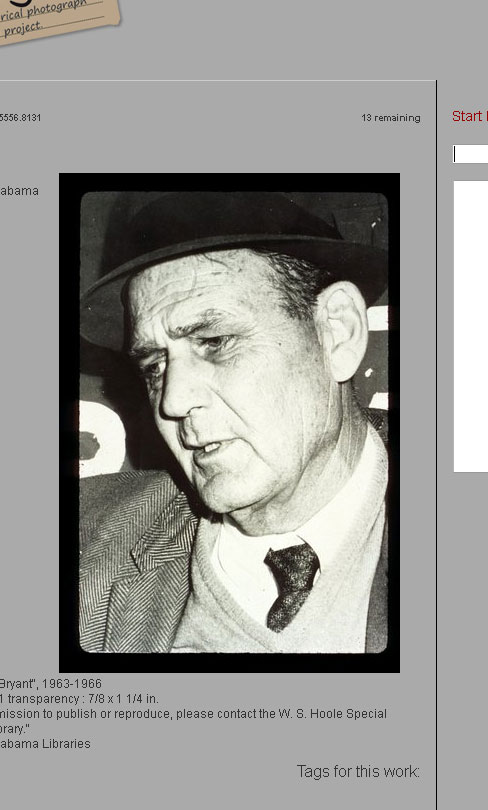
Think you know The University of Alabama? Well, come on and tag it! The University Libraries has started a new crowdsourcing project, allowing anyone to view and tag photographs from the W.S. Hoole Special Collections Library!

Why tag our photographs?


We have thousands of digitized photographs! Many of these photos may lack adequate or complete descriptions of the people, places, or objects displayed. By applying your own “tags” (key words, descriptions) to our photographs, you can help us fill in the blanks and provide more thorough and accurate information for students and researchers using our collections.

The more you tag, the richer the experience for all! And besides, it’s not only easy, but it’s FUN!


Visit http://tagit.lib.ua.edu/ and get started! It’s easy, no password is needed, so just get in there, pick some photographs, and start tagging away! If you have questions, feel free to contact us!

Happy Tagging!!!!!

More Vintage Hoop Shots!


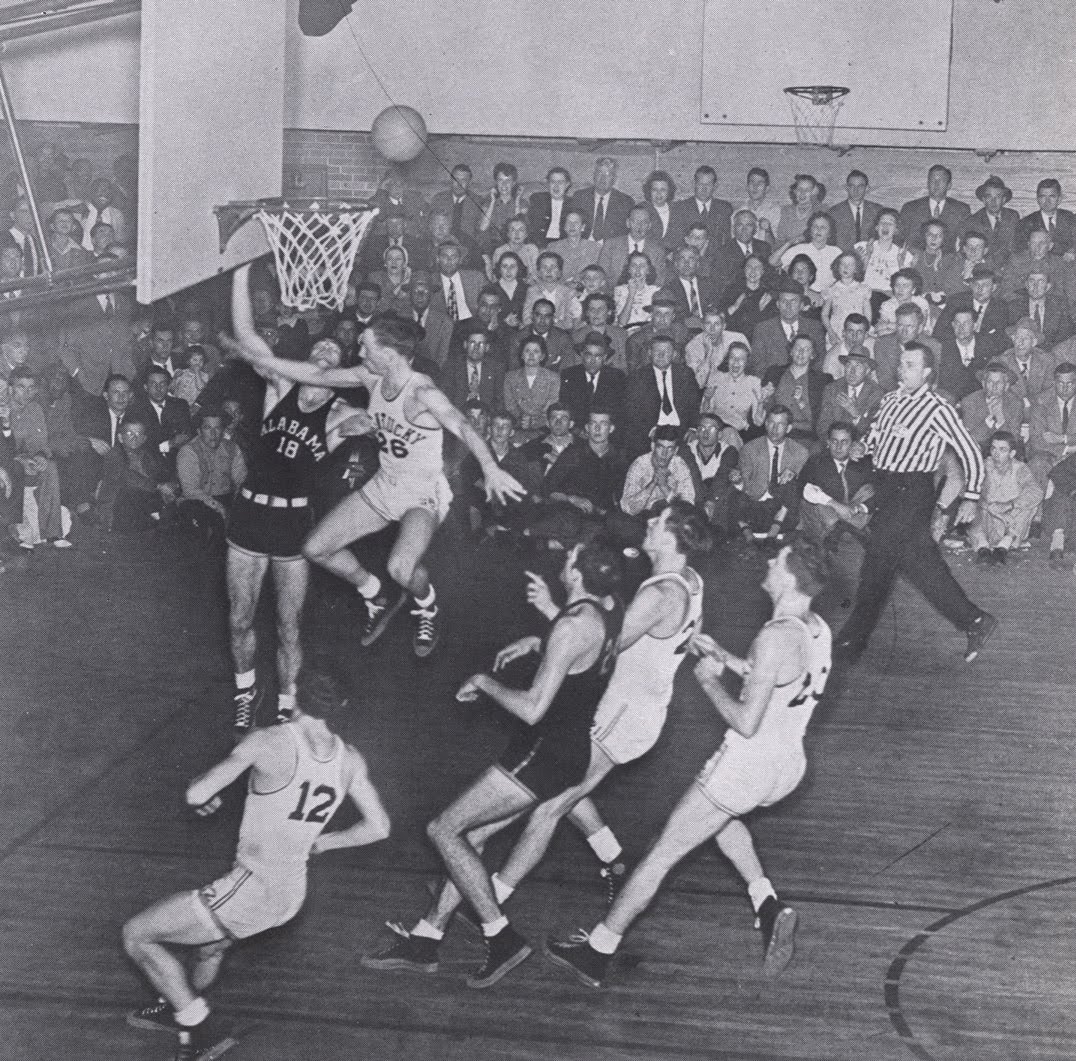
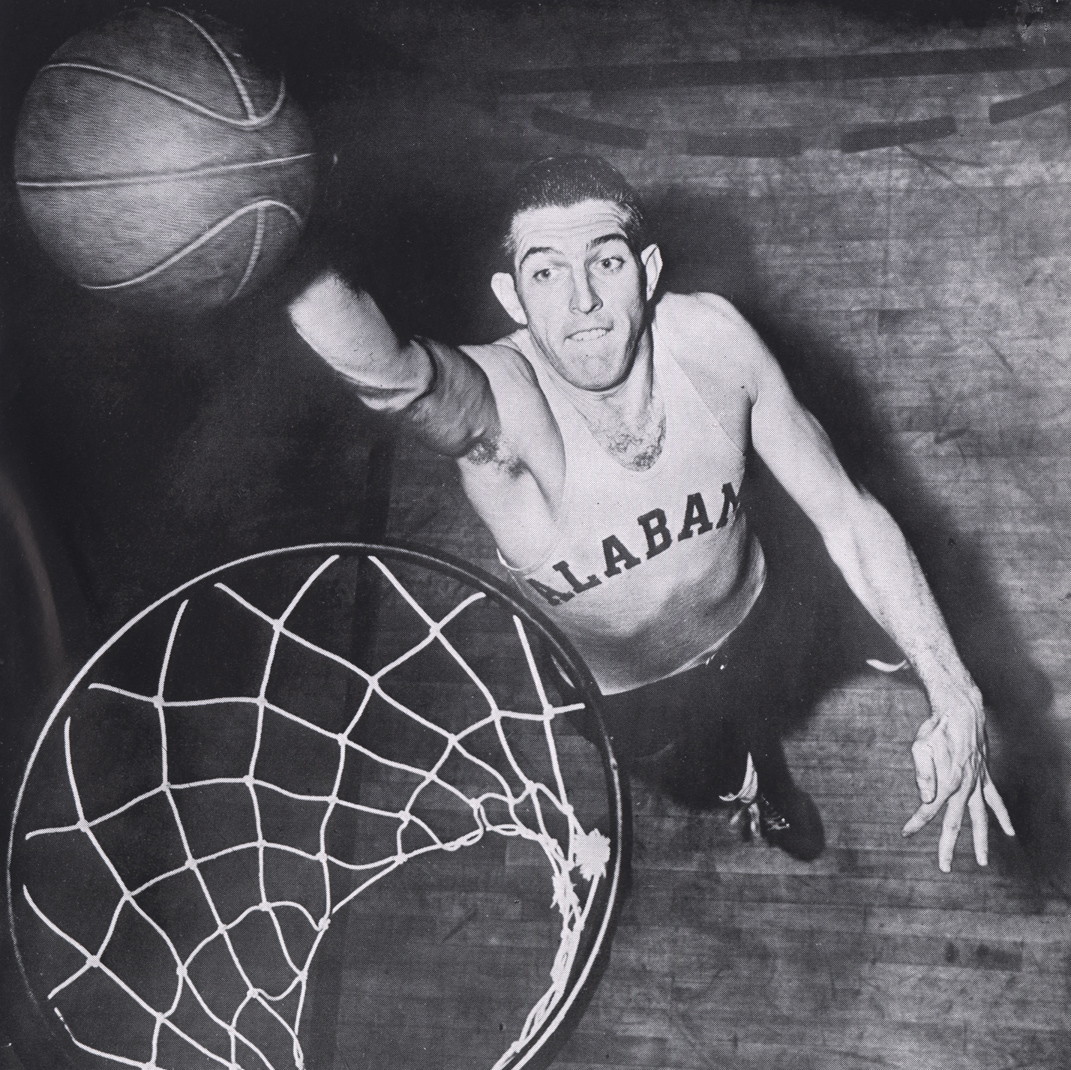
These were too good not to share — part of a little something I’m working on today, here are some University of Alabama basketball action shots and players from the 1940s-60s! Roll Tide!

Vintage Kicks, Vintage Hardwood


This cool and mysterious photograph is of the feet of the 1964 University of Alabama basketball team, part of the University of Alabama photographs collections. The vintage hardwood is Foster Auditorium, where Men’s basketball played before the days of Coleman Coliseum. The sneakers and the venue have changed, but it always is an exciting couple of hours, cheering on the Crimson Tide basketball team! And if you can’t make it to see them live, there’s always ESPN! Roll Tide!

1930s Advertising

The second in a an ongoing series of vintage advertising, today’s post features ads from the 1930s.

Coca-Cola, 1930

Great Lakes Aircraft Corporation, 1930

Lucky Strike, 1930

Chevrolet, 1931

Chevrolet, 1931

Planters, 1931

Camel, 1933

Philco, 1937

Camel, 1938


Robert F. Kennedy’s Visit to UA

Did you know that Robert F. Kennedy gave a speech at the University of Alabama in March of 1968, just months before he was assassinated? Kennedy was invited to the University to speak as part of the Emphasis Program, which was an annual symposium on contemporary issues that was sponsored by the University of Alabama Student Governement Association and ran from 1967 to 1971. Audio recordings of all of the speeches made at the symposium are available in Acumen.

Robert F. Kennedy with James Hood, one of the first African-American students admitted to the University of Alabama

Robert F. Kennedy was the keynote speaker for the 1968 symposium, in which the topic was “America at the Crossroads.” His speech was given on March 21, 1968, just five days after announcing his candidacy for president. Kennedy speaks about the lack of unity in the United States at the time. He believes there are too many conflicts dividing the people. He discusses the United States’ military involvement in Vietnam, Kennedy also discusses the timely topic of the struggle for civil rights and expresses his desire for a national action to ensure equality. Kennedy’s speech is introduced by astronaut John Glenn, who will later enter politics himself. The introduction and Kennedy’s entire speech can be heard here.

Working Lives Oral History Project

Our Digital Collections not only feature manuscripts and photographs, but also audio. One of our audio collections is the Working Lives Oral History Project. Funded by a grant from the National Endowment for the Humanities, this project focuses on black working class social history of Birmingham, Alabama, prior to World War II. It explores the implications of the immigration of blacks in the rural Deep South to urban metropolitan areas and the social history of first and second generation black wage earners within the context of urban-industrial development and social change. These interviews were conducted in 1984.

We currently have 72 of these interviews available in Acumen. Each interview is accompanied by a detailed description and transcript. Some of the interviews discuss the Civil Rights Movement in Birmingham. Others describe working in coal mines and steel plants, the treatment of blacks in rural Alabama, life during the Depression, and attempting to register to vote.

From the main Working Lives page in Acumen, click on the headphones icons to open individual interviews. From there you will find the description of a particular interview and another headphones icon to click on which will open up the audio file. Please note that Quicktime is required to listen to our audio files and can be downloaded for free here.

Theodore Roosevelt Letters

Theodore Roosevelt passed away on this date in 1919. Roosevelt was the 26th president of the United States, serving from 1901-1909. In our William Crawford Gorgas collection, we have several letters from President Roosevelt, including some written while he was serving as president. William Crawford Gorgas was a United States Army physician and later the 22nd Surgeon General of the U. S. Army from 1914 to 1918. You may recognize Gorgas’ name, as his mother was Amelia Gayle Gorgas, whom the main library at the University of Alabama is named after, and his father Josiah served as president of the University. William Gorgas became well-known for his work with yellow fever. During the Spanish American War, Gorgas was appointed chief sanitary officer of Havana, Cuba, where he eradicated yellow fever by controlling the mosquito population. As a result of this success, Gorgas was assigned to create sanitation plans in the Canal Zone during the building of the Panama Canal.

In addition to the letters from Theodore Roosevelt, the William Crawford Gorgas collection also contains letters from William Taft, Woodrow Wilson, John D. Rockefeller and Walter Reed, as well as Grogas diaries and journals illuminating his ife and work and many articles and other publications written about Gorgas work in disease prevention. The digitization of this collection is an on-going project, and we will feature other items in the collection as the project continues.

This letter was written by Theodore Roosevelt from the White House to Gorgas during Gorgas’ time as Cheif Sanitary Officer in Ancon, Panama, and concerns restroom sanitation.

Another letter from President Roosevelt was sent to Gorgas the following year, reccomending a man for a position working under Gorgas.

This letter was written after Roosevelt had left office, introducing Gorgas to an acquaintance who was coming to visit the Canal Zone.


The following letter introduces Gorgas to another acquaintance.


This letter is hand-written from Theodore Roosevelt. He asks Gorgas for assistance in finding his son-in-law a position serving with the Army overseas during World War I.

Finally, this letter was written by Roosevelt a month later, thanking Gorgas for his courtesy. One could assume it is in reference to his request made in the previous letter.

Holiday Cards

Tis the season for holiday cards! In Acumen, we have some digitized holiday cards dating back to the early 1900s. The cards included here were found in the William Crawford Gorgas Papers, the Manley Family Papers, the Tuscaloosa Service Men’s Center Scrapbook and the O. E. Bruce, Jr., Letters.  Click on the images to link to the original item in Acumen.

Christmas postcard circa 1905


Holiday card from 1913


Holiday card in German: "Warm wishes for Christmas and New Year."

Christmas postcard circa 1915

Letter from O. E. Bruce, Jr., a soldier during World War II on U. S. Army Christmas stationary. Click on the image to see the letter in its entirety.

Envelope that goes with the above letter.

A Christmas card from a member of the Royal Canadian Air Force during World War II.

Holiday card from the 1940s.

Holiday card from the 1940s.

Holiday card from the 1940s.

Holiday card from the 1940s.

Holiday card and photo from the 1940s. This one's my favorite!

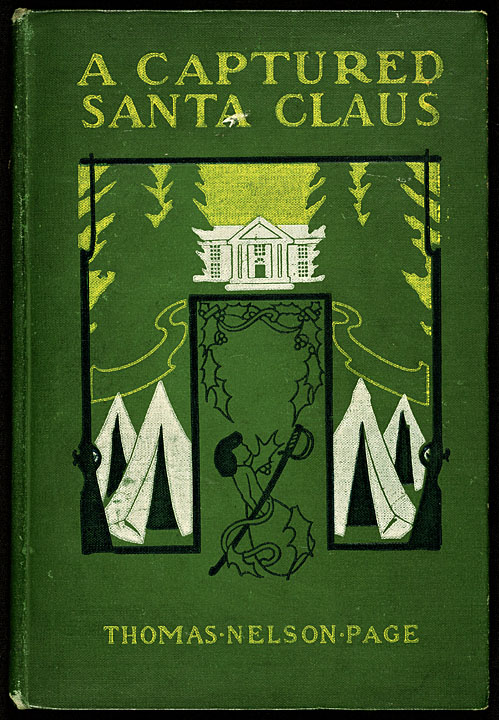
Two Kinds of Santas!

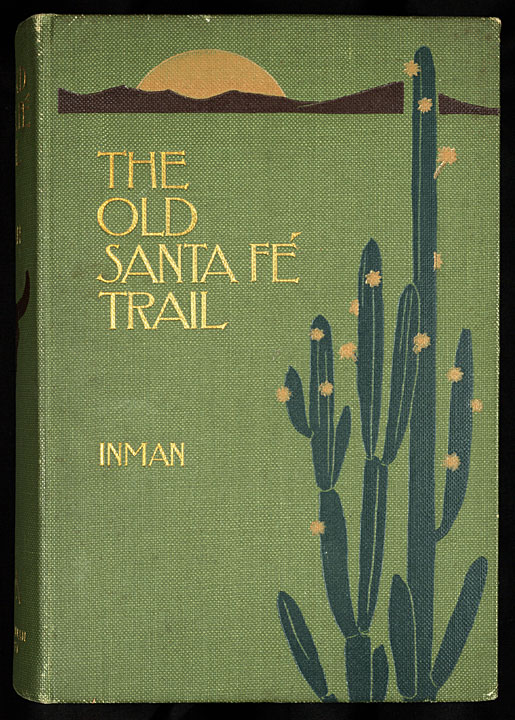
Both on publishers’ bindings, and both in glorious green cloth.
The Old Santa Fe Trail (Macmillan Co., 1898, from the Hoole Richard Minsky Collection) and A Captured Santa Claus (Charles Scribner’s Sons, 1905, from the Wade Hall Collection of Southern History and Culture) Both of these books are included in the award-winning digital project, Publishers’ Bindings Online, 1815-1930: The Art of Books.