Cool@Hoole

Golden Age of Children’s Literature: Grimm’s Fairy Tales

By: Ellie Campbell, JD and University of Alabama MLIS Graduate student

While Maleficent is showing in movie theaters, come take a look at some rare books featuring the characters of Grimm’s Fairy Tales! The exhibition, which will be put up this week, features a case of material relating to the classic fairy tales from Germany. 
TheBrothersGrimm

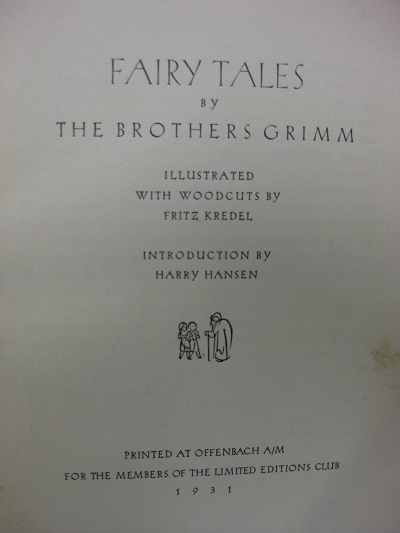
Fairy Tales (1931) by the Brothers Grimm, Rare Books PZ8.G882 F55 1931

The Brothers Grimm, Jacob and Wilhelm Grimm collected and popularized German folktales as part of their academic studies. Their collections included such famous tales as “Cinderella,” “The Frog Prince,” “Hansel and Gretel,” “Rapunzel,” “Rumpelstiltskin,” and “Snow White.” Born thirteen months apart in 1785 and 1786, the brothers were raised in the German town of Hanua. They both attended the University of Marburg, where they developed a curiosity about German folklore, which grew into a lifelong dedication to collecting German folk tales. The rise of romanticism and the development of the German nation-state in the nineteenth century revived interest in traditional folk stories, which represented a form of national literature and culture. The brothers developed a methodology for collecting and recording folk stories that became the basis for folklore studies.

Their first collection of folk tales, Kinder- und Hausmärchen (Children’s and Household Tales), was published in 1812. Between 1812 and 1857, they revised the collection many times, adding over a hundred stories to the first eighty-six. These later editions sanitized the stories’ cruelty and violence in response to criticism that the stories were not suitable for children. The brothers sometimes published versions of tales that had appeared in collections by other authors like Charles Perrault. In addition to writing and modifying German folk tales, the brothers also created collections of Scandinavian, Irish, and Danish folk stories. The brothers’ stories remain popular; the tales are available in more than 100 translations, have influenced countless numbers of books for young and adult audiences, and have been adapted by filmmakers including Lotte Reiniger and Walt Disney, in films such as Snow White and the Seven Dwarfs and Sleeping Beauty.
Continue reading

Interested in digitization?

We’re looking for a new Digitization Technologist.  Are you looking for an interesting, challenging position where you’ll learn about digitization of images, text, and audio?  Where you’ll expand your developing scripting skills, learn XML (if you don’t already know it) and get up to your elbows in technical and preservation metadata?  Do you like working both on your own and as part of a close-knit team?

If this sounds like it might be right up your alley, check out the full description (under “IT Technical Specialist I – Digitization Technologist – 49792″) and submit your application before June 9 (2014).   Thanks.  We’ll be interviewing very soon!

Princesses and Paupers: The Golden Age of Children’s Literature

web_small_v02

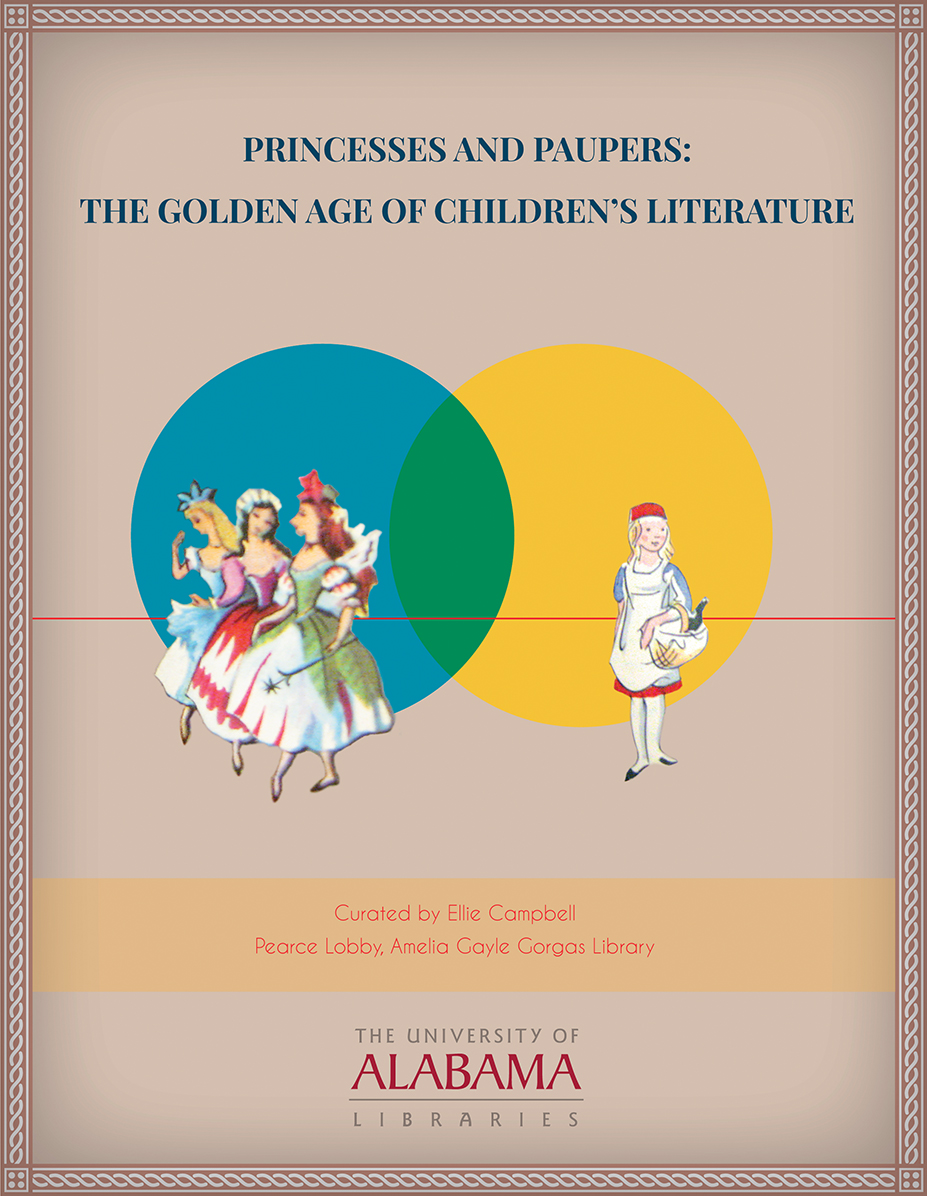
Princesses and Paupers: The Golden Age of Children’s Literature, curated by Ellie Campbell, poster design by Muzel Chen

By: Ellie Campbell, JD and University of Alabama MLIS graduate student

On June 10, 2014, Princesses and Paupers: The Golden Age of Children’s Literature, curated by Ellie Campbell, will be mounted in the Pearce Lobby of the Amelia Gayle Gorgas Library.

In the seventeenth and eighteenth century, European culture, influenced by the writings of John Locke, came to regard children’s minds as a tabula rasa, a blank slate which could be molded with proper instruction. Publishers began to create a new genre: literature intended to educate young minds about the adult world. By the beginning of the nineteenth century in Europe and North America, laws began to prevent child labor and enforce compulsory education, measures which increased literacy rates in the general population. In response, the children’s publishing industry expanded to meet this growing demand just as new developments in printing technology also made books cheaper to purchase, leading to what is now known as the Golden Age of Children’s Literature during the latter half of the nineteenth century.

Continue reading

Campus Rewind: The President’s Mansion

For this installment of Campus Rewind, check out these photos of the President’s Mansion, recently added to HistoryPin.

Besides the building, you’ll see a former President, a then-current First Lady, students protesting, and students horsing around, antebellum costume (in the 1960s!), and some truly scary plaid bell bottoms. 🙂

While you’re at it, take a look at the other items we’ve collected at our HistoryPin channel. Among them is a tour of images from the Crimson Tide’s trip to the 1926 Rose Bowl.

There’ll be a Hot Time in the Town of Berlin

By: Amy Chen, CLIR Postdoctoral Fellow

In honor of Memorial Day, a day to remember all members of the military who died in the course of their service, this week on Cool@Hoole we are featuring two items from Wade Hall’s Collection of Sheet Music. Hall’s library of music includes a large amount of patriotic songs written to boost the morale of the country during wartime.

WomenMarines

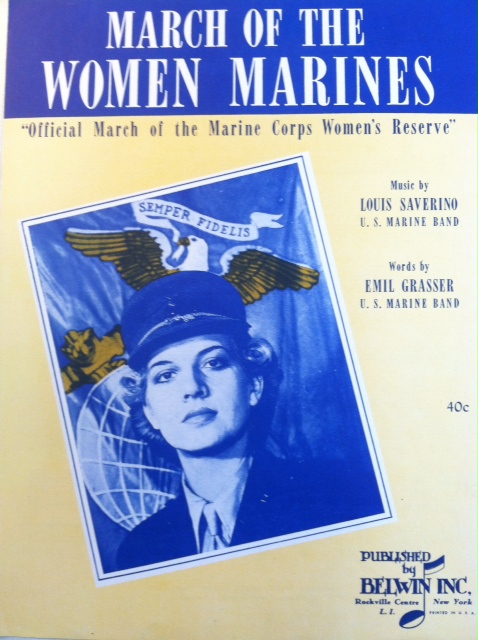
March of the Women Marines, Wade Hall Sheet Music M1630.2.S275 M27 1943x

March of the Women Maries. Music by Louis Saverino. Words by Emil Grasser. New York, NY: Belwin Inc., 1943.

The Marine Corps Women’s Reserve was founded in 1943 and closed in 1948. Designed to provide a female labor force to support the men fighting, the march reiterates their role within the military hierarchy. One lyric reiterates, “we serve that men may fight in air, on land, and sea.” Notably, the Women’s Reserve even included its own band.[1]

By the end of World War II, 20,000 women participated in the reserve.[2] The Women Marines Association (WMA), a similar organization, continues today as a way to support active-duty military and veterans, whether they are male or female.

This copy of the “March of the Women Marines” is in excellent condition, with no apparent shelf wear.

HotTime

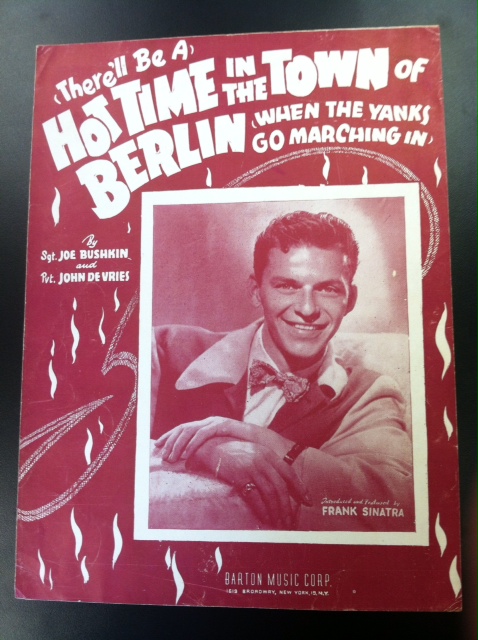
There’ll be a Hot Time in the Town of Berlin When the Yanks Go Marching In, Wade Hall Sheet Music M1648.B97 T4 1943x

Sgt. Joe Bushkin and Pvt. John De Vries. There’ll Be a Hot Time in the Town of Berlin When the Yanks Go Marching In. New York: Barton Music Corp, 1943.

“They’re gonna take a hike through Hitler’s Reich,” announces Bushkin and De Vries’ patriotic song predicting the success of the United States against Germany.

In 1943, when this song was written, the Casablanca Conference between the British Prime Minister Winston Churchill and American President Franklin D. Roosevelt established the Allies’ policy that the Axis powers, consisting of Germany, Italy, and Japan, must submit to an unconditional surrender. The Allies also decided to postpone invading France in order to concentrate on Italy instead. The Italian invasion is successful and, by the end of the year, the Allies decide to begin planning an invasion of France for June 6, 1944, a day that would become known as D-Day.[3]

So while 1943 marked the turn of the war to begin to favor the Allied forces, military success was still uncertain; Germany’s surrender would not come until 1945. In the meantime, songs like “There’ll be a Hot Time” kept soldiers’ morale — as well as the morale of the home front — up during the long months of fighting.

“There’ll Be a Hot Time” is in good condition with minimal shelf wear. Frank Sinatra’s portrait on the cover of the music recalls how young performer served as the voice representing all the men who had gone off to war.

Sinatra sang this song to promote the war effort in 1944. However, Sinatra’s career did not take off fully until the 1950s, when his followers switched from being primarily young women to older men. Later, he’d become known for his time in the Rat Pack, a group of performers based in Las Vegas and Hollywood that included Sinatra as well as Dean Martin, Sammy Davis Jr., Joey Bishop, and Peter Lawford. Sinatra’s decades-long career in both film and music which began in the 1940s made Sinatra one of the largest stars of the twentieth century.[4]

Works Cited

[1] “Marine Corps Women’s Reserve Band,” Music Educator’s Journal 30.1 (September/October 1943), 23.

[2] “Marine Corps Women’s Reserve,” Marines.com, http://www.marines.com/videos/-/video-library/detail/video_marine_corps_womens_reserve

[3] “1943: World War II Timeline,” World War II History, http://www.worldwar2history.info/1943.html.

[4] “Frank Sinatra,” Bio.com, http://www.biography.com/people/frank-sinatra-9484810#rat-pack&awesm=~oF1t2346YrKEfS.

Searching Acumen – Using Tabs to Limit by Format

[Update, 8/25/14: The look of our digital repository has changed. The functionality discussed below is still very much there — in a new form. To limit to format now, use the dropdown menu at the search bar.]

In the first of a series of posts on searching Acumen, our digital repository, we’ll be discussing a quick and often illuminating way to limit a search: using the tabs at the top of the search box.

Each tab limits the search to a particular kind of source, from books and manuscripts to audio, images, and even student research. Since these tabs can be selected at any point in the search process, they’re especially useful for switching your perspective on a set of results. With a search term already in the search box, simply select a tab and hit enter again to see what limiting to a particular format can unearth.

For example, searching for “civil war” results in a lot of content: 6127 results! But limiting the search to various tabs can help narrow down those results, sometimes to things you didn’t even know you wanted:

search-civilwarWho knew that Hoole library had hand-drawn maps of the war? And who would have thought about searching for sheet music?

How about “cotton”? You’ll find that our repository has resources that touch on all parts of the cotton farming industry: from an audio interview with a sharecropper to a collection of photos documenting cotton picking and harvesting to numerous pieces of manuscript material on the subject, such as receipts for cotton sales:

search-cotton

You’ll notice we’ve even got several pieces of sheet music, attesting to the fact that cotton was once a prominent part of popular culture.

Perhaps you’d want to search for our former governor, “George Wallace.” Using tabbed searching brings up the expected — the Stand in the Schoolhouse Door — as well as the unexpected — including an audio file of a speech he gave at UA in the late 1960s.

search-georgewallace

Did you know Wallace was instrumental in getting Alabama’s two-year college system off the ground? More importantly, did you know he was a boxer? 🙂

What about a search for “football”? It turns up things you might not have known were there, including issues of the student magazines Mahout and Rammer Jammer, a scrapbook of UA football memories from the 1960s, images of students playing intramural football, and student research about game analysis:

search-football

Search results always appear in the order of best match to the keyword, and best and most matches to multiple keywords. However, all things being equal, the results are presented in order of type, which does not exactly follow the order of the tabs. Images, books, manuscripts, and finding aids are first, then sheet music, audio, maps, and research.

So one good use of tabbed search is to get past lots of image results, for example, or to get to things usually further down the line like sheet music, audio, and maps.

Hoole book arts goes on the road

By: Amy Chen, CLIR Postdoctoral Fellow

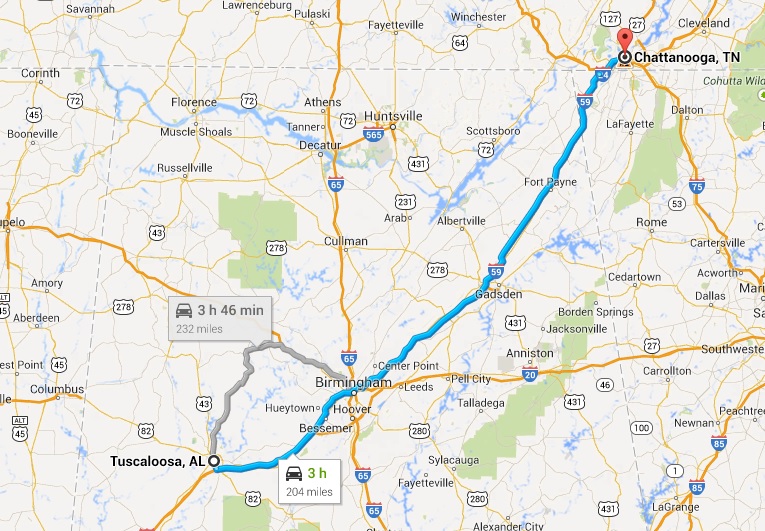
The Hunter Museum of Art in Chattanooga, Tennessee is hosting Preface: An Introduction to Artists’ Books, an exhibition largely drawn from the holdings of the W.S. Hoole Library. The show opened on March 28, 2014 and will remain up through June 15, 2014 — which gives interested viewers less than a month to go visit!

TuscaloosaToChattanooga

Tuscaloosa to Chattanooga

Items borrowed from the W.S. Hoole Library include work by the following book artists: Jenna Adams, Lynn Avadenka, the Combat Paper Project, Julie Chen, Nicole Eiland, Susan King, Ellen Knudson, Emily Martin, Amy Pirkle, and Coriander Reisbord.

Pirkle is a graduate of the University of Alabama book arts program and a current instructor at UA; she discussed her work, Smoke (2008), with Cool@Hoole last year. Smoke is now on display at the Hunter.

While twelve of Hoole’s artists’ books are in Chattanooga, many more are still available to be seen in the Hoole reading room on the second level of Mary Harmon Bryant Hall.

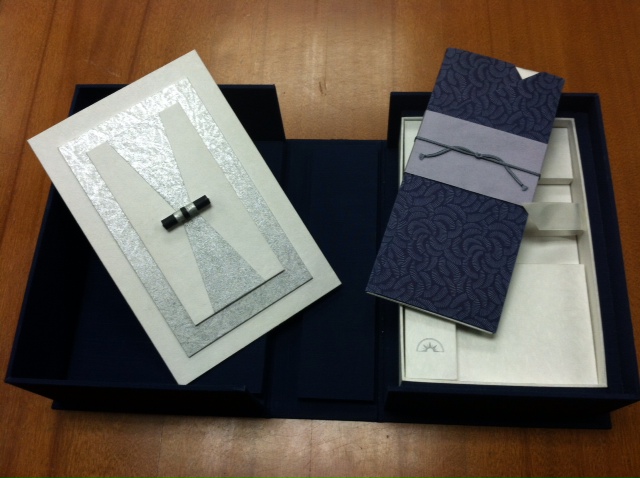
whitekimono

Mark Doty’s White Kimono (1997) Hoole Library Book Arts Collection Oversize PS3554.O798 W45 1997x

For example, come see Mark Doty’s White Kimono (1997), which was published in a limited edition of 40 copies by Tuscaloosa’s Enstar Press. Mark Doty won the National Book Award for his volume Fire to Fire: New and Selected Poems (2008) and is the only American poet to win the UK’s T.S. Eliot Prize. Not usually listed in Doty’s bibliography, White Kimono is as rare as it is beautiful.

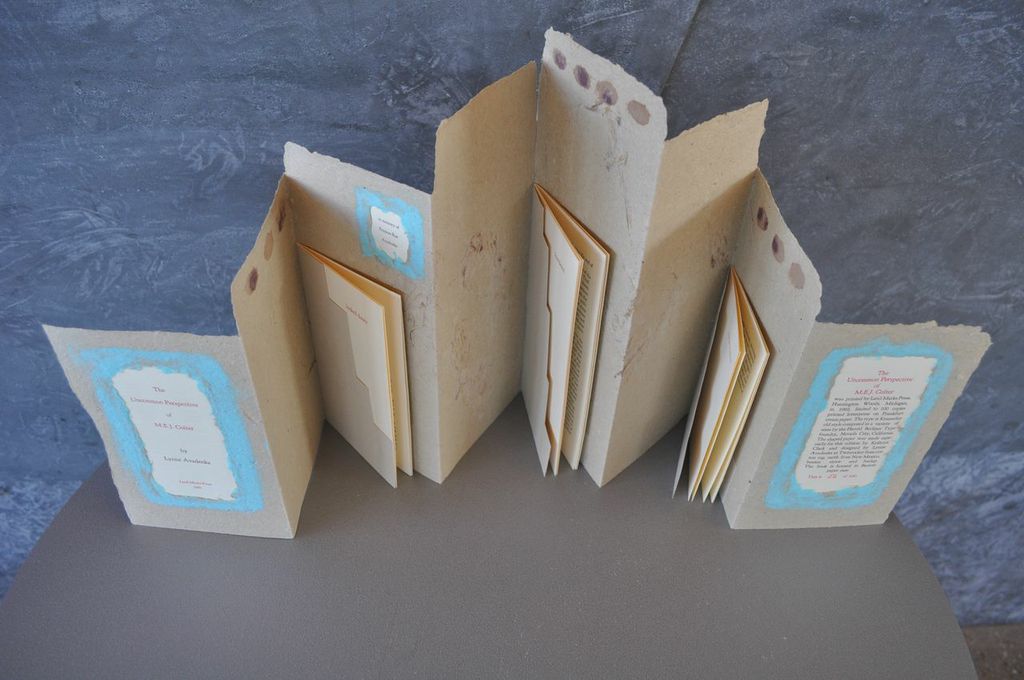
Below are images from The Uncommon Perspective of MEJ Colter (1993) by Lynn Avadenka and Emily Martin’s The Anxiety Alphabet (1998). Both books are from Hoole’s collection. The photographs are courtesy of Hunter Museum’s dropbox.

TheUncommonPerspectiveTheAnxietyAlphabet

William Bradford Huie exhibition on display in Hoole lobby

By: Jessica Lacher-Feldman

Hoole Library is closed through May 16 for inventory. After we reopen next week, on Monday, May 19, please come in to check out our refreshed displays on the second floor of Mary Harmon Bryant.

This exhibition on the life and work of William Bradford Huie is in honor of Huie and his wife, Martha Hunt Robertson Huie. Martha Huie, who helped bring Huie’s collection to UA, died on May 6, 2014. We wish to honor her legacy. 

Huie

William Bradford Huie

William Bradford Huie was an American journalist, editor, publishers, television interviewer, screenwriter, lecturer, and novelist — a man with many facets and many talents.

Huie-Bio

Huie’s early years at The University of Alabama

Born in Hartselle, Alabama on November 13, 1910, Huie was an Eagle Scout and attended Morgan County High School in Hartselle. He came to The University of Alabama in the fall of 1927, and graduated Phi Beta Kappa in 1930, making him the youngest Phi Beta Kappa initiate the university had ever had to date. He started out as a pre-Med but sold his first story when he was still a student. He then went directly to work for a Birmingham newspaper, launching a career as a writer and journalist that spanned five decades. His campus days at The University of Alabama are brilliantly captured in his fictionalized autobiography and first novel, Mud on the Stars (1942).

William Bradford Huie was inducted into the United States Navy on April 24, 1943 as an apprentice seaman. Huie served the Seabees as their chief promoter and historian. It was Huie’s goal to ensure that the contributions of the Seabees to the war effort did not go unnoticed. They may not have been fighting battles with the enemy, but they were building roads, buildings, and infrastructure to keep our soldiers safe.

Huie documented the reminiscences of the Seabees as the aide to Admiral Ben Morrell, founder of the Seabees — the Naval Construction Battalions. After interviews, research, and training, Huie published a series of periodical articles and then his first book on these able-bodied men. Huie was said to be perfect for the job of capturing the Seabee story.

Continue reading

Interview with Ellie Campbell, Division of Special Collections graduate assistant

By: Ellie Campbell, JD and University of Alabama MLIS graduate student

Editor’s Note: This post is part of an ongoing series profiling the graduate students who work in the Division of Special Collections. Haley Thomas was interviewed for Cool@Hoole over two posts back in November 2013. Alex Goolsby contributed her thoughts on her time at Hoole on May 5, 2014.

Hello! Thank you for agreeing to talk to us about your role at in the Division of Special Collections. First off, how did you get started in this field?

EllieCampbell

Ellie Campbell

I first worked in archives as a student worker at the University of Mississippi. I was a graduate student there in Southern Studies, and I got a part-time job working for their Modern Political Archive on the papers of former U.S. Senator James O. Eastland. I was later hired in a full-time position as the Senior Library Assistant for their Modern Political Archives. I’ve also worked in circulation as the Senior Library Assistant at Austin Community College in Austin, Texas, and as the faculty research assistant at the Bounds Law Library at the University of Alabama. I enjoy learning about different academic fields and helping our patrons research across those fields, so I hope to continue to have a career in libraries.

What is your current position here at the Division of Special Collections at UA?

I am the graduate teaching assistant for outreach and exhibitions here at Hoole Library.

What is the most surprising item you’ve seen during your time in the stacks?

Hoole has a couple of collections that surprised me – in particular, their collection of quilts and their collection of comic books. [Editor’s Note: Ellie previously wrote on a Gee’s Bend quilt at Hoole] Before I came to work here, I had not particularly thought of either as an archival collection, but I have come to appreciate how fascinating they are, and how they can be of use to many different researchers.

Continue reading

Confronting the Holocaust: Alabama Responses to Dachau, Part II

By: Allyson Holliday, W.S. Hoole Library Complex Copy-Cataloguer

This post is the second of a two-part series in recognition of Holocaust remembrance week April 27–May 4, 2014. (Better a little late than never!) Part I of this series featured testimony from Joe Sacco and James ChancyThe theme designated by the United States Holocaust Memorial Museum for the 2014 observance is Confronting the Holocaust: American Responses

book cover Denson

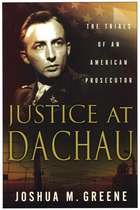
Joshua M. Greene’s Justice at Dachau (2003) Alabama Collection KK73.5.D32 G74 2003

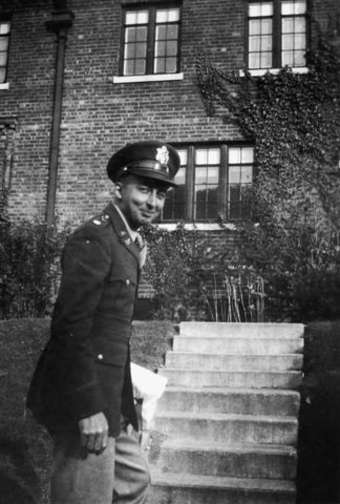
William (Bill) Dowdell Denson (1913-1998) was born in Birmingham, Alabama in 1913. His grandfather was a judge on the Alabama Supreme Court and his father also practiced law. After graduating from West Point, Bill went on to Harvard Law School and joined his father’s firm in Birmingham. By the age of twenty-eight, he had argued over 300 civil cases.

In 1941, Bill returned to West Point to teach law to the cadets. By January 1945, the United States began to prepare for war crimes trials against Nazi Germany. Bill’s reputation for diligence in the courtroom was awarded by an invitation to join the Judge Advocate Generals, the Army’s legal division. In July 1945, after working on smaller cases around Germany, Bill received a commission to serve as the chief prosecutor in “The Dachau Trials,” which would bring administrators of Nazi concentration camps at Dachau, Mauthausen, Buchenwald, and Flossenburg to justice.

Denson at West Point, 1945

Denson at West Point, 1945

This thirty-two year old soft-spoken lawyer from Alabama endured an incredible shift from teaching law at West Point to assembling a team and leading the prosecution of war crimes that courts had never seen before.  His prosecutorial team had no background in war crimes and had to weigh the charges for the atrocious crimes against humanity that were committed by Nazi Germany at these concentration camps.  A makeshift courtroom was set up at Dachau – symbolically important because it was Hitler’s first concentration camp. Bill had seen the suffering and destruction caused by the war in Europe. However, it was not until he began to interview witnesses that the full depth of the horrors became apparent.

Continue reading