Cool@Hoole

Mardi Gras in Mobile

By: Donnelly Walton, Archival Access Coordinator

donnelly1

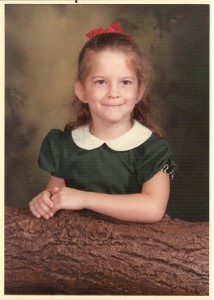
Archival Access Coordinator Donnelly Walton as a child

I grew up in Mobile, Alabama, a town known as the “Mother of the Mystics.” Although Mobile’s Mardi Gras is perhaps not as famous as the celebration in New Orleans, Mobile boasts the oldest Mardi Gras in the country. I grew up feeling pride in my town, and I loved the Carnival season, which ends on Mardi Gras Day (Fat Tuesday). Each year I woke on Ash Wednesday with a certain sadness that it was over.

Began in 1703, Mobile’s Mardi Gras is celebrated for about three weeks. Parades for the general public start around each night at 6:00. But for those involved in the secret societies, Mardi Gras activities last all year with meetings, parties, and other events. In Mobile, these secret societies are called “mystic societies.” In New Orleans, they are known as krewes. Since the 1830s, members of the societies remain anonymous. Not all societies actually parade; those that don are referred to as “parade krewes.” When parading, the men wear elaborate costumes with masks and a hat to protect their identity. The A. S. Williams III Americana Collection at The University of Alabama holds an extremely rare 1847 notebook from the Cowbellion de Rakin Society, the first  such society in Mobile that held parades. The notebook includes the induction ceremony script.

Continue reading

More adventures in 3D printing

We wanted to share an update on our ongoing 3D printing adventures.

Good news

Here’s the smaller part I mentioned before, the one that came out perfectly using PLA at 15% fill on the printer we’ve been working with all along. Here it is from above (left) and on its side (right):

3d-printing-6

Bad news

However, we’re still having cooling/contracting problems with the previously attempted parts (discussed in the last post), seen here an attempt to print at 15% fill:

3d-printing-4

On a positive note, these made it a lot further in the process (all the way past the second bore hole) before things went bad.

Changing another variable

Apparently, the biggest danger with the cooling/contracting issue is that the raft anchoring the piece — which is made of the exact same material — begins to bow, so that it no longer sits flat on the table. As you can image, that makes it pretty easy for the filling process to knock the piece around, and then nothing lines up properly anymore.

Jeremiah conjectured that this bowing effect in the raft was worse here because of the regular, unbroken footprint made by the rectangular bottom of the piece. Compare that to the open, irregular footprint of the piece in the first picture above.

Crisis averted?

So the next time he tried to print one of the pieces, he altered the design (and the STL file) so that the piece lies on its side, which is not rectangular, as you can see here:

3d-printing-5

That seems to have done the trick. Of course, the other possibility is that simply printing one piece at a time, rather than four, decreases the probability of something going haywire.

At any rate, we look forward to sharing pictures of all the pieces — and assembled! — when we get to that point in the process.


Adventures in 3D printing

Our Digitization Manager, Jeremiah, has been working on a local grant to develop a way to capture relief data from otherwise mostly flat materials like embossed paper, wax seals on envelopes, and the surface of coins. The project is currently in the preparation phase, which means Jeremiah is doing some equipment building.

Instead of buying parts and constructing things from scratch, he decided to really begin at square one, designing the main components in Sketchup and exporting them as files that can be used to print the pieces on a 3D printer. That way, when we share the details of the capture technique, we can also share those files.

Unfortunately, trying to make this project scaleable for others means a lot of refinement of the component design and printing process.

The plan

Jeremiah is by no means a novice with 3D printing, but knowing how to create a good design and STL file doesn’t always mean you can predict how the materials and particular printer will behave. So far, he’s now made a couple of attempts at printing a set of roughly rectangular blocks that have two holes running through them, as seen in this image:

bracket_stl_objects

Here are aborted attempts at two of those pieces, being created from the bottom up:

3d-printing-3a

So far, these look like the file visualization representing that point in the process:

bracket_cross_section

The process

One layer at a time, the printer provides walls for the object and fills them with a varying crisscrossing pattern you can see up close here, looking down through the layers from the top:

3d-printing-3b

In the middle (in red in the visualization above) is support material that will be removed from the finished object.

You can also see a pattern layer here on the left, in an earlier printing attempt:

3d-printing-1a

And on the right? That’s what you get when things begin to go wrong with the fill.

The problem

As the material cools, it contracts. If that begins happening as the object is still being created, eventually the crisscrossing fill will not quite line up properly with the object it’s filling in. Below, you can see a good print job that went awry:

3d-printing-2a

The printer hit a snag with the piece on the right (see the bottom of the image) and everything began to go off track, as is evident in this closeup:

3d-printing-2b

The solution

Jeremiah knew there might be some trial-and-error involved in perfecting the design, so he was prepared to make changes that will combat the cooling/shrinking problem.

  • Use a different material: the lighter, shinier blue material in the above photos, PLA (a bioplastic), is less apt to contract than the darker material, ABS (a polymer you’ll know from its use in Lego bricks).
  • Use less of it: reducing the amount of fill crisscrossing the interior of the object (in this case, 20% down to 15%) and thinning its outer walls will lessen the amount of material there to contract.
  • Slow the cooling process: the location of this particular printer makes it hard to keep shielded from the room-temperature air of the surrounding environment, so he’s making another attempt on a different machine, one with an enclosure that will keep the piece from cooling as it is still being formed.

Today, he successfully completed one of the smaller pieces out of PLA at 15% fill. We’ll keep you posted as things progress. In the meantime, we hope someone out there can learn from our adventures in 3D printing.

The Jennie C. Lee Papers at the A.S. Williams III Collection

By: Christa Vogelius, CLIR Postdoctoral Fellow

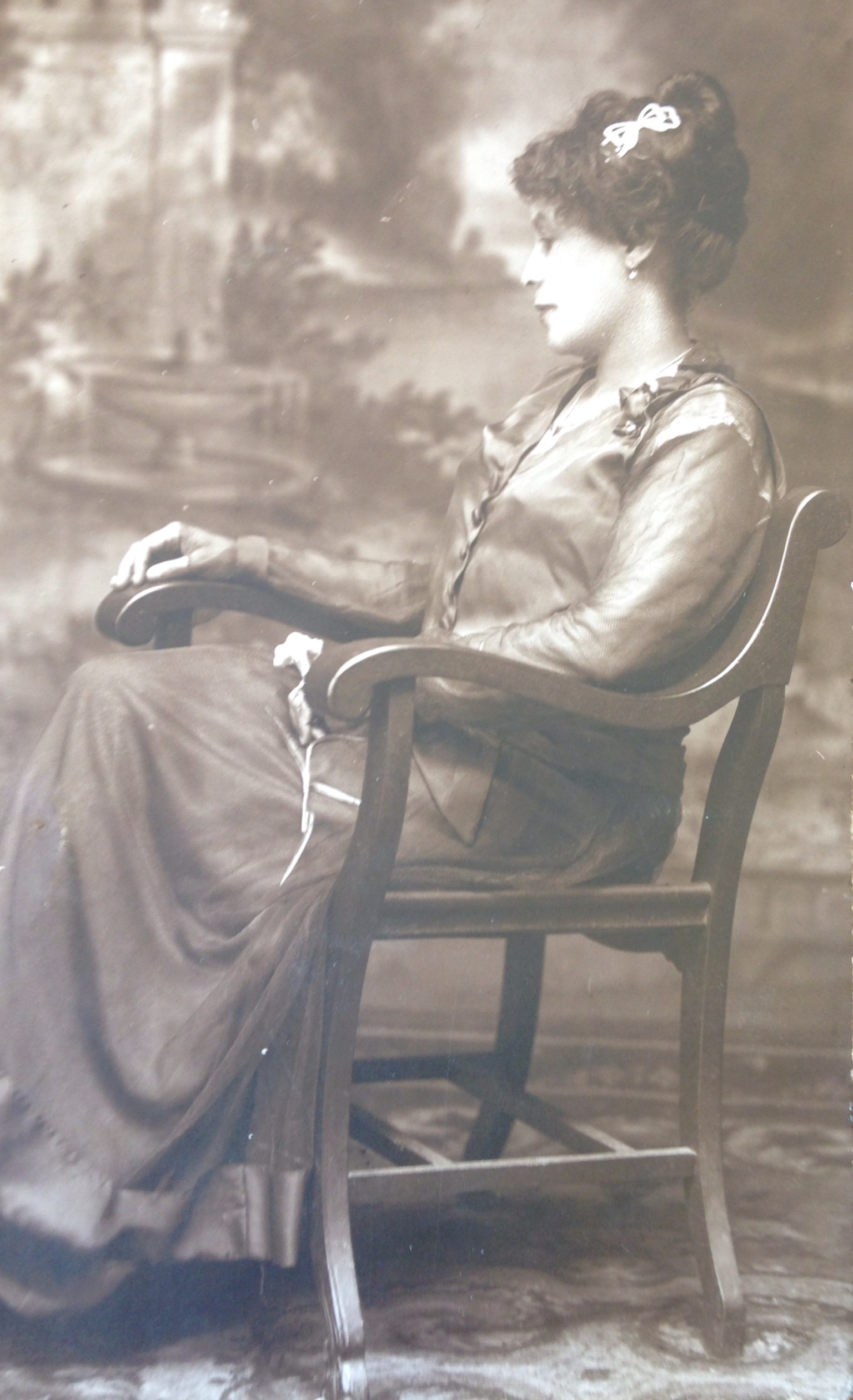
photo3

Jennie C. Lee

Jennie Cheatham Lee, the second choir director at the Tuskegee Institute in Tuskegee, Alabama, served at the Historically Black College during a crucial moment in its history. During her tenure from 1903 to 1928, the Institute transitioned away from the leadership of Booker T. Washington, who had founded the school in 1881 and served as its president until his death in 1915. Tuskegee, like Fisk University where Lee was educated, trained teachers who would serve Southern rural schools and help to shape the musical traditions of the larger African-American community in the early part of the twentieth century.

In spite of Lee’s centrality to this mission, not much is known about her life and work. Her personal archive in the A.S. Williams III Americana Collection includes pages from a personal photographic scrapbook that she kept during her years at Tuskegee. The album’s candid images and ephemera capture the day-to-day life of Tuskegee students, teachers, and administrators—including trips to the beach, hat-making classes, and group photos of the choir and singers— but they are supplemented only by a small number of textual documents, most of them printed programs rather than personal manuscripts. The documents include a telegram and letter from Booker T. Washington; a letter from Julius Rosenwald, the businessman and philanthropist who was a prominent supporter of Tuskegee; and letters on the occasion of Lee’s retirement as choir director. Lee’s own writing is sparse.

Continue reading

Life in the mines: Desegregated labor unions

Normally, we do a post on labor unions for labor day, but it seemed appropriate to bring up the subject for Black History Month, too. African Americans in Birmingham-area mines and industrial plants were often important leaders in efforts to unionize in the 1930s and 1940s. Others were workers brave enough to accept the invitation when it was offered to them, helping contribute to important changes in labor practices in America — for blacks as well as whites.

The Working Lives Oral History Project features many interviews with their recollections about the period, some of which are summarized below.

*

Frank Sykes, a worker at ACIPCO (American Cast Iron Pipe Company), talks about attempts to unionize the plant, including holding a “wildcat” strike:

See, you really can’t have a strike. We just stopped the shop. It took the Army, Navy, and Marines and everybody else, the Air Force and everybody to get us back in that plant. They had representatives out there and meetings. “Now, y’all please get back to work. We’ve got to have this stuff.” Said, “Now, things are going to get better for you, hear.” Well, it’s the government talking, you go ahead on back and take a chance on it. But they get things rolling good, you never do hear no more about it, then you’ve got to walk out again.

Clearly for Sykes, having a labor union would’ve made the situation better.

*

Jesse Grace was an ore miner at Muscoda from the time he was 15 to the time the mine closed in 1954. Until he worked in the mine, he had never heard of the union but was warned by his employers to not have anything to do with “folks come from up North or somewhere or another, wanting to get y’all in a union.” Unionizing began in 1933:

Some had worked in Kentucky and some had worked, you know, in different places up there, in the coal mines. They knew what it was all about. Well, see, we didn’t know nothing about it … But after they told us about it, you know, then we all joined in together and formed a union, ’cause we wanted better working conditions…

Grace goes on to say that unionizing was often a violent enterprise, like a war: Well, see, I’d say that the union and the company, you know, it was just like Vietnam.

*

In the 1930s, William E. Mitch moved to Alabama from Indiana, where his father was an organizer for the United Mine Workers of America (UMWA). Mitch’s father was shocked to find that Alabama had no unions.

Mitch recalls various challenges in trying to establish labor unions in the South, including the inaccessibility of rural employees, threats of reprisal from employers and being required to hold meetings in secret. He added that local governments were also often anti-union because they were afraid that unions would run industry off.

Race, however, was less of a factor than many might suppose: …the coal miners are unique. The race was not a big item. They worked side by side… Including in the union, in companies like U.S. Steel (then Tennessee Coal, Iron and Railroad Company [TCI]) which employed both races. Unions were also important in primarily black companies like Woodward Iron Company and Alabama Byproducts Corporation. Mitch says, I don’t believe without the cooperation of the blacks, organization on a broad basis would ever have been possible.

*

Morris Benson, an employee at TCI’s Ensley plant, helped organize fellow steelworkers in 1936 after learning about the union from an organizer:

When he got to explaining it to me, I figured if everybody joined, they couldn’t fire all of us. … I tried to get everybody to join. In fact, everybody in that department joined, and you can’t fire a whole lot of men when they take care of big machines.

Firing people for joining the United Steelworkers (USW) didn’t stop it: Every time they would fire a man, it make the fire burn more and more. Luckily, Benson reports that there wasn’t much violence at his plant.

After the coming of organizer John L. Lewis, Benson says that things improved for miners and, by extension, for all unionized workers in the area. Segregation laws proved a bit challenging — there were separate toilets and drinking fountains — but the workers themselves at least decided to stop sitting on separate sides of the room.

*

Robert Washington talks about forming a local of the Brick and Clay Workers (BCW) union, although it disbanded so they could join the USW in 1942. He describes an incident with a group of white inspectors who didn’t want to join the USW, who instead formed a new BCW local. This caused problems:

We tried to get them to let their contract expire at the same time ours expired, so we could, if they would strike, then we would both be together. … They didn’t, they couldn’t come to an agreement on the– their contract. So they struck. We stayed out two weeks with them, and finally they, we, couldn’t get food stamps. We couldn’t get any relief from our union, because we had broken our contract by not coming to work.

According to Washington, the USW workers then had to go back to work, and about that time, the Ku Klux Klan came in to picket with the BCW, and things went from bad to worse.

*

Constance Price talks about her father, Walter W. Jones, who helped organize the UMWA in Birmingham, having moved there at the behest of John L. Lewis. She recalls that her father’s life was often in jeopardy because of his work organizing the union, but she says the whites usually looked after him, helped keep him safe. However, Price says she was always aware that her father was in danger:

Because he tried to hide it from my mother, my mother was one who, she was a small woman. And, she used to sit up and cry and all, and finally she’d tell us, say, “Your daddy hasn’t come home yet.” … We didn’t have sense enough to know the real, I guess seriousness of it, be we knew it was something bad because mama was crying.

*

W. J. Ridgeway worked in the first mine in the state to have a union, in the 1920s. It was run by a man from Pennsylvania: He was no southerner; he thought that things down here was about like they was in Pennsylvania. After the operator signed a contract with the union, assuming he had to, the mine went out of business: …after they got the union broke there, well, it wasn’t just broke, he had to shut down. ‘Cause he couldn’t operate, he wasn’t getting the money to operate the mine.

But while it lasted, the union at that mine was unusual for the time, with blacks and whites meeting together: Now, they didn’t meet that way nowheres else that I know of, in the state… we all, white and all, met together in the same union hall.

Ridgeway recalls how the state militia tried to break the union by bringing in farmers and other men to work, telling them they could make a lot of money. They were guarded and separated from the unionized workers at first, but sometimes the unionized workers would find a way to win them over anyway.

*

Curtis Maggard recalls the organization of the Steelworkers’ Union in Birmingham at the TCI plant in Ensley. He recalls being laid off for up to a week sometimes because he was trying to get people to join the union. He says people were scared to join for that very reason, so the union took two years to get off the ground. He recalls that blacks and whites were both in the union. The union was good for blacks especially:

It opened the door for me. I would not have had the privilege had it not been for the union getting jobs I would not have gotten. ‘Cause in the union, you go step by step, and the next job come to the oldest man that is entitled to it. … When I quit I had the highest paying job that they had.

*

Click on the links above to listen to any of these interviews in full, and to read along in the transcripts. Or check out the whole collection of audio + transcripts, with extensive summaries for each of the 72 interviews, through this link.


The Agrarians

By: Ellie Campbell, JD and University of Alabama MLIS graduate student

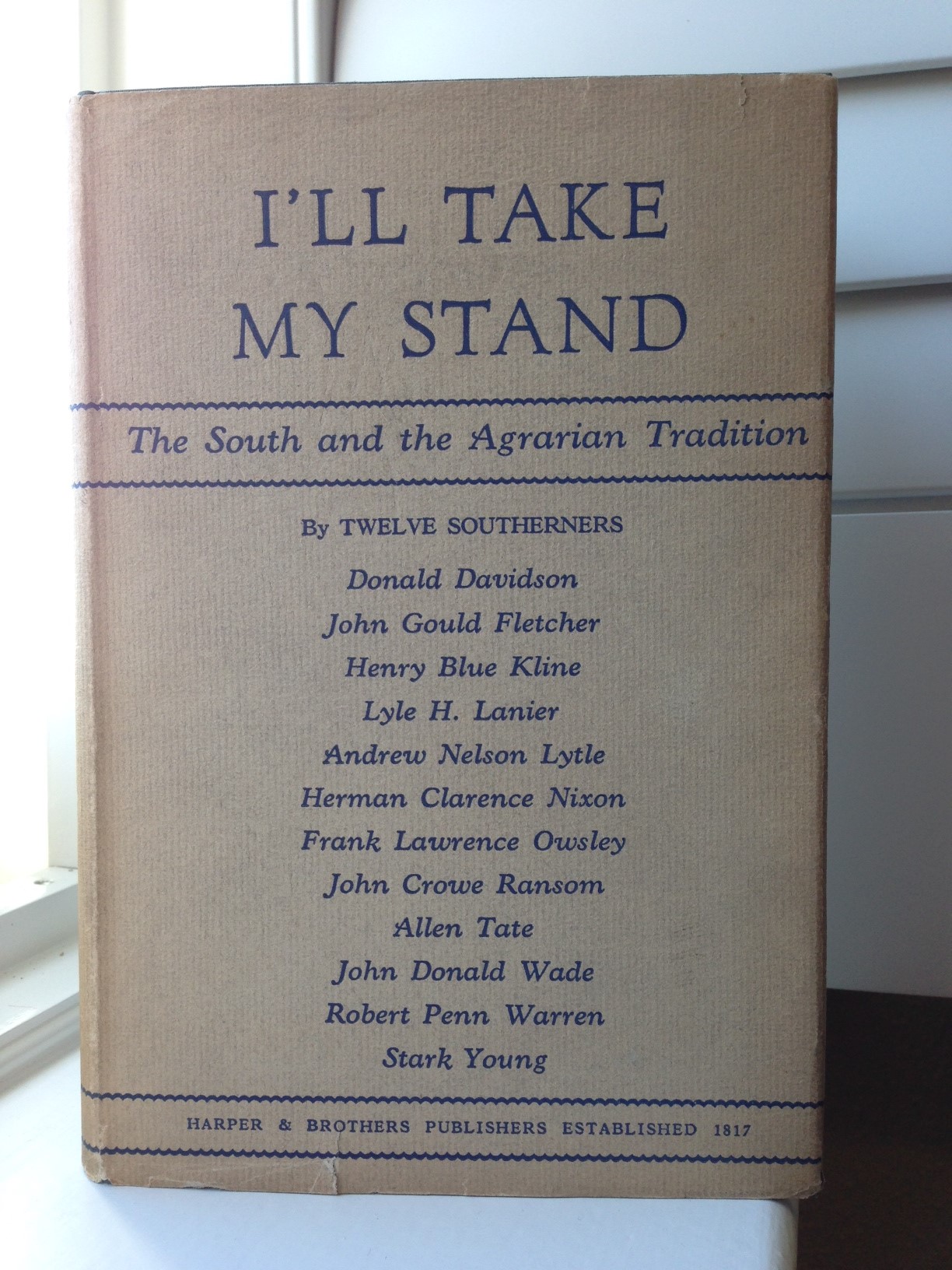
TakeStand

I’ll Take My Stand (1930) Williams Collection F215 .I29

In 1930, a group of self-designated “Twelve Southerners” published I’ll Take My Stand: the South and the Agrarian Tradition, a book of twelve essays defending what they perceived as Southern virtue against the forces of Northern industrialization. The roots of this manifesto began with a series of small, informal gatherings of a handful of Vanderbilt University students, professors, and community members in 1915 in Nashville Tennessee. They met on campus and at various members’ homes to discuss philosophy. Several participated in World War I, and after some of them returned to campus to finish their education, the discussions turned to poetry. Influenced by some of the European modernists like T.S. Eliot, they founded a literary journal, The Fugitive, in 1922. The journal lasted three years, and only produced four volumes, before ending due to financial difficulties and the lack of an editor.

Over the course of the 1920s, some of the veteran Fugitives turned their attentions to Southern culture and history, spurred by the critical writings of Baltimore journalist and editor H.L. Mencken, as well as Chapel Hill sociologist Howard Odum. In particular, Mencken’s scathing coverage of the 1925 Scopes “monkey trial,” in which high school science teacher John T. Scopes was prosecuted for teaching evolution in Dayton, Tennessee, ridiculed the people of the state and the region as “gaping primates,” “yokels of the hills,” and “fundamentalist bigots.” Though Odum’s work was less abrasive than Mencken’s, they shared both a friendship and a highly critical view of the South. Mencken and Odum both contributed to developing a body of scholars and critics to fight what Mencken deemed “the Sahara of the Bozart,” his phrase for the emptiness of the Southern cultural landscape. Mencken influenced a wide variety of writers, both black and white, including James Branch Cabell, Ellen Glasgow, Thomas Wolfe, Langston Hughes, James Weldon Johnson, and Richard Wright. Meanwhile, Odum founded the department of sociology at the University of North Carolina in Chapel Hill, and contributed to the field both through his own scholarship and by recruiting talented professors and students who work also critiqued the South and its culture.

Continue reading

Interview with Stephen Rowe, Part III

By: Christa Vogelius, CLIR Postdoctoral Fellow

Editor’s Note: This is the third of three posts serializing an interview between Christa Vogelius, the CLIR Postdoctoral Fellow in the A.S. Williams collection, and Stephen Rowe, author of From a Love of History: The A.S. Williams III Americana Collection at the University of Alabama. Read the first post and the second post of this series.

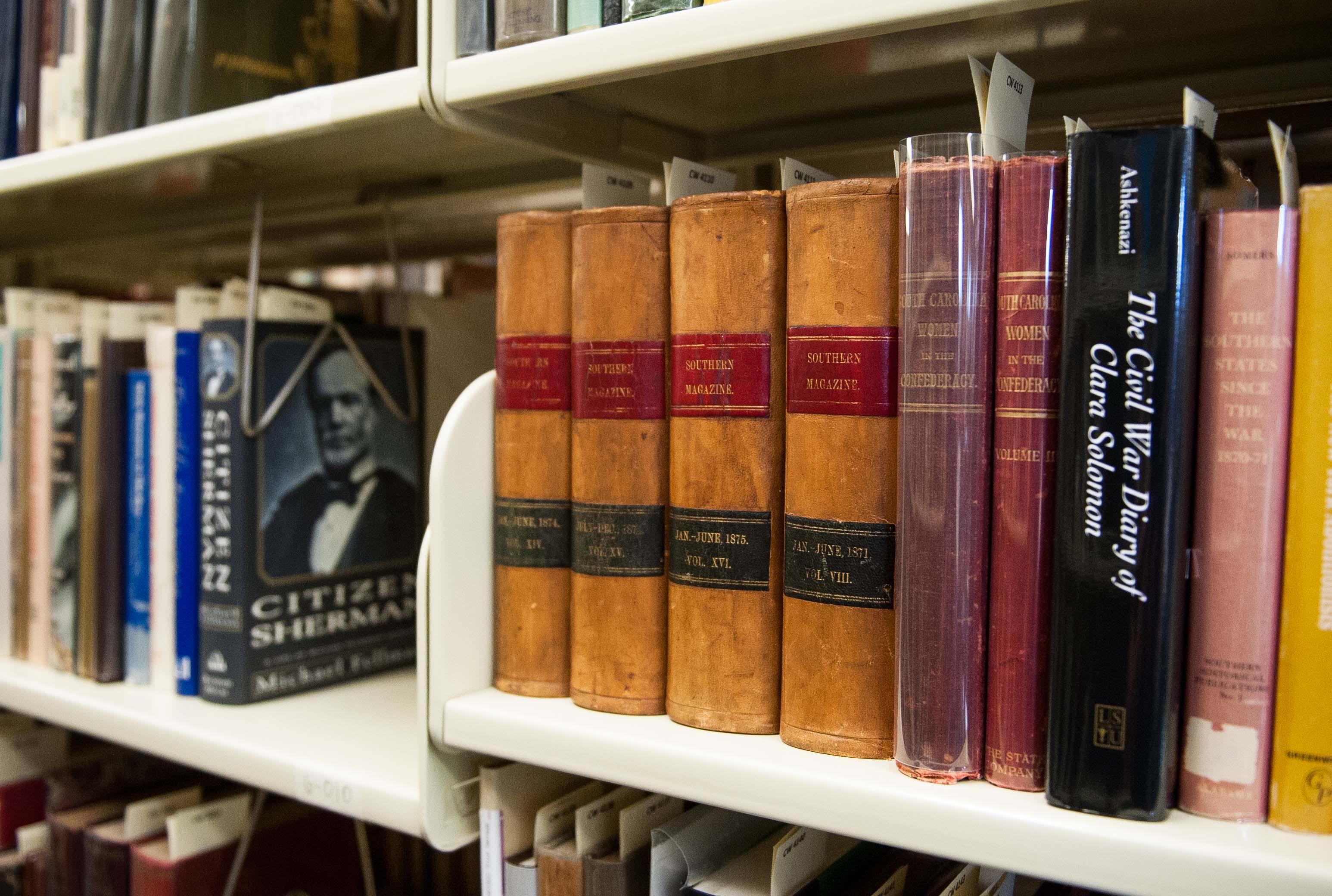
130909_MNB_Williams_Collection

Books in the Williams Collection stacks

Now, with the bulk of the collection that he helped to shape residing at the University of Alabama, and From a Love of History released, Rowe is busy at work on new projects. For one, he is slowly rebuilding the collection at the Eufaula Athenaeum based on refocused priorities. When the collection moved to Tuscaloosa, Williams held back a core group of about 200 scholarly and modern editions of books on the American Revolution, as well as any materials related to Eufaula and Barbour County. In acquiring new materials, Rowe is focused primarily on these areas and relevant reference texts. He pursues materials that were priorities in the past—such as manuscripts, maps, and Southern photography—strictly on an “ad hoc basis.” This smaller collection is being computer catalogued, and will, Rowe suspects, also likely end up as a part of the Williams Collection in Tuscaloosa. Rowe doesn’t see any imminent end to his eight-year tenure at the Athenaeum: “As long as Steve Williams is active, he’s going to keep collecting, and as long as he’s collecting, he’s going to want to keep the Athenaeum open, and as long as he keeps the Athenaeum open, hopefully he will want me to be there.”

In addition to Rowe’s duties in Eufaula, side projects that the heyday of collecting did not allow for have once again begun to crop up.  He is on the road three to four times a year to acquire materials for Williams and the other collectors that he can increasingly devote attention to now that the development of the Athenaeum has slowed. Rowe is also in the final stages of completing another book manuscript that he hopes to be able to submit to a university press within the next few months. The book, a historiographic study of a Civil War battle, attempts to untangle the web of differing accounts of this event that have prevented scholars from a thorough investigation in the past, and looks in particular at how the generals involved “wrote diametrically opposed accounts of everything that happened.” From curation to collection to scholarship, life in small-town Alabama is anything but sleepy for Rowe: “I must say, it keeps me busy…I have no particular desire to move on.”

Interview with Stephen Rowe, Part II

By: Christa Vogelius, CLIR Postdoctoral Fellow

Editor’s Note: This is the second of three posts serializing an interview between Christa Vogelius, the CLIR Postdoctoral Fellow in the A.S. Williams collection, and Stephen Rowe, author of From a Love of History: The A.S. Williams III Americana Collection at the University of Alabama. Read the first post here

130909_MNB_Williams_Collection

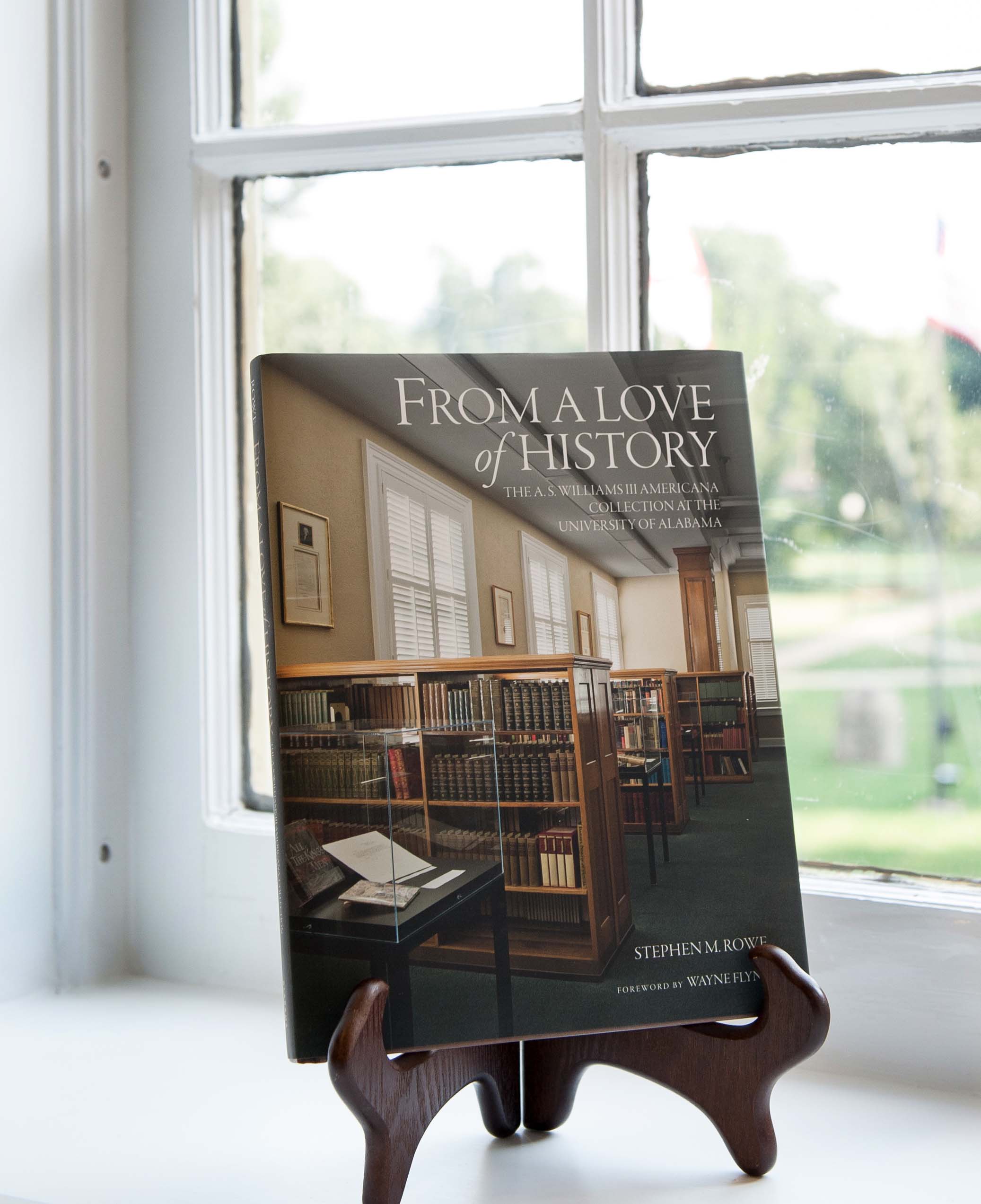
From a Love of History

In the spring and summer of 2010, when the University of Alabama Libraries acquired the bulk of the collection at Eufaula in a joint purchase and gift, discussions to create a guide to what would become known as the A.S. Williams III Americana Collection first began. Dean of Libraries Louis Pitschmann approached Rowe about the possibility of authoring the guide during the collection’s move from Eufaula to Tuscaloosa at the end of June. Rowe expressed interest in the project, and in the fall of 2011, Dean Pitschmann and Rowe began discussing the timeline and layout of From a Love of History in earnest. By early November they had a proposal for the press with an outline of the book’s ten chapters. Once the proposal was accepted at the end of November, Rowe and the book’s photographer, Robin McDonald, met for what Rowe describes as “an intense week” in early December. Working with Nancy Dupree, Curator of the A.S. Williams III Americana Collection, Rowe picked out items for McDonald to arrange and photograph—books, images, manuscripts—and the result was over 100 images a day. The richly-illustrated From a Love of History would use over half of these 550 images in its final form.

The composition of the book followed a tight deadline that reveals Rowe’s personal dedication to the project. He began what he calls the “winnowing process” for the images and the composition of the accompanying text in January. In choosing and grouping images, he consulted with McDonald, who also arranged the layout for the book. The two already had a strong working relationship from their collaboration in 2010 on an article on the Eufaula Athenaeum Collection for Alabama Heritage, a journal for which McDonald does layout and photography. The images and the text of the book as a whole were completed within four months: they were in the hands of the press by May 10. Looking back at the experience, Rowe considers the book a labor of love.
Continue reading

Interview with Stephen Rowe, author of From a Love of History

By: Christa Vogelius, CLIR Postdoctoral Fellow

Editor’s Note: This is the first of three posts serializing an interview between Christa Vogelius, the CLIR Postdoctoral Fellow in the A.S. Williams collection, and Stephen Rowe, author of From a Love of History: The A.S. Williams III Americana Collection at the University of Alabama

130909_MNB_Williams_Collection

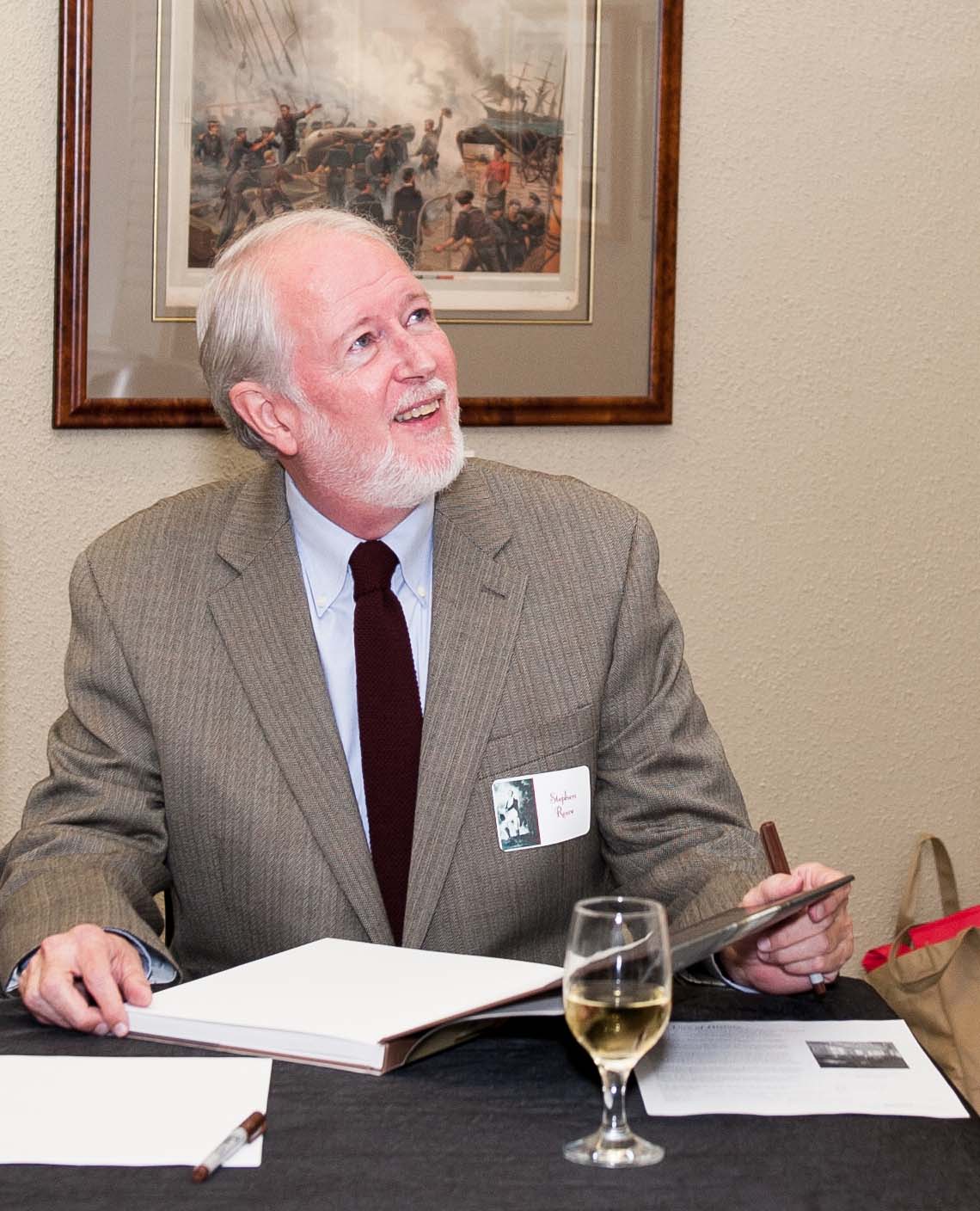
Stephen Rowe signing his book, From a Love of History

A little over two years after the public opening of the A.S. Williams III Collection on the third floor of Gorgas Library, the collection welcomes a broader audience with the publication of From a Love of History: The A.S. Williams III Americana Collection at the University of Alabama, by archivist and rare books dealer Stephen Rowe. From a Love of History—characterized by Rowe as a “semi-scholarly coffee-table book”— was released by the University of Alabama Press in September, and functions both as a richly-photographed guide through some of the highlights of the collection and as a tribute to A.S. (Steve) Williams, the man whose passion for history and scholarly generosity have made the collection possible. I had the opportunity earlier this fall to sit down with Rowe, who is also the longtime curator of Williams’ ongoing collection in Eufaula, Alabama. We talked about his years as a dealer and archivist for Williams, the writing of the book, and his plans for the future.

Rowe was born and raised in Richmond, Virginia, where he became interested in American history and rare books from an early age. Through his junior high school teacher, a “Real Daughter” (the daughter of a Confederate veteran), he gleaned stories of army life that provided a sense of the living history evident throughout Richmond. On boyhood trips to an antiquarian bookshop with his father, Rowe would often receive books about the Civil War, which were, as he says, “the genesis of my collection,” a modest library begun in high school and college.

Continue reading

Papers of H. D. Clayton Sr., General, statesman, and UA President

Over the last few months, we’ve been digitizing the papers of Henry De Lamar Clayton, Sr. As our student worker Ellyn and I see the final box of materials in sight, it seems like a good time to give an overview of what you’ll find if you want to dig in to the collection. Click on any of the thumbnail images below to see them in detail.

Born in Georgia in 1827, Clayton attended college in Virginia and eventually moved to Alabama, learning about law while working under future Alabama Governor John Gill Shorter. From 1857-1861, he served in the Alabama Legislature. Go to the finding aid and open up the series Family and Personal Data or Emory and Henry Colleges to see personal correspondence, newsclippings, and other documents about this period.


When war came, he distinguished himself, commanding the First Alabama Regiment, which was reorganized as the Ninth Alabama Volunteers. After being wounded in the battle of Murfreesboro, he was promoted from colonel to brigadier general. His brigade fought at Chickamauga and in the Atlanta campaign, among other encounters. Eventually, he was made major general, commanding a division that fought mostly in campaigns in Georgia and Tennessee. Go to the finding aid and open up the series Generalship to see papers relating to his Civil War service, including personal correspondence and military papers like muster rolls and reports to his superiors.

After the war, Clayton was a planter, then he was elected Judge of the Circuit Court in 1866, a position he lost two years later because of Reconstruction laws. He was a lawyer again until those laws allowed for his reelection, and he held his Judgeship for 20 years. Though he failed in a bid for Alabama Governor, he was elected the President of The University of Alabama in 1886. Three years later, he died in Tuscaloosa. For information on this period, see the series Legal Practice and JudgeshipPolitics, and University of Alabama Presidency in the  finding aid.

In every collection of personal papers, there is material that doesn’t quite seem to belong but is interesting nonetheless. Among the Miscellaneous and Artifacts series are an assortment of random items, some of which belonged to his wife or sons. The most interesting item is something we can’t formally digitize, although I did take a picture of it. A bayonet from WWI, perhaps belonging to his son Bertram, who died in the war.

You never know what else you  might find in the papers of this fascinating figure!