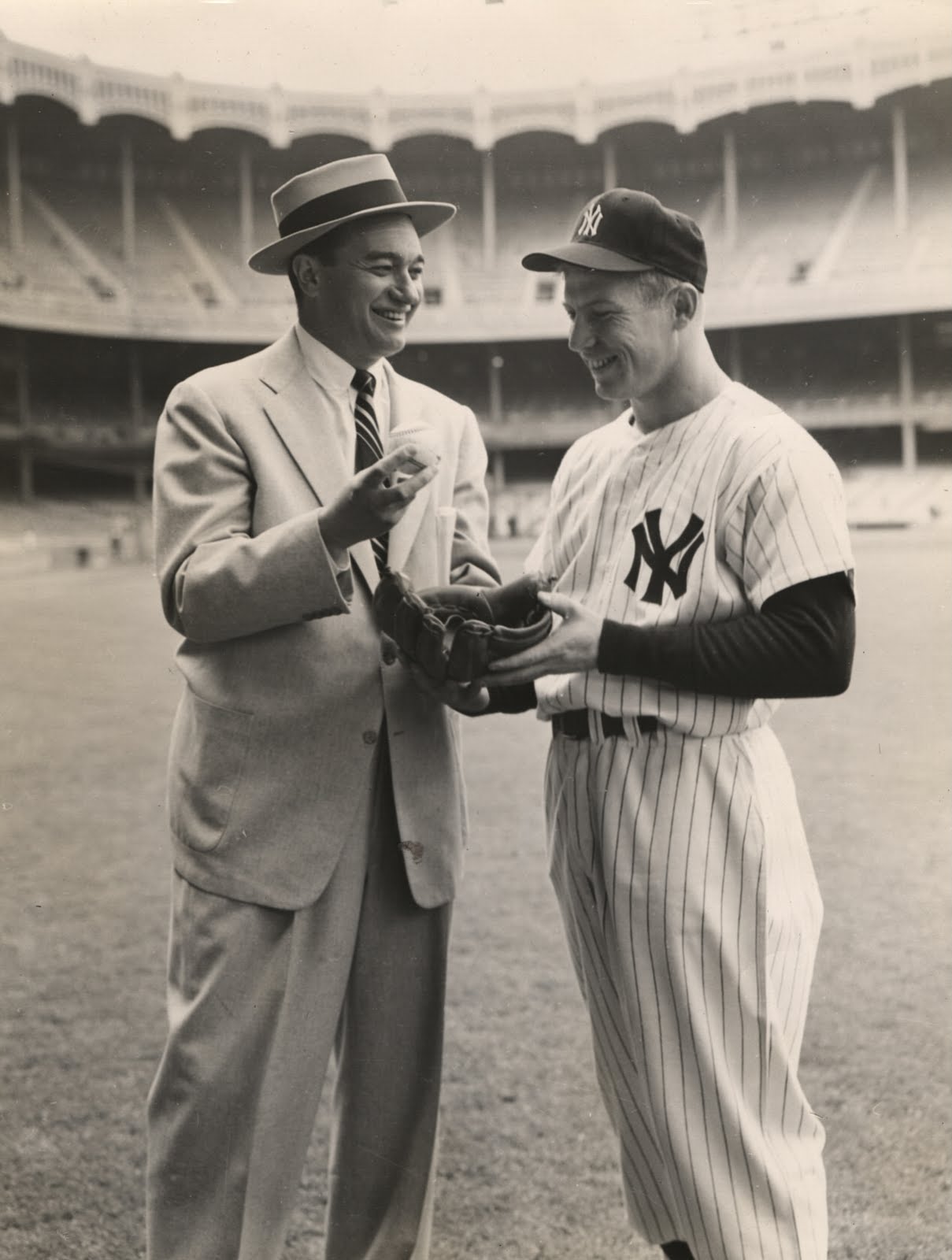
Mel Allen and Micky Mantle, from the Mel Allen Collection, W.S. Hoole Special Collections Library, The University of Alabama.
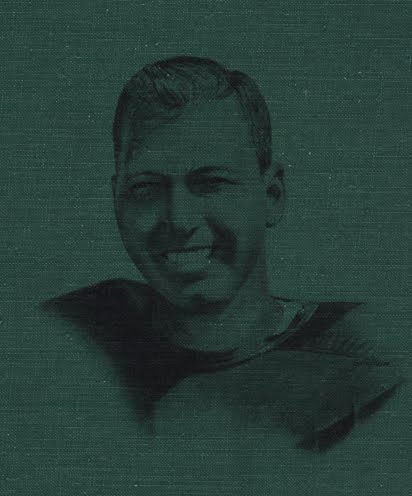 Detail from Quarterbacking by Bart Starr with Mark Cox (Prentice-Hall, 1967) from the Hoole Alabama Collection
The Green Bay Packers will make their fifth Super Bowl appearance this Sunday, and what better way to celebrate is to talk a little bit about someone who who knows a thing or two about winning Super Bowls for the Packers.
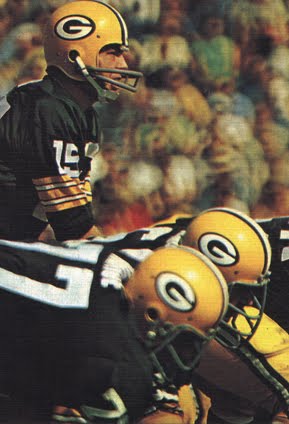
Bart Starr donned a #15 green and gold jersey to play quarterback for the Packers from 1956 to 1971. Starr’s first season as starting quarterback was 1959, Vince Lombardi’s first year as coach of the Packers. With Starr at quarterback, the Packers won five NFL Championships in seven seasons. Starr led Green Bay to defeat the Kansas City Chiefs and the Oakland Raiders in the first and second Super Bowls, respectively. And Starr was named Most Valuable Player of both of these games (Guess who was MVP of Superbowl III — Fellow University of Alabama player and graduate, Joe Namath!). After Starr concluded his playing career, he remained with the Packers, first as an assistant coach in 1972 then as head coach from 1975 to 1983. Starr appeared in the Pro Bowl four times, was inducted into the Alabama Sports Hall of Fame in 1976 and the Pro Football Hall of Fame in 1977, and has a National Football League award named in his honor, given annually to an NFL player of outstanding character. He is one of five Green Bay Packers alumni to have his number retired.
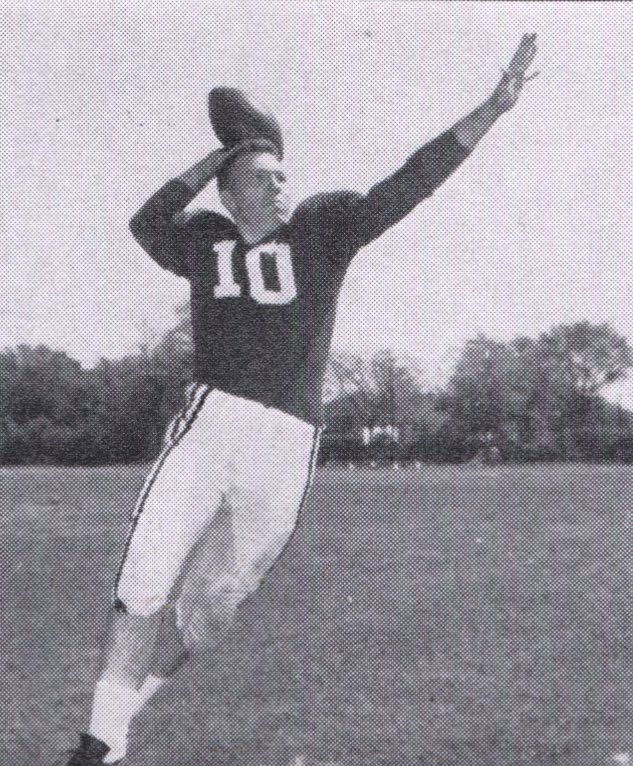 Bart Starr, from the 1956 Corolla in his uniform as Quarterback for the Crimson Tide.
Bryan Bartlett Starr was born in Montgomery, Alabama on January 9, 1934. Prior to his professional career with the Packers, Starr played football at Sidney Lanier High School in Montgomery under head coach Bill Moseley. As a senior quarterback and punter, he earned all-state honors. Under both “Red” Drew and J.B. Whitworth, Starr served as quarterback for the Alabama Crimson Tide.
Starr is featured in the book, Crimson, sharing that The University of Alabama is one that “has always offered uniquely strong foundations for athletic achievement, as well as academic excellence.” Of his time here he says in Crimson, “It was at The University of Alabama where I was privileged to meet so many people who have left their footprints on my life, and where still today, I gain strength and feel a strong sense of pride for what my alma mater has done for me and for so many others who came before me, after me , and for those still to come.” Starr is a successful businessman, inspired public speaker, and tireless charitable work, including the Rawhide Boys Ranch, which was established by Starr in 1965 to work with at risk youth and their families.
On Superbowl Sunday, Alabama fans can lend their support to both the Packers and the Steelers, as we have two former University of Alabama football players competing on opposite sides of the football field in Super Bowl XLV this Sunday. Charlie Peprah now plays for the Green Bay Packers and Anthony Madison plays for the Pittsburgh Steelers. The cheering will be extra loud at Hoole’s own Allyson Holliday’s house — a native of Green Bay, shown here with Bart Starr as a little girl, with her dad and sister, but we should all give a cheer for Bart Starr, Alabama’s very own Super(bowl) Starr!
 Hoole Library’s own Allyson Holiday, being held by Bart Starr (on the left). Her dad (in pre-cheesehead Packers gear) and sister are on the right.
Thanks to Jamie Burke for her Bart Starr Super-sleuthing and scanning!

Few Alabama authors have written more, and have produced so much variety as Wayne Greenhaw. He has written novels, plays, works of non-fiction, and several hundred articles in regional, national, and international publications.
Wayne will be at the Hoole Library on Wednesday, February 2, 2011 at 5 pm (talk to begin at 5:30 pm) to discuss his new book, Fighting the Devil in Dixie: How Civil Rights Activists took on the Ku Klux Klan in Alabama (Lawrence Hill Books/Chicago Review Press, 2011)
Greenhaw is the 2006 recipient of the Harper Lee Award for Alabama’s Distinguished Writer, given annually by the Alabama Writers’ Forum and Alabama Southern Community College at Monroeville’s Alabama Writers’ Symposium. In 2005, Greenhaw was recipient of the ninth Clarence Cason Award for Nonfiction, given annually by the University of Alabama’s College of Communication, joining such distinguished writers as Gay Talese, Rick Bragg, Diane McWhorter, and Howell Raines. Greenhaw’s short story, “The Old Guy,” won first place in the Hackney Literary Awards at Birmingham Southern College’s 2007 Writing Today conference.
After graduating from high school in 1958, Greenhaw traveled to Mexico from Tuscaloosa, Alabama, by four different trains. In the central Mexican mountain Spanish colonial town of San Miguel de Allende he attended Instituto Allende. He returned for the next three summers, studying at the writing center under Ashmead Scott.
At The University of Alabama he studied under the legendary Hudson Strode. In 1967, after working as a reporter for the Alabama Journal, Montgomery’s afternoon newspaper, his first novel, the Golfer, was published by J.B. Lippincott Company.
After his first nonfiction book, The Making of a Hero: Lt. William L. Calley and the My Lai Massacre, was published in 1971, he was awarded a Nieman Fellowship at Harvard.
Throughout his years as a journalist in Alabama, where he was a stringer for the New York Times, Time magazine, and others, Greenhaw met and nourished friendships and relationships with Dr. Martin Luther King, Governor George C. Wallace, numerous political personalities and Southern cultural icons. Greenhaw was a protegé and mentee of fellow Alabama author and University of Alabama graduate, William Bradford Huie. As part of the 100th anniversary celebration of the birth of William Bradford Huie, Greenhaw, along with Huie’s widow Martha, spoke at the opening of the exhibition on November 10, 2010.
Wayne Greenhaw’s talk on his new book, Fighting the Devil in Dixie will begin at 5:30 pm, but doors will open at 5 pm. Books will be on sale for the event, and a reception will follow. This event is free and open to the public. The event is co-sponsored by University Libraries, the Alabama Center for the Book, the Summersell Center for the Study of the South, and the WBH@100 Collaborative Group. As part of the event, Wayne Greenhaw will present the Hoole Library with some personal copies of his works to be included in the Alabama Collection. In addition, we have a very special guest to introduce Mr. Greenhaw!
About Fighting the Devil in Dixie:
“ Shortly after the success of the Montgomery Bus Boycott, the Ku Klux Klan—determined to keep segregation as the way of life in Alabama—staged a resurgence, and the strong-armed leadership of Governor George C. Wallace, who defied the new civil rights laws, empowered the Klan’s most violent members.
As Wallace’s power grew, however, blacks began fighting back in the courthouses and schoolhouses, as did young Southern lawyers like Charles “Chuck” Morgan, who became the ACLU’s Southern director; Morris Dees, who cofounded the Southern Poverty Law Center; and Bill Baxley, Alabama attorney general, who successfully prosecuted the bomber of Birmingham’s Sixteenth Street Baptist Church and legally halted some of Wallace’s agencies designed to slow down integration. Fighting the Devil in Dixie is the first book to tell this story in full, from the Klan’s kidnappings, bombings, and murders of the 1950s to Wallace’s run for a fourth term as governor in the early 1980s, asking forgiveness and winning with the black vote.”
 The Raven by Edgar Allan Poe
Ah, distinctly I remember it was in the bleak December,
And each separate dying ember wrought its ghost upon the floor.
Eagerly I wished the morrow; – vainly I had sought to borrow
From my books surcease of sorrow – sorrow for the lost Lenore –
For the rare and radiant maiden whom the angels name Lenore –
Nameless here for evermore.
And the silken sad uncertain rustling of each purple curtain
Thrilled me – filled me with fantastic terrors never felt before;
So that now, to still the beating of my heart, I stood repeating,
“‘Tis some visitor entreating entrance at my chamber door –
Some late visitor entreating entrance at my chamber door; –
This it is, and nothing more.”
Presently my soul grew stronger; hesitating then no longer,
“Sir,” said I, “or Madam, truly your forgiveness I implore;
But the fact is I was napping, and so gently you came rapping,
And so faintly you came tapping, tapping at my chamber door,
That I scarce was sure I heard you”- here I opened wide the door; –
Darkness there, and nothing more.
Deep into that darkness peering, long I stood there wondering, fearing,
Doubting, dreaming dreams no mortals ever dared to dream before;
But the silence was unbroken, and the stillness gave no token,
And the only word there spoken was the whispered word, “Lenore?”
This I whispered, and an echo murmured back the word, “Lenore!” –
Merely this, and nothing more.
Back into the chamber turning, all my soul within me burning,
Soon again I heard a tapping somewhat louder than before.
“Surely,” said I, “surely that is something at my window lattice:
Let me see, then, what thereat is, and this mystery explore –
Let my heart be still a moment and this mystery explore; –
‘Tis the wind and nothing more.”
Open here I flung the shutter, when, with many a flirt and flutter,
In there stepped a stately raven of the saintly days of yore;
Not the least obeisance made he; not a minute stopped or stayed he;
But, with mien of lord or lady, perched above my chamber door –
Perched upon a bust of Pallas just above my chamber door –
Perched, and sat, and nothing more.
Then this ebony bird beguiling my sad fancy into smiling,
By the grave and stern decorum of the countenance it wore.
“Though thy crest be shorn and shaven, thou,” I said, “art sure no craven,
Ghastly grim and ancient raven wandering from the Nightly shore –
Tell me what thy lordly name is on the Night’s Plutonian shore!”
Quoth the Raven, “Nevermore.”
Much I marvelled this ungainly fowl to hear discourse so plainly,
Though its answer little meaning- little relevancy bore;
For we cannot help agreeing that no living human being
Ever yet was blest with seeing bird above his chamber door –
Bird or beast upon the sculptured bust above his chamber door,
With such name as “Nevermore.”
But the raven, sitting lonely on the placid bust, spoke only
That one word, as if his soul in that one word he did outpour.
Nothing further then he uttered- not a feather then he fluttered –
Till I scarcely more than muttered, “other friends have flown before –
On the morrow he will leave me, as my hopes have flown before.”
Then the bird said, “Nevermore.”
Startled at the stillness broken by reply so aptly spoken,
“Doubtless,” said I, “what it utters is its only stock and store,
Caught from some unhappy master whom unmerciful Disaster
Followed fast and followed faster till his songs one burden bore –
Till the dirges of his Hope that melancholy burden bore
Of ‘Never – nevermore’.”
But the Raven still beguiling all my fancy into smiling,
Straight I wheeled a cushioned seat in front of bird, and bust and door;
Then upon the velvet sinking, I betook myself to linking
Fancy unto fancy, thinking what this ominous bird of yore –
What this grim, ungainly, ghastly, gaunt and ominous bird of yore
Meant in croaking “Nevermore.”
This I sat engaged in guessing, but no syllable expressing
To the fowl whose fiery eyes now burned into my bosom’s core;
This and more I sat divining, with my head at ease reclining
On the cushion’s velvet lining that the lamplight gloated o’er,
But whose velvet violet lining with the lamplight gloating o’er,
She shall press, ah, nevermore!
Then methought the air grew denser, perfumed from an unseen censer
Swung by Seraphim whose footfalls tinkled on the tufted floor.
“Wretch,” I cried, “thy God hath lent thee – by these angels he hath sent thee
Respite – respite and nepenthe, from thy memories of Lenore:
Quaff, oh quaff this kind nepenthe and forget this lost Lenore!”
Quoth the Raven, “Nevermore.”
“Prophet!” said I, “thing of evil! – prophet still, if bird or devil! –
Whether Tempter sent, or whether tempest tossed thee here ashore,
Desolate yet all undaunted, on this desert land enchanted –
On this home by horror haunted- tell me truly, I implore –
Is there – is there balm in Gilead? – tell me – tell me, I implore!”
Quoth the Raven, “Nevermore.”
“Prophet!” said I, “thing of evil – prophet still, if bird or devil!
By that Heaven that bends above us – by that God we both adore –
Tell this soul with sorrow laden if, within the distant Aidenn,
It shall clasp a sainted maiden whom the angels name Lenore –
Clasp a rare and radiant maiden whom the angels name Lenore.”
Quoth the Raven, “Nevermore.”
“Be that word our sign in parting, bird or fiend,” I shrieked, upstarting –
“Get thee back into the tempest and the Night’s Plutonian shore!
Leave no black plume as a token of that lie thy soul hath spoken!
Leave my loneliness unbroken!- quit the bust above my door!
Take thy beak from out my heart, and take thy form from off my door!”
Quoth the Raven, “Nevermore.”
And the Raven, never flitting, still is sitting, still is sitting
On the pallid bust of Pallas just above my chamber door;
And his eyes have all the seeming of a demon’s that is dreaming,
And the lamplight o’er him streaming throws his shadow on the floor;
And my soul from out that shadow that lies floating on the floor
Shall be lifted – nevermore!

Our amazing volunteer manuscript processor James shared this cool little item he came across while proce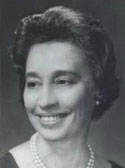 ssing the Mabel Smythe-Haith papers. Everyone loves a big fancy decree, deed, or diploma — something with seals and stamps and stuff. Pretty cool. What’s even cooler? Mabel Smythe-Haith herself.
Mabel Smythe-Haith, a native of Montgomery, Alabama, was a brilliant student – leaving home to study at Spellman College in Atlanta at the age of fifteen. She left Spellman in her senior year, graduating from Mount Holyoke College. She went on to receive a Master’s degree in Economics from Northwestern and a PhD from University of Wisconsin.
Dr. Smythe-Haith was married to Hugh H. Smythe while he was an ambassador to Syria from 1965-1967 and ambassador to Malta 1967-1969. President Johnson appointed her the US envoy to UNESCO in Paris, France, in 1964. She was the U.S. ambassador to the United Republic of Cameroon concurrently with the Republic of Equatorial Guinea from 1977-1980. She worked with Thurgood Marshall on the preparations for Brown v. Board of Education. After a distinguished career as a U.S. ambassador and civil rights advocate, Ms. Smythe-Haith served as Melville J. Herskovits Professor for African Studies at Northwestern. Additionally, she was awarded two honorary law degrees and other academic honors. She later worked as deputy assistant secretary of state for African affairs until 2000.She passed away in Tuscaloosa in 2006. There are additional papers at the Library of Congress, and the Mabel Smythe-Haith papers at the Hoole Library will be open to researchers shortly. Stay tuned!


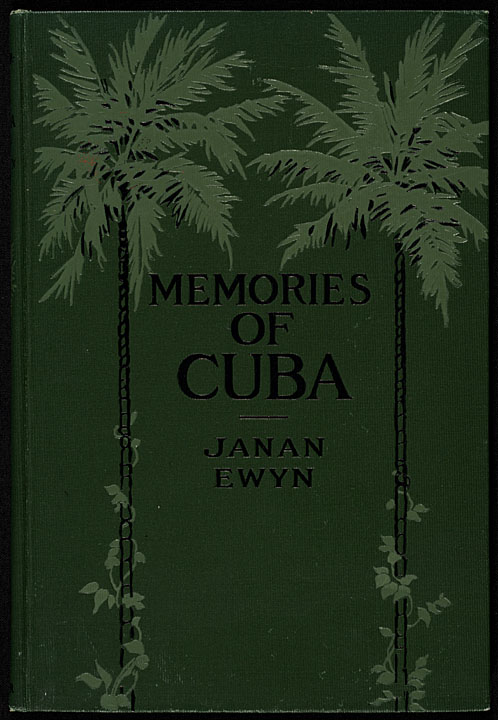
So last week was Cuba Week at The University of Alabama. Here’s a little Memories of Cuba (Week) binding for you to enjoy….
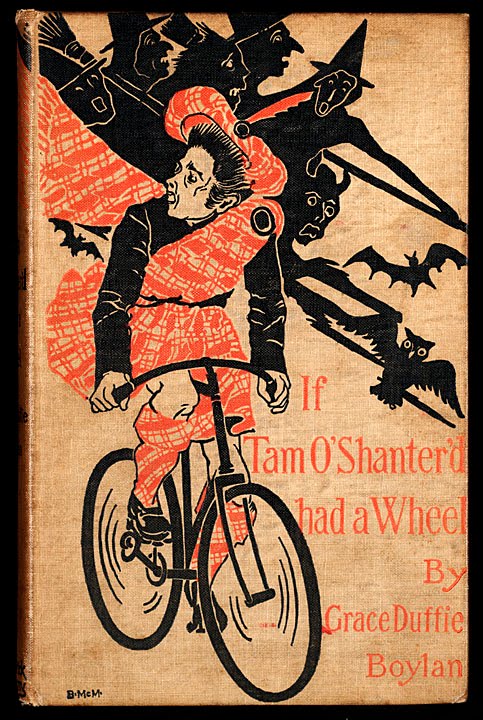
by Grace Duffie Boylan
Binding design by Blanche McManus (Signed binding: B.Mc.M)
New York, E.R. Herrick, 1898.
pba02560, from the Richard Minsky Collection, W.S. Hoole Special Collections Library
and Witches!
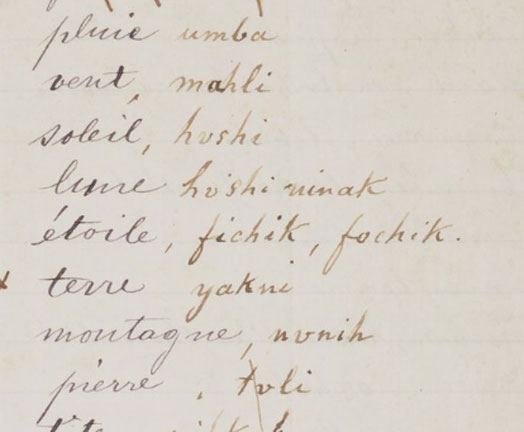
Among Hoole’s many fascinating treasures is this slim manuscript volume – eight pages of hand written text, which came to us as part of the T.P. Thompson Collection. The detail above gives us the words for rain, wind, sun, moon, star, earth, mountain, and stone — first in French, then in Choctaw.
Written about 1885, this “Vocabulaire de la langue des Indiens Choctaw (lac Ponchartrain) Louisiane” is in the hand of Abbé Adrien Roquette, who was also known by many as “Chahta-Lma”, Choctaw for “Like a Choctaw” — a beautiful sentiment. This name was bestowed upon him by the Choctaw people as a sign of belonging and respect. In hindsight this can be viewed in many ways — but the simplest notion of all is to see this expression as a reflection of everyone being connected as people — to say that you are one of us. A pure expression of belonging and connection.
This manuscript volume has been digitized, and is available as part of our digital program here.
The original item is part of the W.S. Hoole Special Collections Library. To read more about Abbé Roquette, there is a 1913 biography available via Google Books.
No matter our language or our differences, we are one people. On one great, beautiful terre… yakni…earth…
 Julia Tutwiler Hall, March 1950, from UA Libraries Digital Collections
Yesterday marked the 169th anniversary of the birth of the pioneer educator and reformer, Julia Strudwick Tutwiler. Born in Tuscaloosa on August 15, 1841, she brought higher education for women to Alabama, and worked tirelessly for prison and other social reform. She is considered a pioneer and activist far before her time. She even wrote the the song, Alabama, which was adopted as the Alabama state song on the 100th anniversary of her birth in 1931.
Many, many reminders of Miss Julia’s legacy remain, though the one seen here has since been replaced. This photograph, taken in 1950, is of the “old” Tutwiler Hall, which has since been replaced with a second Tutwiler Hall, located just across from Bryant-Denny Stadium on Bryant Drive. We have many more dormitories on campus these days — beautiful new buildings with a river view and new amenities. But it is always interesting to look at where we have come from.
And with that, we not only celebrate the birthday of Julia Tutwiler, but we welcome all the new students and returning students to The University of Alabama!