Cool@Hoole

Surplus?

Recently, the kind folks at the Annex said enough was enough — we needed to get our boxes of extra equipment out of their storage space.

Rather than let the boxes sit around here and collect dust, we decided to dive in and see what we had, whether it was worth keeping or needed to go.

Aside from a several flatbed scanner lids and a pretty sweet turntable, we also found two 16mm film projectors. We couldn’t decide which one to keep — not having any good way at hand to test them — so we kept them both.

(Click on the images below to see larger versions.)

Singer Insta-load 16:

We have no idea how old it is, probably from as early as the 1960s or as late as the 1980s.

Here’s the same model in action:

[youtube https://www.youtube.com/watch?v=-a_C1u-77FY&w=420&h=315]


Bell & Howell Filmosound Specialist, from the 1960s or 1970s:


A Bell and Howell cousin in action:

[youtube https://www.youtube.com/watch?v=siWv1bt3PQ4&w=560&h=315]


Mose T

By: Ellie Campbell, JD and University of Alabama MLIS student

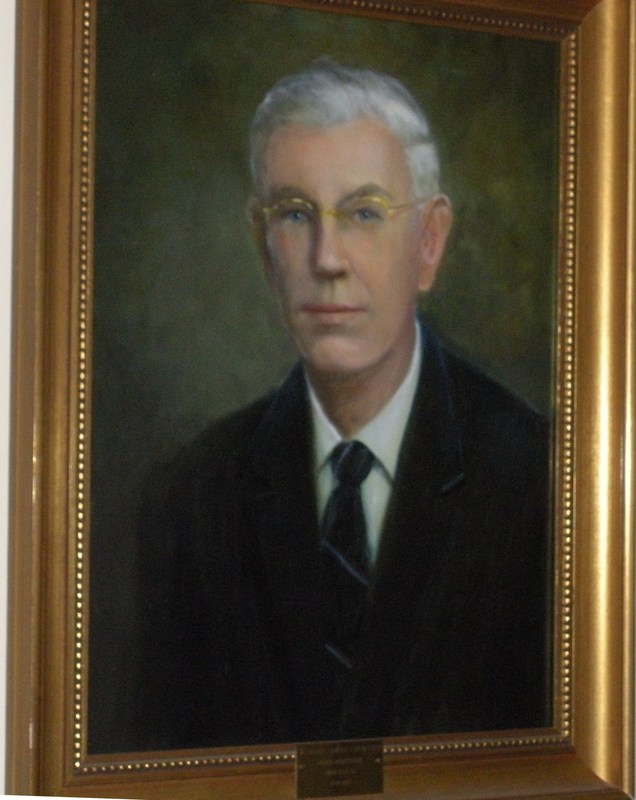
Mose T painting

Mose T painting, currently decorating Hoole’s graduate study work room

Mose Tolliver was a renowned folk artist from Montgomery, Alabama. “Mose T,” as his signature read, was most famous for his paintings of figures on scrap wood, generally on themes including people, animals, and plants. He first gained national attention when he was featured in the groundbreaking exhibition Black Folk Art in America: 1930-1980 at the Corcoran Gallery of Art in Washington, D.C. His paintings are now held in major museums around the U.S., including the Modern Museum of Art in New York, the High Museum of Art in Atlanta, and the National Museum of American Art in Washington, D.C.

Mose T was born outside of Montgomery, Alabama, in the Pike Road area, circa 1915. The youngest of twelve children, his sharecropping family moved around central Alabama several times during his youth. Tolliver held a number of odd jobs throughout his life, including working as a carpenter, handyman, plumber, house painter, and gardener. He married his wife, Willie Mae Tolliver, in the 1940s. She later helped manage his painting career, and they were married for almost fifty years until her death in 1991. Tolliver was injured in the 1960s while working at the McLendon Furniture Company in Montgomery; a case of marble fell on his left leg, and he used crutches or a wheelchair for the rest of his life. Tolliver had painted before the accident, so several of his friends and family encouraged his hobby afterwards in order to combat his depression over his injuries. He began hanging his art in his front yard and selling it to passersby. By the late 1970s, Tolliver had gained notice from art dealers, galleries, and the Montgomery Museum of Fine Art. The museum hosted a one-man exhibition of his work in 1981, and his work was featured in another exhibit in Philadelphia that year as well. Due to this exposure, he was included in the Corcoran Gallery’s exhibit in 1982, which drew worldwide attention to African-American folk artists. Tolliver remained a key figure in African-American folk art circles until his death in 2006.

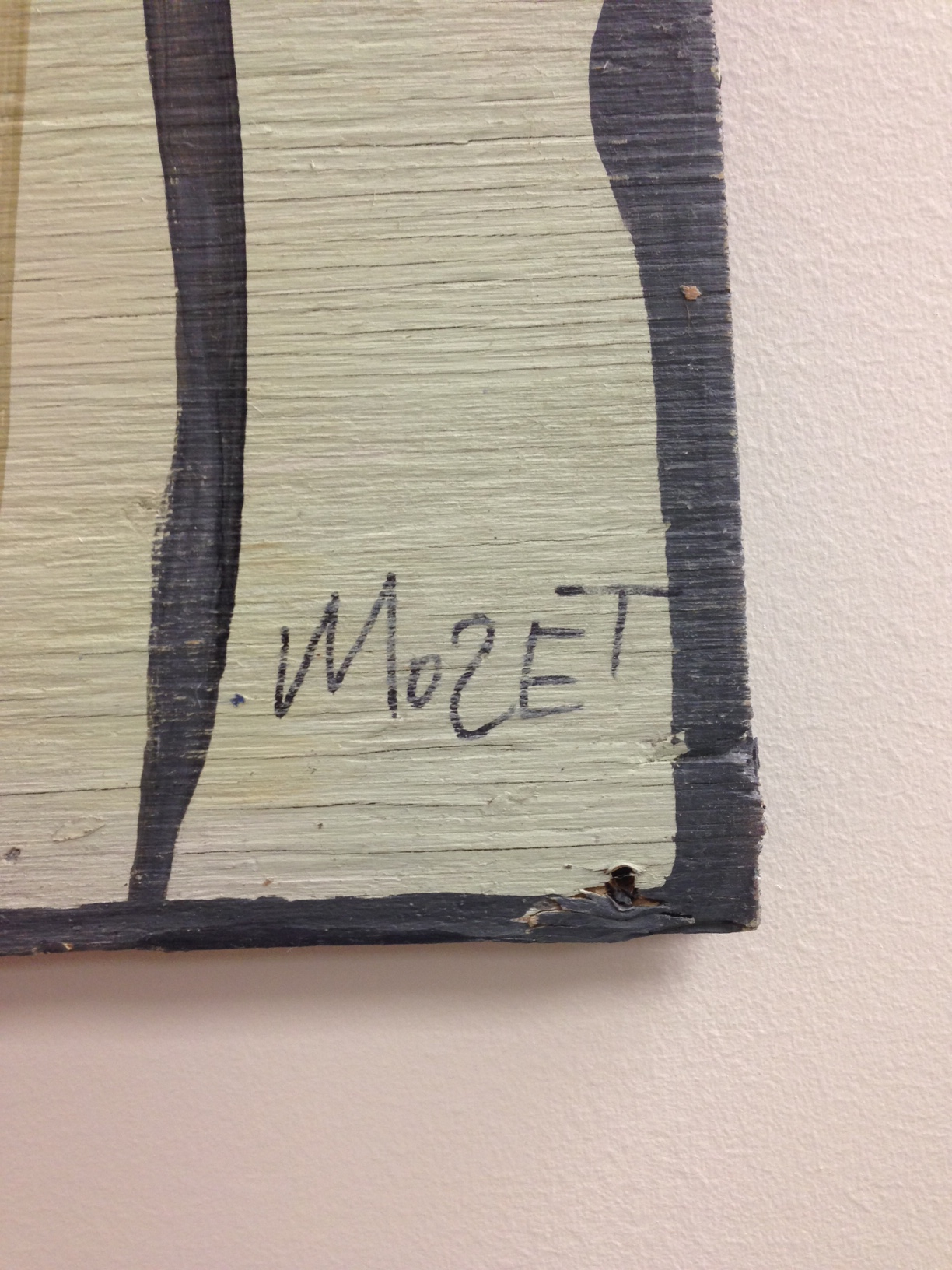
Mose T signature

Mose T’s signature

Tolliver’s earlier works were more varied than the work he produced after the Corcoran Gallery exhibit. He always used house paint, and early paintings might have been on many different sizes and types of material, from wood to metal to cardboard. His later paintings were usually on uniformly cut plywood. His subjects often included animals, plants, and people; he often painted his wife or other family members. Some of his most famous paintings are erotic depictions of women like his Moose Lady or Tiger Lady series. After his trip to D.C., he sometimes painted his interpretation of iconic American figures like George Washington, and occasionally drew inspiration from images in magazines or newspapers. In later years his family assisted with his paintings, cutting boards and preparing backgrounds; some of his children have become artists as well. Hoole Special Collection’s Mose T painting is an excellent example of his paintings, featuring a human figure made up of an oversized head and legs on plywood. On the bottom right corner, you can see his name with the signature backwards “s.”

Futher reading:

Robert Andrew Dunn. “Mose Tolliver.” Encyclopedia of Alabama. May 22, 2008. Revised August 13, 2013.

Robert Ely. Mose T’s Slapout Family Album. Montgomery, AL: Black Belt Press, 1996. Hoole Library Alabama Collection ND237.T576 A4 1996

Anton Haardt. Mose T A to Z: The Folk Art of Mose Tolliver. Montgomery, AL: Saturno Press, 2007. Hoole Library Wade Hall Collection ND237.T576 H33 2006

Interview with Kevin Ray, Archival Technician

By: Kevin Ray, Archival Technician

Hello! Thank you for agreeing to talk to us about your role at in the Division of Special Collections. First off, can you tell us a bit about your position?

IMG_5893

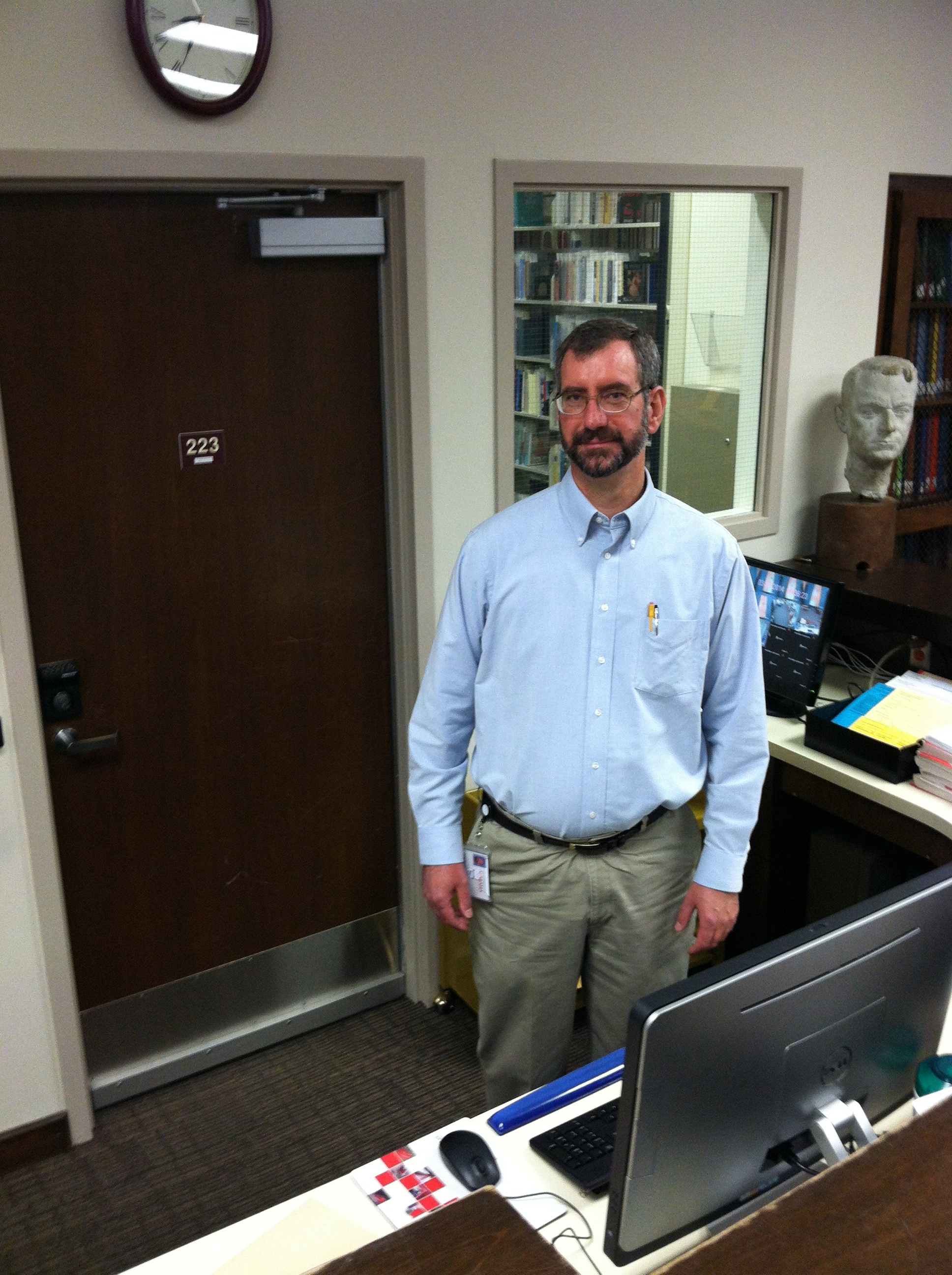
Kevin Ray

My current title is Archival Technician, but I do several different jobs. I moved into this position in May, 2013.

Initially, I was going to be processing manuscript collections, but things have changed over the past year. When Jessica Lacher-Feldman left last June to become the Director of the Louisiana State University’s Special Collections, I began handling reference for our Special Collections. This includes all outside reference requests whether by email, telephone, or snail mail. I also spend several hours each week working the reference desks in the Hoole Library and in the Williams Collection in Gorgas. Reference desk time is split among most of the staff in Special Collections, and some of us work in both Williams and Hoole.  I make the schedule each week. I also handle requests for permission to publish.

Now that Tom Land is retiring, I have added building representative to my list of duties, and I’m getting involved in university archives again. I also manage statistics for Special Collections.

Continue reading

Newly online: materials about slave labor at UA, 1820s-1860s

We know them by first name only, and there’s a good chance those are not the names they were born with. Men called William, Moses, Edwards, Patrick, Sam, Major, Quillen, Arthur, Speers, Robert, Andrew, Swindle, Peter, Erasmus, Anderson, Jack, Isaac, and Jim (among others) were very much a part of the early life of the University of Alabama, but they’ve long remained in the shadows of history. Why? They were slaves, essentially rented (or bought) from local owners to do work at the University.

Typically, these men performed outdoor labor like “hauling” and “cutting”…

u0006_0000001_0000166

…but some took on domestic duties:

u0006_0000001_0000053

Be it ordained by the Trustees of the University of Alabama; that in addition to the servant now owned by the University the faculty Pres. of Board of Trustees shall be authorized to hire purchase one other competent servant at the lowest terms that can be procured, for the service of the Dormitories; and be it further ordained; that the Steward shall board the two college servants, to compensate for which he shall have their service during meals, and also during vacations.

While the “servants” mentioned above were apparently permanent (notice the change of “hire” to “purchase”), most were temporary manual laborers. They worked at the University for a prescribed time, and the money for their labor was remitted to their owners. Here are a couple of examples of receipts for their wages:


The University also had to feed and in some cases clothe and otherwise care for the slaves, especially the permanent domestic servants:

Dozens of invoices for such transactions, as well as other related receipts and memos, are included in the University Archives. These administrative records can now be accessed online in our digital repository, Acumen.

Related material:

  • Another collection of interest on the history of slavery in Alabama is the S. D. Cabaniss papers. Cabaniss, a lawyer, took on a controversial mid-19th c. case. Samuel Townsend, an unmarried planter who owned more than half a dozen plantations, wanted to leave his property to some of his slaves, many of whom were also his children. Townsend’s will took years to settle, providing us a look at the legal system of the day…and the ways in which it was being forced to change with the times.
  • For other items and collections relating to slavery, go to Acumen and enter the search term “slavery.”

Interview with Tom Land, Institutional Records Analyst

Tom Land, the Institutional Records Analyst in the Division of Special Collections, is retiring at the end of this month after over twenty years of service. This interview is between Amy Chen, the editor of Cool@Hoole, and Tom Land. 

First off, congratulations on your upcoming retirement!

TomLand

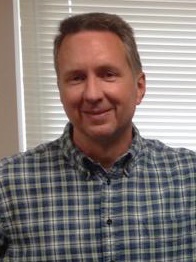
Tom Land

Thanks, I can’t believe it’s finally here.  I was a young punk and the other staff members were at least in their 40s when I first started working here.  At some point, I don’t remember when, I became the old guy with the institutional memory.  I can now pass the mantle of “Old Man of Special Collections” to Kevin Ray.

Would you mind telling us when you first started working in the Division of Special Collections and what originally got you interested in the field of rare books, manuscripts, and university archives?

I guess, in a way, I kind of stumbled into Special Collections.  I had worked as a student in the History Department for two years and then in Gorgas Library for another two years.  A professor I worked for in the History Department, Russell Bryant, asked if I would be interested in a job in Special Collections.  I had met the Curator of Special Collections, Joyce Lamont, while working at Gorgas and I heard she was a great department head.  I also loved history and the University, so I applied for the records clerk job.  Dr. Bryant gave me a recommendation and Joyce hired me in September of 1986.

How has the Division of Special Collections at The University of Alabama changed over the years?

YoungTomLand

Tom Land helps pack items from Wade Hall

Typewriters.  When I started working in Special Collections we used typewriters, we barely even knew what PC (personal computer) meant.  By 1988 I grew tired of the typewriters and decided to use a computer database (yes, it was the Atari Trimbase) to produce finding aids and to track records checked-out in University Archives.  Our Archival Technician, Joe Moudry, helped me get started.  We were really cutting edge.  I say that with some sarcasm, but all the data I entered back then on the Atari has been migrated to other systems over years and we still use that information today.

The other big change is our facilities.  The University Archives were stored in the Gorgas attic and the temporary records were stored in four attics around campus.  We now have clean, climate-controlled facilities for both archives and records management.  Having worked closely on a daily basis with a wide variety of bugs in the dust of the attics for the first half of my career, I really appreciated being able to work in facilities that were built to house a library or an archive.

What is your present role in the Division of Special Collections?

My title is Institutional Records Analyst.  I work with University offices and departments to identify, preserve, and provide access for their archival records.  Additionally, I work with the storage of and eventual destruction of their temporary records.

Continue reading

Tuscaloosa Area Virtual Museum

By: Elizabeth Bradt and Betty Slowe, Tuscaloosa Area Virtual Museum volunteers

omeka-net-2539-archive-fullsize-d2ff4d7a105eaad776bef9831cdf2c67

James Sidney Tarwater

If you can’t get enough of the Tuscaloosa area historic photos and documents, try visiting the Tuscaloosa Area Virtual Museum.

For example, if you are interested in the Bryce Hospital campus now that it has been purchased by the University of Alabama, you may have found the book, The Alabama State Hospitals and the Partlow State School and Hospital: A Brief History by James Sidney Tarwater (RC445.A2 T89) in Hoole under both the Rucker Agee and the Alabama collection.  In the Tuscaloosa Area Virtual Library, you can find a photograph and biographical information about Tarwater.

The Tuscaloosa Area Virtual Museum (TAVM) is an online archive of historic photos and documents of Tuscaloosa and the surrounding area. The photos come from a variety of sources creating a valuable resource for history lovers and students to access for free. The Tuscaloosa News, the Tuscaloosa County Preservation Society, the Heritage Commission, the city of Tuscaloosa, the Paul W. Bryant Museum, Friends of Historic Northport, Stillman College, and private collectors all contribute photos and documents to TAVM for educational purposes.

DSC_0034_web

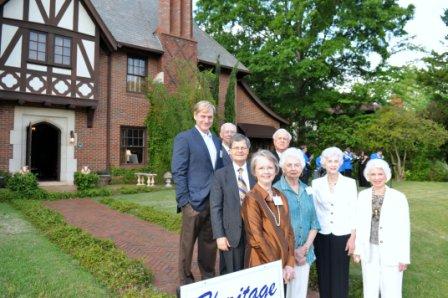
Tuscaloosa Preservation Society members in April 2013. Courtesy of TPS. From left to right, top to bottom: David Nelson, John Paluzzi, Charles Hilburn, Cal Wilson, Mary Bess Paluzzi (Associate Dean of UA’s Special Collections), Camille Elebash, Bee Cooper, and Sandra Dockery.

The museum is purely digital, existing only on the internet. The staff is all-volunteer; many are librarians or archivists, some are business people and collectors, but all have an interest in the history of the area and a desire to make it easily available to those who want to learn about it. The project was started with the help of Dr. Steven MacCall from The University of Alabama School of Library and Information Studies. MacCall used the project in a metadata class, with students selecting and exploring the software that was ultimately used. MacCall also provided interns to help scan and catalog a large number of photos at The Tuscaloosa News.

TAVM does not retain hard copies of the photographs or documents. The originals are scanned, researched, cataloged and saved to the website. Originals go back to the owner or, if the owner does not want them, they are given to a local historical agency for preservation.

Though still in its infancy, TAVM has over 1100 photos and documents, some accompanied by audio. The staff has begun developing lesson plans for middle school students. Finding answers in TAVM to ten questions about the history of Tuscaloosa allows students to develop search strategies for online research while learning interesting facts about their hometown and seeing life as it was in the past.

If you find you are interested in the history of the area and have a few hours to work, consider donating your time and talents to the museum. Reach Jennie Claybrook at 205-348-5820 for information on how you can help.

Remembering Joyce Lamont, Part III

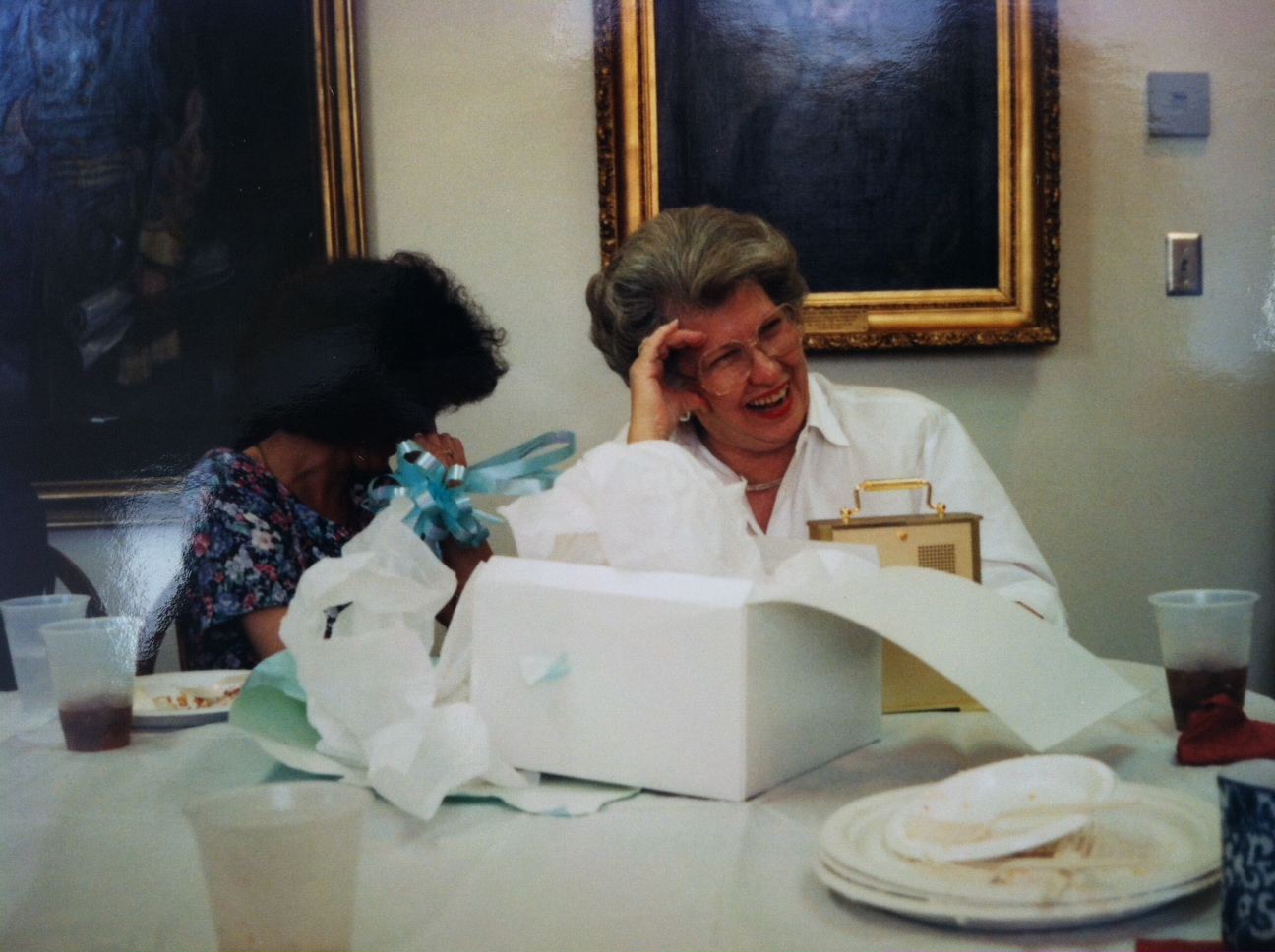
Unwrapping

Joyce Haguewood Lamont

Joyce Haguewood Lamont passed away on February 22, 2014. Widely recognized for her work in historical preservation and her expertise on the history of the American South, Lamont excelled in her ability to promote the profession of librarianship. She became a valuable resource to scholars, teachers, students, and community members throughout Alabama during her nearly forty years of service at the Capstone.

Read words from her colleagues who are now working at different institutions in the first post dedicated to her legacy. Then follow along to learn about Kevin Ray’s memories of her service on behalf of the University. More memories from her colleagues who remain working for the Division of Special Collections at The University of Alabama conclude our commemoration.

Martha Bace

I didn’t know Joyce all that well as I believe she retired before I came to UA in 2002 and I don’t believe I ever met her until I came to Hoole in October 2007.  I recall the few times I did meet her and got to talk with her, I was always amazed by her voice.  For someone who generally spoke in the higher register, her voice had a surprising depth of character.  I was always entranced – not only with what she was saying, but how she said it.

She was always dressed to the nines.  I never saw her without lipstick or mascara… and oh, how her eyes always sparkled.  And she had a smile that could light up Tuscaloosa.  She was gracious, thoughtful, and oh so knowledgeable.  I know that she will be missed by so many.

Continue reading

Remembering Joyce Lamont, Part II

u0001_2007001_0002875

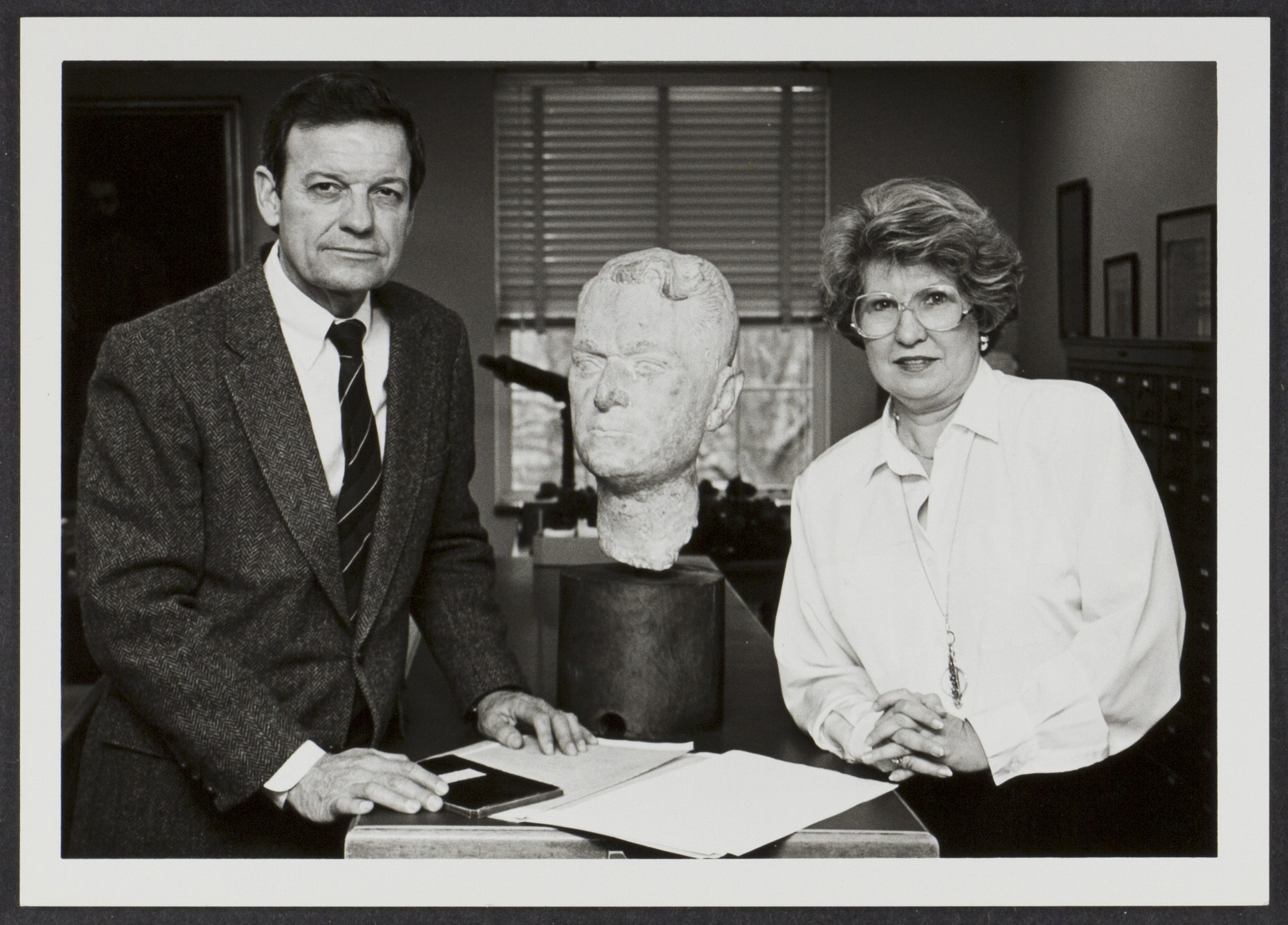
Doug Jones and Joyce Haguewood Lamont with bust of William March (1985)

Joyce Haguewood Lamont passed away on February 22, 2014. Read about her career and the words of her colleagues who have now moved on to roles at different institutions in the first post dedicated to her memory. Statements from more of her colleagues at The University of Alabama will conclude our third day of commemoration tomorrow.

Kevin Ray

The University of Alabama Libraries lost a very special lady on February 22, 2014.  Joyce Haguewood Lamont, Assistant Dean for Special Collections, Emerita, passed away after a battle with cancer. Joyce was born in Choctaw County, Alabama, in 1932, and grew up in Tuscaloosa.  A 1954 graduate of The University of Alabama, she began working in the library after graduation, first in the Business Library, and later in the acquisitions department in the Gorgas Library. Joyce became Curator of Special Collections in 1976. She retired in 1994.

I first met Joyce in 1990, when I transferred to The University of Alabama as an undergraduate history major. That fall semester I began working in Special Collections as a work-study student.  When I graduated in 1993, Joyce hired me as a full-time staff member.  After her retirement the following year, we remained in contact.  For many of us who worked for her, Joyce was far more than a boss or a department head. She was friend and a trusted adviser.
Continue reading

1870s English Literature lecture notebook

Philology, n. the study of literary texts and of written records; linguistics, especially historical and comparative linguistics; Obsolete: the love of learning and literature.

Long before literature students spent their time looking for symbolism and theme in poems and stories, the study of literature was about appreciating the beauty of the language and sentiment in literary texts. Along with this came a serious study of the linguistic roots of texts, or just linguistics in general — how English came to be the way it is, and how it works.

All these definitions of Philology come into play in a lecture notebook from Professor Benjamin Franklin Meek, from the 1872-1873 school year. Meek taught Latin and Greek at UA during the 1860s and literature from the 1870s to his death in 1899.

Linguistics

Meek begins all the way back at the Roman occupation of England and its influence on the “Celtic tongue,” tracing English through the Saxon invasions, the influx of Danish peoples, and finally the Norman conquest, when Old English crashed into Old French.

He goes so far as to show a table of the proportion of Saxon words in the writings of major authors to date:

MeekNotebook1

Translating the Bible into English

After this history lesson, he takes up the topic of the Christian Bible: “for no work in the language, viewed simply as a literary production, has had a more profound historical influence over the world of English speaking people.” He discusses the various ancient translations (such as the Septuagint and Vulgate) that eventually led to English versions of the Bible like the Douay–Rheims and more familiar King James versions.

Major Authors

A further section of the notebook contains commentary on specific parts of the course textbook, referencing works like Piers Plowman and Paradise Lost, and writers like Ben Jonson, Alexander Pope, and Daniel Defoe. Also referenced were physicist Isaac Newton and theologian/hymn writer Isaac Watts, showing that philosophical writings were also important to the study of literature in the 19th c.

American Literature?

As expected, little attention is given to American Literature as a whole, which didn’t gain a foothold in the academy until the 20th c. But he does include specific American writers like Washington Irving, James Fenimore Cooper, and Nathaniel Hawthorne among his major authors. Here are his comments on Edgar Allan Poe, to whom he says “the text[book] does not do justice”:

MeekNotebook2

Shakespeare and Linguistics

The remainder of the book is given over to “Lectures on the English of Shakespeare,” which uses Shakespeare’s works to talk about the differences between Elizabethan and Victorian (then-modern) English.

Exam

On the inside back cover you find an examination given to the senior class in February 1873. I happen to have a PhD in Anglo-American literature, but the study of literature has changed so much that there’s no way I would pass this exam… as you’ll see below with my no-cheating, off-the-cuff answers.

MeekNotebook3

1. They were Celtic peoples?
2. The Romans brought Latin, Saxon exerted a major influence on the native Celtic language which is still seen today (especially in our expletives), I have no idea how the Danes influenced us, and the Normans brought French, which changed the structure of our language a lot (made it less germanic and more latin) and contributed a lot of words.
3. ???
4. ???
5. [I know how we divide periods now, but then?]
6. Edmund Spenser helped popularize the sonnet in English and wrote The Fairie Queen, an allegorical epic poem in iambic pentameter, with just enough hexameter to make it really tedious to read.
7. [If I answered the first part of this I would be cheating, since I read the names as I perused Meek’s notes.] The King James version was commissioned by King James I of England, based on the Latin Vulgate. It is a word-for-word translation, rather than a sense-for-sense translation.
8. He was born in the 18th century and died in the 19th century. He wrote historical novels like Ivanhoe.
9. [Once again, I would be cheating to answer this, although I probably would’ve guessed correctly.]
10. (1) ???, (2) Thomas More, (3) Dryden?, (4) ???, (5) Poe

How did I do? 🙂
Remembering Joyce Lamont, Part I

u0001_2007001_0002872

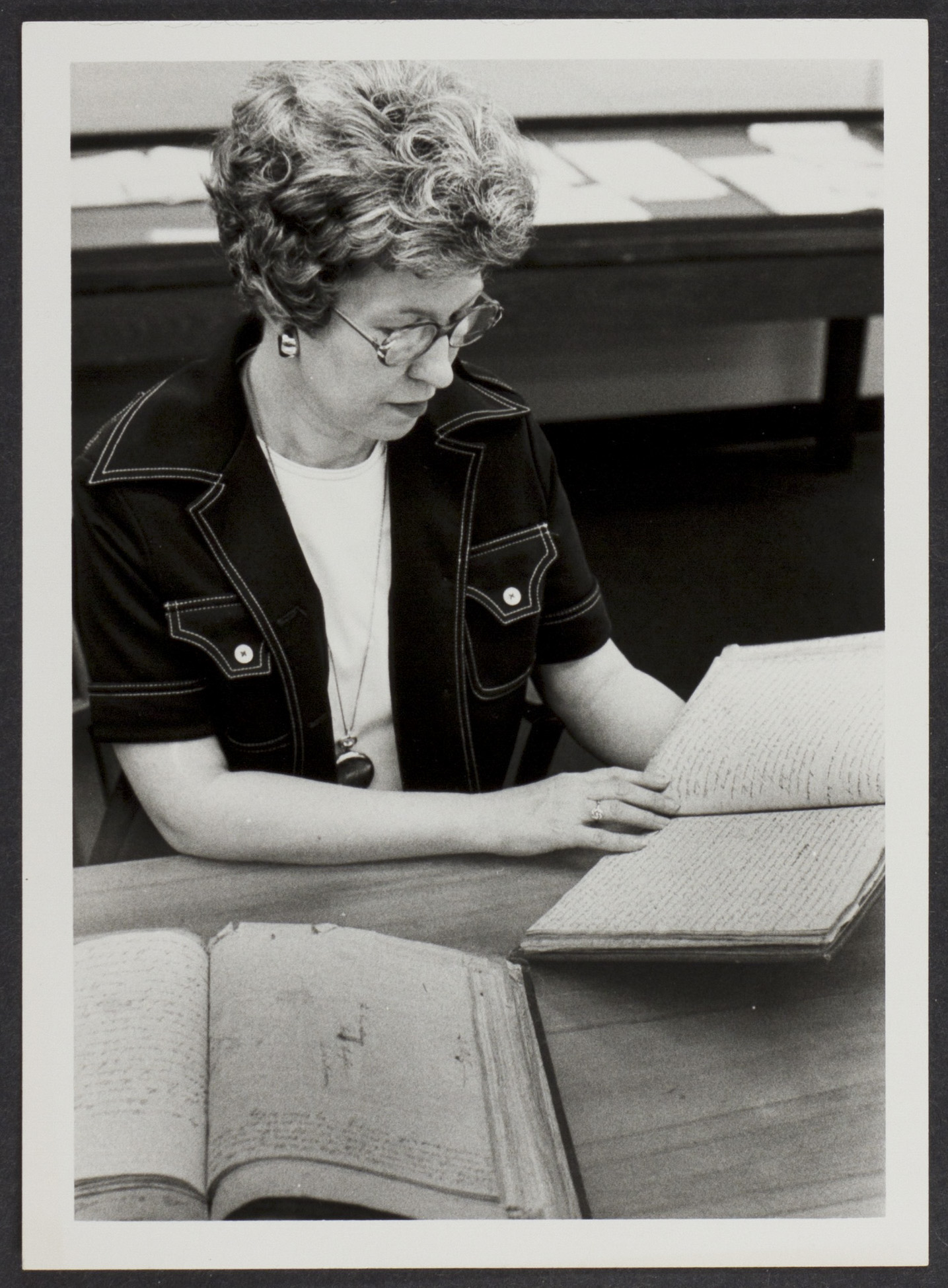
Joyce Haguewood Lamont looking at journals, 1977

Joyce Haguewood Lamont passed away on February 22, 2014. Widely recognized for her work in historical preservation and her expertise on the history of the American South, Lamont excelled in her ability to promote the significance of the profession of librarianship. She became a valuable resource to scholars, teachers, students, and community members throughout Alabama during her nearly forty years of service at the Capstone.

Lamont, a University of Alabama alumni from Bellamy, Alabama, began as a librarian in the Commerce Library in 1955. She then worked as a bibliographer in Acquisitions in the Amelia Gayle Gorgas Library. In 1975, Lamont became the first curator of the W.S. Hoole Library, eventually accepting the role of Assistant Dean of Libraries for Special Collections and Preservation. During her time in Special Collections, Lamont also taught in the School of Library and Information Studies, where she helped to found the Records Management and Archival Program in SLIS. Lamont retired in 1994. In 2003, the University of Alabama Board of Trustees created the Joyce Haguewood and William Edward Lamont Endowed Library Fund out of donations given by the Lamonts’ friends, colleagues, and relatives.

Joyce Lamont was also a loving wife to her husband, William Edward Lamont, mother to daughter Laura Pennington “Penny” Lamont McAllister, and grandmother to Laura Katherine McAllister and Mary-Keeley McAllister. Both Lamont’s husband and daughter predeceased her.

Lamont’s former colleagues from the Division of Special Collections wish to honor her role as the founding mother of the W.S. Hoole Library. First, we will hear from her colleagues who have left Tuscaloosa, yet who still wish to remember her extraordinary legacy.

Continue reading