Cool@Hoole

Unchaining Alabama: A new exhibition on display in the Williams Collection

By: Ben Flax, University of Alabama undergraduate student

BenFlax-1

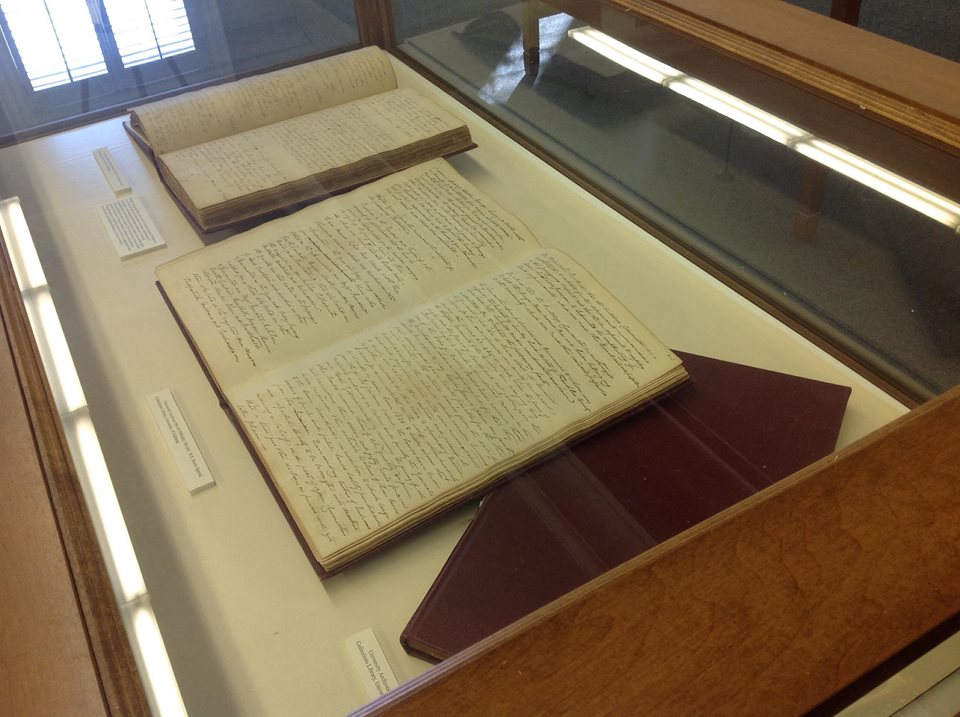
Bound volumes of the Board of Trustees minutes

Though the institution of slavery was integral to the European settlement of the Americas and to the economic development of British mainland colonies and the United States, by the early-nineteenth century most northern states had either abolished slavery or provided for its gradual elimination, and the Atlantic Slave Trade had been outlawed by federal legislation. As the cotton economy boomed in the Deep South, however, an internal slave trade took off in the United States and hundreds of thousands of men, women, and children were sold from older southern states to southwestern frontiers.

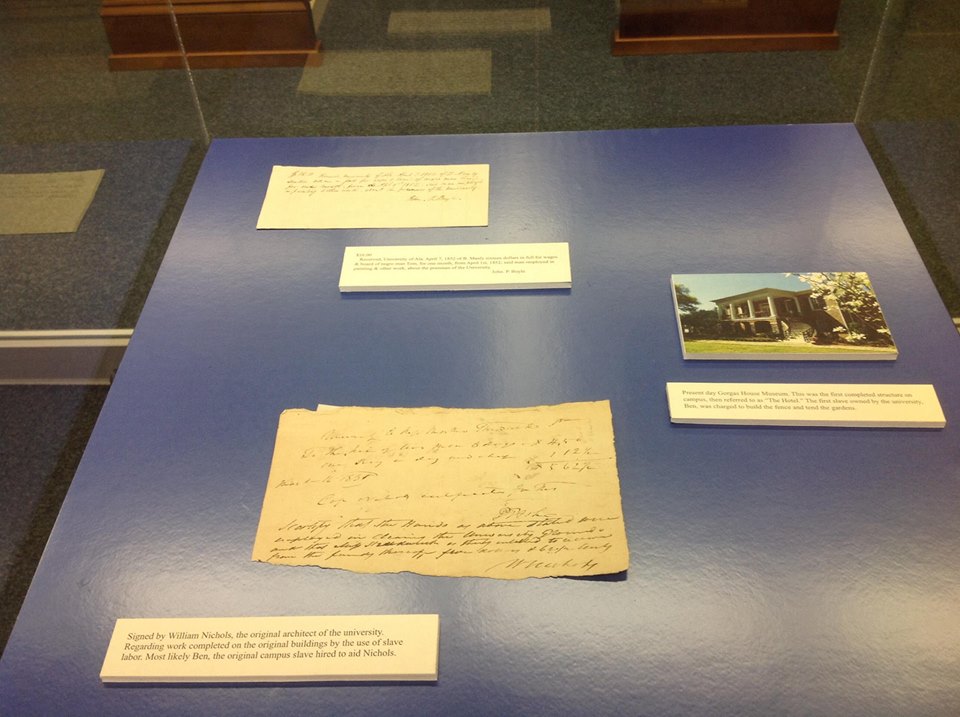
The idea for a state university for Alabama originated in 1818, a year prior to statehood, as part of a congressional plan to use land sales to help fund universities throughout the country. Tuscaloosa was selected as the site for the university in 1827, construction of the grounds began in 1829, and the University of Alabama formally opened in 1831. Given that the state of Alabama owed its existence primarily to the cotton boom and the rapid importation of slave labor that made that boom possible, it comes as no surprise that the University of Alabama would employ slave labor. It remains important nonetheless that we acknowledge how much enslaved laborers contributed to its building and development, and that those individuals sometimes suffered tremendously in the service of an institution that they would never be allowed to attend.

UnchainingAlabama

A case from Unbound Alabama

Even as we recognize former faculty, presidents, and others whose names adorn campus buildings, we ought to remember too those who put their blood and sweat into making the University of Alabama. This exhibit, then, is not intended to shame the University, but rather to respect and to name those who have been overlooked for far too long.

Editor’s Note: Ben Flax’s exhibition will be on display in the A.S. Williams III Americana Collection reading room on the third floor of Gorgas Library during the month of February.

Read more about the show in the Tuscaloosa News, Alabama.com, and on the blog Southern Jewish Life

Bobby Allison of the Alabama Gang: Through Triumph and Tragedy

bobby3

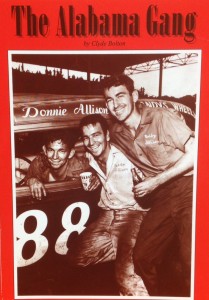
The Alabama Gang by Clyde Bolton

By: Allyson Holliday, W.S. Hoole Library Complex Copy-Cataloger

In honor of the NASCAR Hall of Fame’s 2014 induction ceremony this week, the blog spotlight belongs to Alabama’s own Bobby Allison – a 2011 inductee.

So what is the “Alabama Gang”? The original “Alabama Gang” consisted of auto racers Red Farmer and the Allison brothers, Bobby and Donnie. The trio traveled to short tracks all over the southeastern United States together and frequently claimed the top three positions in their races. One evening in the 1960s, as they arrived at a race track in the Carolinas, a local moaned, “Oh, no, there comes that Alabama gang,” and their nickname was born (Bolton, 4). The term “Alabama Gang” would later be expanded to include all race car drivers from Alabama.

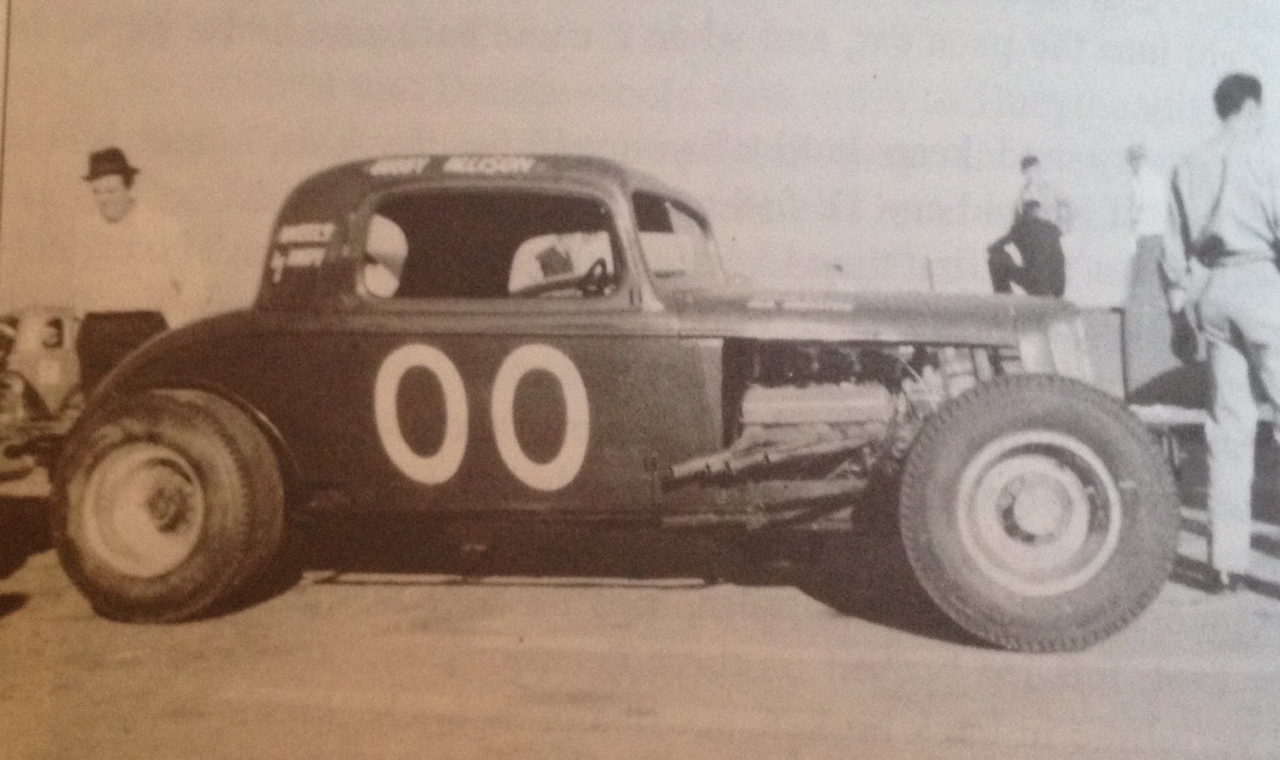
Robert Arthur “Bobby” Allison was born in Miami, Florida, in 1937. His racing career brought him to Alabama permanently in 1961 to race in NASCAR’S Modified-Special Division. First living in Bessemer, Bobby and his family later settled in neighboring Hueytown. From his base in Hueytown, he found immediate success winning the Modified-Specials Division titles in 1962 and 1963, which mostly raced in Alabama and Tennessee. Even a switch to the standard Modified cars did not stop his winning streak. Bobby won the 1964 and 1965 national championship in that division (Bolton, 30).
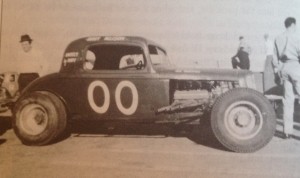
modifiedspecial

One of Bobby Allison’s early modified special racers, photo from Clyde Bolton’s The Alabama Gang

Bobby graduated to the big leagues when he began, in 1966, his NASCAR Grand National/Winston Cup career (Golenbock, dust jacket). He had made it to stock car racing’s biggest stage. And he took full advantage. He would go on to win 84 races and capture 58 poles before he retired in 1988 after an accident at Pocono Raceway that nearly took his life. He finished his career tied for third on the all-time victory list with Darrell Waltrip. Despite his prolific winning record, Bobby only won a Winston Cup championship once – in 1983.

As a member of the “Alabama Gang” and to celebrate his racing career, Bobby was inducted into the Alabama Sports Hall of Fame in 1984. Fittingly, Bobby was also named one of NASCAR’s “50 Greatest Drivers” in 1998.
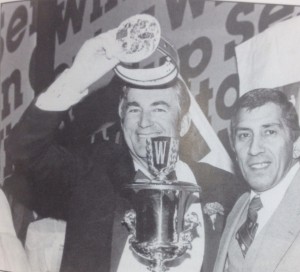
bobby 1983

Bobby Allison holds up his belt buckle for winning the NASCAR championship in 1983, from Peter Golenbock’s Miracle: Bobby Allison and the Saga of the Alabama Gang

After his last race and accident at Pocono Raceway, he battled a significant brain injury that led to memory loss and difficulty completing everyday tasks. While recovering from his extensive injuries, his focus turned to the racing careers of his sons, Clifford and Davey. Bobby also returned to NASCAR as a race team owner in 1990 forming Bobby Allison Motorsports (Golenbock, 270). Responding to a reporter about his new role, Allison said, “Owning a car is not as good as driving, but it’s way better than lying in a hospital bed” (271). Bobby was very lucky to survive the injuries he sustained in his last race and NASCAR narrowly avoided a tragedy.

However, tragedy struck the Allison family all too soon. On August 13, 1992, Clifford Allison was driving for his dad’s Busch Grand National team at the Michigan International Speedway when his car spun and hit the wall in a practice session. He was killed instantly. Then, in July, 1993, the unthinkable happened.

Davey was flying his helicopter to Talladega Superspeedway to watch Neil Bonnett (a fellow Alabama Gang member) test, when the chopper crashed.  Red Farmer, a member of the original Alabama Gang, survived the crash with broken bones but Davey suffered massive head injuries. Recalling the miracle survival of Bobby just five years earlier, many thought Davey would come through this and maybe one day return to racing and join his father as one of NASCAR’s greatest drivers. It was not to be. On the morning of July 13, 1993, exactly eleven months to the day of Clifford’s death, Davey Allison passed away at the age of 32.

It is hard to imagine how Bobby Allison endured that stretch in his life. He closed Bobby Allison Motorsports in 1996 but has remained a beloved figure in the NASCAR world. Asked how he survived it all, Bobby replied, “My life has been a series of ups and downs, hills and valleys, top of the mountain, bottom of the valley…I had really, really good times, and I had disasters, where other people might have quit racing, but every time I hit a valley, I figured there had to be another hill out there and I’d climb that hill. I’ve been blessed in so many ways. And I’m grateful” (Golenbock, 386).

The Allisons are racing family royalty and Bobby is still seen around the NASCAR circuit at different races and events. My family and I had the pleasure of meeting him before a race at Talladega Superspeedway in 2011. A quintessential, southern gentleman with an enduring passion for life and the sport he loves – through triumph and tragedy.

Works Cited:

Clyde Bolton. The Alabama Gang. Birmingham, AL: Birmingham News, 1994. Hoole Alabama Library Collection GV1032.A1 B65 1994x.

Peter Golenbach. Miracle: Bobby Allison and the Saga of the Alabama Gang. New York: St. Martin’s Griffin, 2006. Hoole Alabama Library Collection GV1032.A3 G65 2006.
 

UA Army ROTC Scrapbooks

Since last fall, we’ve had the opportunity to digitize a sizable set of large scrapbooks from a surprising source: the University of Alabama Army ROTC. Who knew that military men and women could be so interesting!

Dating from 1953 to 1983, these scrapbooks cover thirty years of activity for the group — and thirty years of American culture. The books (the latter half of which are online, with more to come) give us a sense of the changes in group activities and training emphases as the Vietnam war came and went, evolving photography practices, and even shifts in styles of dress and hair (and facial hair!).

1960-61: A visit from Governor John Patterson

visit from the governor, 1960-1961 volume

1969-70: Worn out from field training exercises (FTX)

ROTC members resting during training, 1969-1970 volume

Facing protesters during an exhibition on the Quad

students protesting the ROTC, 1969-1970 volume

1970-71: Ropes course at Rangers training

on the ropes course, 1970-1971 volume

Parachute training at summer camp

parachute training, 1970-1971 volume

1971-72: Homecoming parade, Sponsors float

sponsors in the homecoming parade, 1971-1972 volume

Training at Ft. McClellan

training, 1971-1972 volume

shooting practice, 1971-1972 volume

1972-73: Scabbard and Blade blood drive

blood drive, 1972-1973 volume

1978-1979: Self Defense training

hand-to-hand combat practice, 1978-1978 volume

Raft races

rafting trip, 1978-1978 volume

Mid-winter commissioning

midwinter commission, 1978-1978 volume

1980-81: Rangers building the Homecoming bonfire

building the homecoming bonfire, 1980-1981 volume

Rapelling practice

rapelling practice, 1980-1981 volume

1981-1982: FTX at Fort McClellan

training, 1981-1982 volume

Helicopter at Rangers FTX

helicopter, 1981-1982 volume

1982-83: Annual Military Ball

annual military ball, 1982-1983 volume

1983-84: Annual Military Ball

at annual military ball, 1983-1984 volume

Parade banner

alabama corps of cadets, 1983-1984 volume

We’re still working our way through this collection, so stay tuned as we continue to move back and back, all the way to 1953.

Signed first edition of Strength to Love (1963) on display

By: Amy Chen, CLIR Postdoctoral Fellow

MLK

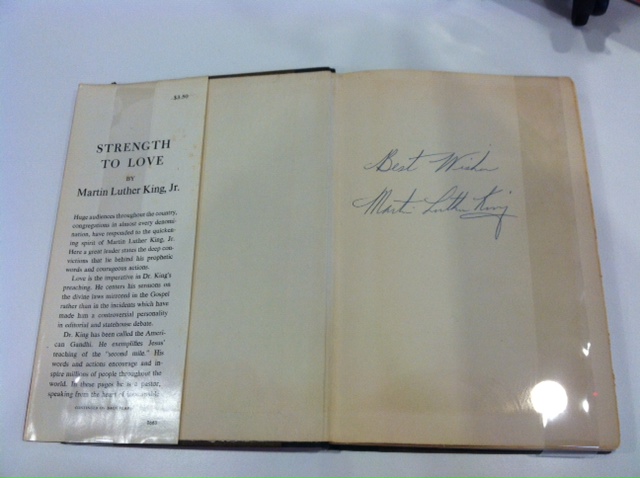
Signed First Edition of Strength to Love

Dr. Martin Luther King, Jr. planned to write Strength to Love (1963), a collection of sermons, as early as 1957, but he was unable to begin writing until he was imprisoned in July 1962 after holding a vigil outside Albany City Hall. Despite the conditions he faced while incarcerated, Dr. King wrote three sermons during this time: “Love in Action,” “Loving Your Enemies,” and “Shattered Dreams.” Later, he would add sermons that would become some of his best-known works, including “What is Man?” and “Paul’s Letter to American Christians.”

In his preface, King writes “we live in a day of grave crisis”; therefore, each sermon included in the book must “deal with the personal and collective problems that the crisis presents” (11). In “Transformed  nonconformist,” King discusses that “we as Christians have a mandate to be nonconformists”  as citizens of what Paul called the “colony of heaven” (21-2). King then warns his readers of “soft-mindedness” in “A Tough Mind and a Tender Heart,” counseling the need to reject superstition, turn away from easy anti-intellectualism, and embrace change rather than remaining committed to faulty traditions. He points his finger at the church, which he sees as too often “rejecting new truth with a dogmatic passion,” yet encourages compassion and love as a way to emulate Jesus and pursue a Christian life (TS 3). Although King speaks persuasively of reconciliation, many of his most pointed statements critiquing segregation, racism, and colonialism as well as capitalism and militarism were cut from the typescript, which has been digitized and is now available through The King Center.

Strength to Love is a landmark text within Dr. Martin Luther King, Jr.’s canon of writings. As the first book of sermons by an African American that became widely read by a white audience, this powerful book seeks to unite “former slaves” and “former slave owners” in a “beloved community.” See a signed copy of this book on display in the Peace Foyer as part of the exhibition “From a Love of History: Exploring the A.S. Williams III Americana Collection,” curated by Stephen Rowe and Amy Chen.

Thought for the Day: 19th century poetry and the daily newspaper

Newspaper clippings are a common type of content in larger collections of personal or family papers. Though a lot of them help record news about the family or about important current events, many are simply interesting pieces of writing someone wanted to remember.

Poetry was a pretty common interest for late 19th c. newspaper clippers, if our collections are any indication. Especially thought-provoking or inspirational poems were often gathered together with other quotes into a single section, with a title like “Thought for the Day.”

Though the poems might be written by local celebrities, they were more frequently culled from previously published work by popular poets of the day, such as Eugene Field, Helen Hunt Jackson, and Ella Wheeler Wilcox:

ella wheeler wilcox poem

Still other poems come from writers many of us still read in English class. For example, Romantic poet William Wordsworth (1770-1850) was still apparently quite popular around the turn of the 20th century:

wordsworth poem

As was Percy Shelley (1792-1822).

Shelley, from Prometheus Unbound

This is an abridged version of the final stanza of his verse drama Prometheus Unbound (1820), given in its entirety here:

To suffer woes which Hope thinks infinite;
To forgive wrongs darker than Death or Night;
To defy Power, which seems Omnipotent;
To love, and bear; to hope, till Hope creates
From its own wreck the thing it contemplates;
Neither to change nor falter nor repent;
This, like thy glory, Titan! is to be
Good, great and joyous, beautiful and free;
This is alone Life; Joy, Empire, and Victory!

Victorian poet Alfred, Lord Tennyson (1809-1882), is perhaps the most common among the clipped. The 1847 poem given below is actually titled “Tears, Idle Tears,” but the heading it was given for the newspaper is maybe more descriptive:

tennyson poem

Fellow Victorian Robert Browning (1812-1889) is known for verse that was the opposite of uplifting and inspirational, so it’s not surprising that the poem we find as a “Thought for the Day” is among the best of the minority. “Rabbi Ben Ezra” (1864) so moved John Lennon, for example, that he wrote a love song based on it, “Grow Old With Me“. This is the poem’s first stanza:

robert browning poem

Robert’s wife, fellow poet Elizabeth Barrett Browning (1806-1861), is probably even more famous, especially for this sonnet, number 43 of her Sonnets from the Portuguese (1850):

elizabeth barrett browning poem

Popular American poet Henry Wadsworth Longfellow (1807-1882), best known for “Paul Revere’s Ride” and The Song of Hiawatha, also pops up from time to time, as seen in this lesser-known 1878 poem:

longfellow poem

Rudyard Kipling of Jungle Book fame is represented by “The Vampire” inspired by a painting by artist Philip Burne-Jones:

kipling poem

Kipling’s poem (and Burne-Jones’s painting) came out in 1897, bringing us up to within a few years of when these works appeared in the newspapers they were clipped from. It reminds us that late 19th and early 20th century folks found real, everyday value in poetry, from the tried and true to more recent offerings. They held familiar lines in their hearts the same way we collect song lyrics or movie quotes. I bet if Facebook had been around 100 years ago, they would’ve made fantastic GIFs and memes. 🙂

To find clippings of all sorts in Acumen, enter into the search bar genre:clippings. For more poetry, enter subject:poetry.

Scenes Around Lincoln Normal: Traveling Exhibition Program to kick off at Tuscaloosa Magnet

By: Christa Vogelius, CLIR Postdoctoral Fellow

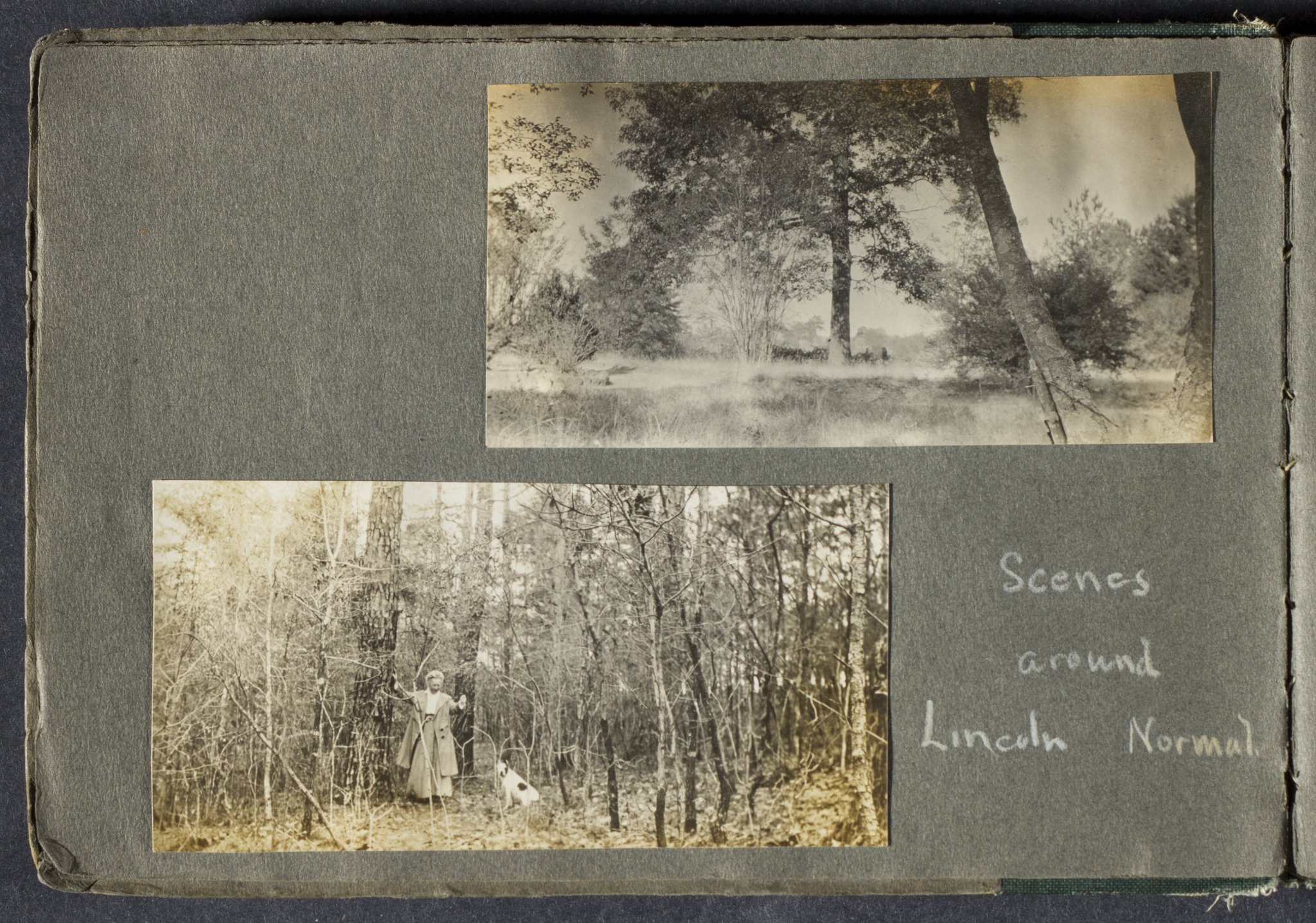
In August 2014, the Tuscaloosa Magnet Middle and Elementary School will be showcasing “Scenes Around Lincoln Normal,” a traveling exhibition of reproduced materials that illustrates the history and contexts of two early twentieth-century photograph albums from the A.S.Williams III Americana Collection at The University of Alabama. The albums, which are digitized and available to view online through Acumen, record scenes from the daily lives of teachers, students, and administrators at the Lincoln Normal School in Marion, Alabama, an elementary and high school that opened immediately following the Civil War for the education of freedmen, and was operational as a landmark African-American institution until 1970.

“Scenes Around Lincoln Normal” is the inaugural show of the Division of Special Collections’ traveling exhibition program, which will create physical displays of digitized materials that will circulate in local schools, libraries, and institutions, showcasing UA’s holdings—many of which document the history and the culture of the state— to a broader public.

Scenes Around Lincoln Normal

Scenes Around Lincoln Normal

The Lincoln Normal School: History and Context

The Lincoln Normal School in Marion, AL was among the first schools established for the education of freedmen after the Civil War.  Popular legend locates the school’s inspiration in a former Union soldier who began to teach local African-American children to read immediately following the war. The school was incorporated in 1867 by a group of nine local African-American men, all former slaves, who acquired both a plot of land in the western part of Marion, and the first school building. By 1868, the founders had secured the financial and administrative support of the American Missionary Association, an auxiliary of the Congregational Church that help to establish and maintain over five hundred schools in the South during the Reconstruction era.

In the over one hundred years of its existence, the Lincoln Normal School operated under several different forms. In its early years, it was a privately-operated school. Beginning in 1873, it was also associated with the publicly-run State Normal School (or Lincoln Normal University), which trained African-American teachers. After a fire destroyed the State Normal School in 1887, this section of the institution moved to Montgomery.  It would later become Alabama State University, the first public Historically Black College (HBC) in the nation. The primary and secondary schools in Marion remained operational until 1970, and were publicly funded after 1943.

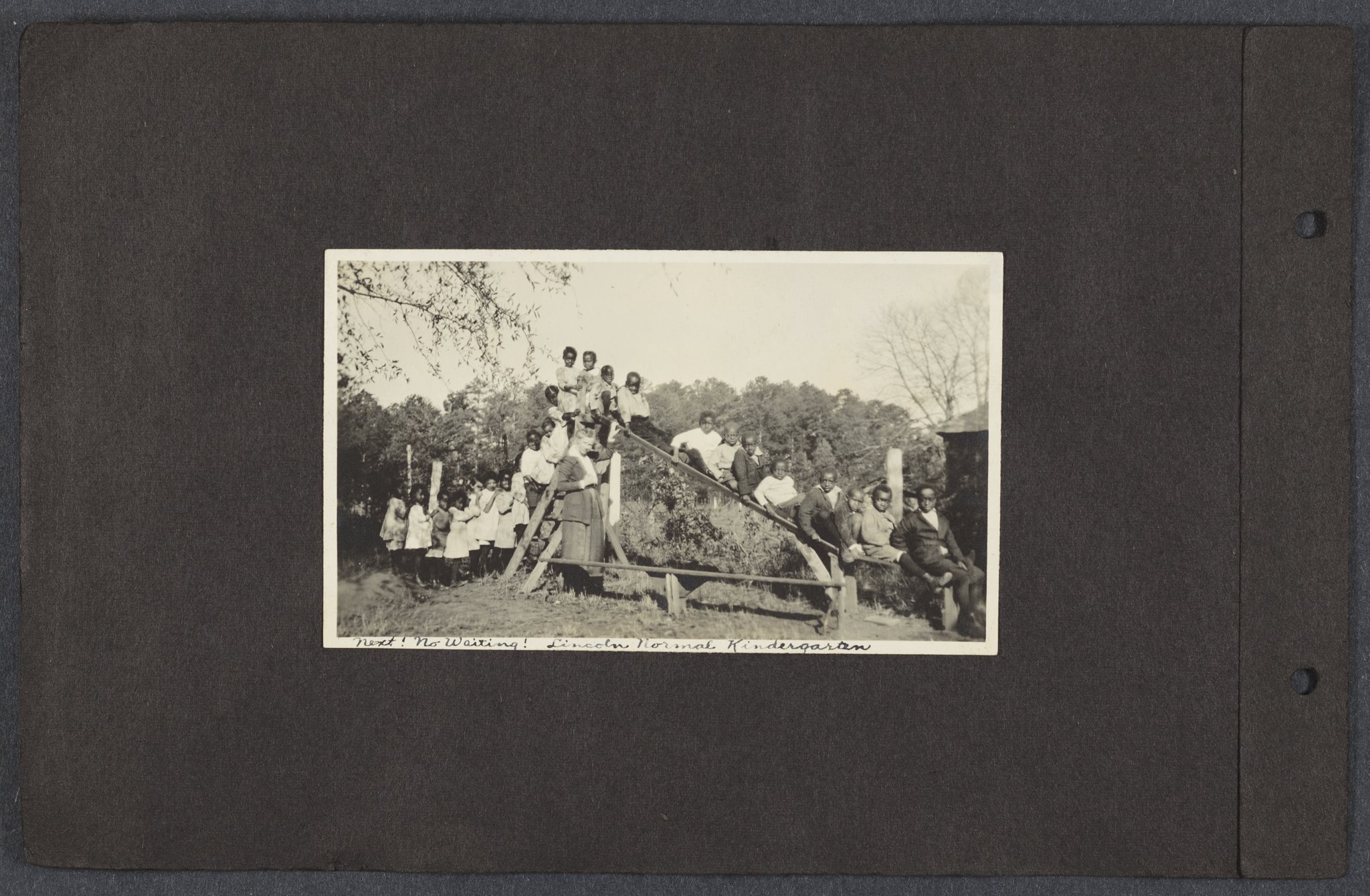
OnSlide

Children on a slide at Lincoln Normal School

Lincoln Normal struggled financially throughout its existence, but left an important intellectual legacy in the African-American community.  In addition to laying the foundation for Alabama State, a university that currently trains more teachers than any other institution in the state, Lincoln Normal provided a progressive and innovative model of education for its younger students. This foundation encouraged the later pursuit of higher education: sociological research from the 1970s showed that of a group of 500 African-American PhD recipients, a disproportionate number had roots in Perry county, where the Lincoln Normal School had been a part of their family histories.  Notable alumni include Coretta Scott King and her sister Edythe Scott Bagley; former federal judge William Hastie; and sociologist Andrew Billingsley.

The Lincoln Normal School Albums at The University of Alabama

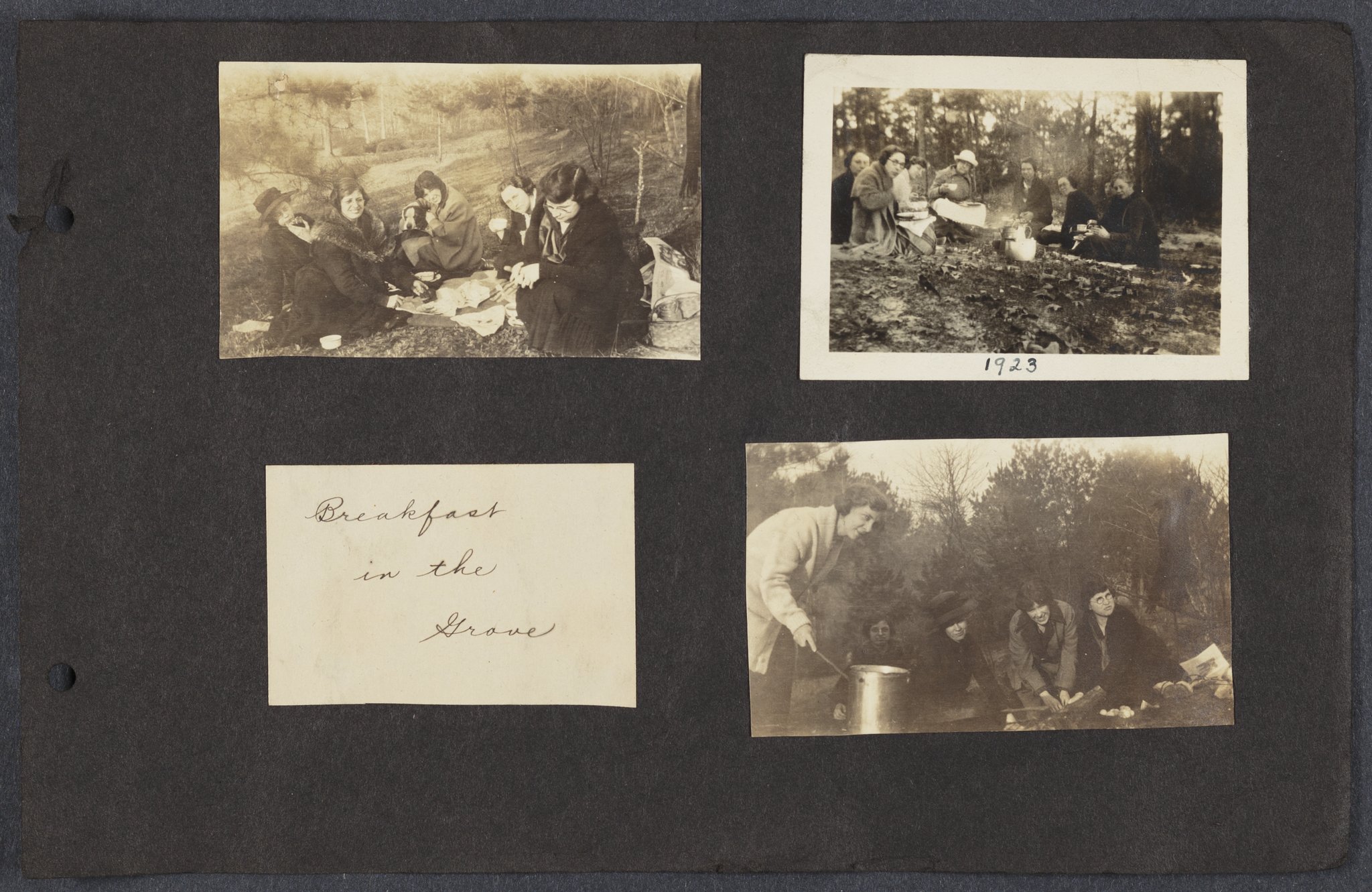
Breakfast

Breakfast in the Grove

The A.S. Williams III Americana Collection at the University of Alabama owns two captioned Lincoln Normal School photograph albums with images from 1909- 1924, bought as a set by the collector A.S. Williams from a Birmingham book dealer. Both offer a rare glimpse into the lives of Lincoln Normal students and teachers at an important moment in their school’s history and were likely kept by teachers at the school. In 2010, The University of Alabama acquired the albums as part of the Williams Collection, and they are stored with the rest of the archive on the third floor of Gorgas Library.

The exhibition at the Tuscaloosa Magnet School during the spring semester will highlight the place of these photograph albums in both African-American and women’s history. The albums document scenes including posed group portraits of teachers and administrators, and informal shots from daily, celebrations, and performances. The time span of the albums, from 1909 to 1924, was a pivotal moment in the landmark institution’s history; these were years that the school expanded dramatically and many of its campus buildings were constructed under the leadership of the influential principal Mary Elizabeth Phillips. Both albums include rare pictures of the teachers’ quarters and “Miss Phillips,” captioned images of students and teachers, and short transcriptions of songs from student performances.

Hidden Gem: Peter Jennings at Emphasis ’69 (audio)

“It is nice to be invited back to Alabama, instead of sent here.” –Peter Jennings, referring to his previous trips to the South during the civil rights movement

In April of 1969, the Emphasis program at UA, a yearly symposium dedicated to discussion of important current events topics, focused on the urbanization of America and the cultural divide between young and old, black and white. Speakers included sociology professor Louis Yablonsky, former Secretary of Housing and Urban Development Robert Weaver, and minister and politician Adam Clayton Powell.

But the most famous name among the speakers is future ABC News anchor Peter Jennings. He was only 31, but he had already done important reporting on the civil rights movement and Vietnam. (For more on Jennings, see his obituary at ABCNews.com.)

In his half-hour speech at Emphasis ’69, he discussed the problem of America’s largest cities, especially the one he lived in, New York City, “the largest chicken coop in America.”

New York City, 1968

NYC, 1968 (photo by John VanderHaagen)

Listen to The American City: Paradox of Progress in Acumen.

Jennings gives various examples of ways in which city infrastructure cannot or will not properly handle problems (like the 1966 Transit Strike, the 1968 Garbage Strike and Police Slowdown).

Garbage Strike, NYC, 1968

NYC Garbage Strike, 1968 (photo by Dennis Harper)

He attributes most of these problems to overcrowding, but he also implicates the citizens themselves, saying New Yorkers, especially those in the middle and upper classes “don’t apparently give very much of a damn.” In a city of rural migrants and international immigrants in local enclaves, “with very few people who are born and bred with any sense of being part of a [larger] community,” citizens are unwilling to work toward improving the overall condition of the city. However, if they took an interest, they could help solve some of the city’s problems before it is too late.

Pedagogy Series Conclusion: Interview with Shelby Gatewood

By: Shelby Gatewood, first-year undergraduate at The University of Alabama

Editor’s Note: This post is the last of a six-part series highlighting innovative special collections pedagogy. 

Read an interview with Sarah Smiley’s instructor, Brooke Champagne and review the assignment. Then learn about Mary Dees, Jean Harlow’s stand-in. Sarah Smiley shares her research process to help fellow students understand the fun as well as the challenge of working in the archive. The fifth post of the series is Shelby Gatewood’s essay, “The Neglected History of Bryce Hospital,” the chosen paper from the second section of Champagne’s course. The following interview with Gatewood concludes our inaugural Special Collections Pedagogy Series.

Please feel free to post questions and/or continue the discussion in the comments section of these posts.

*** 

IMG_0085_2

Shelby Gatewood

Congratulations on having your work chosen to be featured on Cool@Hoole! To start with, can you summarize your paper topic? 

My research paper describes some important phases in Bryce Hospital’s history. In the paper I focused on three specific moments: a patient’s daily routine in 1872, the lawsuit Wyatt v. Stickney in 1970, and the decision to sell Bryce to the University of Alabama in 2009. I wanted to use the history of Bryce Hospital to bring attention to the importance of the mental health field. Most of my research came from the Bryce Hospital Collection in Hoole Library.

Had you heard of or visited a special collections repository before you came to the W.S. Hoole Library?

Before I was presented with the research assignment, I had never heard of a special collections repository, and I did not know that we had one on campus.

Continue reading

Pedagogy Series: The Neglected History of Bryce Hospital

By: Shelby Gatewood, first-year undergraduate at The University of Alabama

Editor’s Note: This post is the fifth of a six-part series highlighting innovative special collections pedagogy. Read an interview with Sarah Smiley’s instructor, Brooke Champagne and review the assignment. Then learn about Mary Dees, Jean Harlow’s stand-in. Sarah Smiley shares her research process to help fellow students understand the fun as well as the challenge of working in the archive. As Champagne taught two sections of the same course,this post features Shelby Gatewood’s essay, which was the chosen piece from Champagne’s second section. An interview with Gatewood will conclude the series on Monday, January 6.

***

The Neglected History of Bryce Hospital

Meteor cover page

The Meteor

With two days left in the first decade of the new century, the clouds loomed overhead in preparation for the unavoidable rainy afternoon that was to coincide with the meeting of the Alabama Department of Mental Health Advisory Board of Trustees, an unnecessarily long title for a group of members that was to decide the future of Bryce Hospital. The year 2009 marked the official end of the nation’s most recent recession as well as the inauguration of the country’s first African American president. This was a year of change, and the city of Tuscaloosa, Alabama still had one last decision to make. Members of the board gathered at Governor Bob Riley’s office in the capital city of Montgomery to begin the scheduled meeting at 1 p.m (Beyerle, n.pag.)

This was not the first time in recent weeks that Bryce’s future had been discussed. The University of Alabama previously offered to buy the property in early October, but a total offer of 60 million dollars was apparently not enough to satisfy the needs of the state mental health department. The unwavering demand was 84 million dollars. While the university scrambled to revise its offer, fifty-nine miles away the officials of Birmingham were cleverly brewing their own deal to acquire Bryce Hospital. Amidst the hustle-and-bustle of downtown Birmingham, Carraway Hospital shut its doors in 2008 after filing for bankruptcy. With the search for a new Bryce location, the city of Birmingham jumped at the opportunity to bring employment and patients back to this facility. The city was unable to compete financially with the university and the city of Tuscaloosa, but they were able to offer tax incentives to Bryce as well as a preexisting establishment that was prepared to house patients as soon as a deal was arranged. While Birmingham fought hard for the acquisition of this institution, Tuscaloosa had more support from the city’s officials and citizens, 150 years of history with Bryce Hospital, and quite frankly, more money from the university (Beyerle, n.pag.)

Continue reading

Pedagogy Series: Interview with Sarah Smylie

By: Sarah Smiley, first-year undergraduate at The University of Alabama

Editor’s Note: This post is the fourth in a six-part series highlighting innovative special collections pedagogy. Read an interview with Sarah Smiley’s instructor, Brook Champagne; review the assignment; or learn about Mary Dees. As Champagne taught two sections of the same course, the final two posts of this series will cover Shelby Gatewood, who is the featured student from Champagne’s second section. 

***

SarahSmiley

Sarah Smiley

Congratulations on having your work chosen to be featured on Cool@Hoole! To start with, can you summarize your paper topic? 

The topic of my paper was the constant comparison between Mary Dees and Jean Harlow and the emotional effect that it had on Mary through the use of Mary Dees’ Scrapbooks found at Hoole Special Collections Library.

Had you heard of or visited a special collections repository before you came to the W.S. Hoole Library?

Before visiting W.S. Hoole Library I had never heard of or been to a special collections library before, but after talking about it in class, I was very interested in it.

What was your first impression of Hoole?

I thought that it was amazing that Hoole had so many unique artifacts that cannot be found at any other place.

Continue reading