Cool@Hoole

Happy St. Patrick’s Day! A Memorable dinner at Antoines in New Orleans: March 17, 1914

Featured here is the menu and program cover from the annual St. Patrick’s Day Dinner in New Orleans. This particular dinner was held at Antoine’s and featured such delicious green delicacies as Absinthe Verte and Artichaux Bayard. The final course seems especially compelling — cigars, cigarettes, and Café Diabolique — flambéed coffee served tableside, and still an Antoine’s tradition.This program and menu and several other equally interesting St. Patrick’s Day Dinners, including one from 100 years ago – 1908) are from the T.P. Thompson Collection at the Hoole Special Collections Library. T.P. Thompson’s book collections are the foundation of the Hoole Library’s rare books collections. And his papers are an incredible collection of materials that relate to his collections, his civic and business life, and his deep love for the city of New Orleans.

To learn more about T.P. Thompson, stay tuned for Exhibit Mashup No. 2! (Hint No. 2) And have a very happy St. Patrick’s Day and a very safe and happy spring break to those who are lucky enough to get one!

Turning Japanese: How Winnifred Eaton became Onoto Watanna in Victorian America

Join us Tuesday, March 11, 2008 at the Hoole Special Collections Library, 2nd Floor Mary Harmon Bryant Hall at 4:30 pm for a lecture by Dr. Edward Tang, Associate Professor of American Studies, The University of Alabama. [flier for event here]

His talk, Turning Japanese: How Winnifred Eaton became Onoto Watanna in Victorian America explores the complicated life of Winnifred Eaton (1879-1954), one of the first known writers of Asian descent to be published in America. She wrote several popular novels set in Japan, yet she tried to hide her own ethnic identity – she was born in Canada to an English father and Chinese mother who had been adopted by missionaries. Eaton published under the Japanese pen name — Onoto Watanna.

Many of Eaton’s novels revolve around romances between American men and Japanese women. In Me, A Book of Remembrance, which was published anonymously, she wrote a thinly veiled autobiography in which she discussed her work as a writer but avoided mentioning her half-Chinese background.

“Eaton’s identity as a writer relied on cultural borrowings and blurrings,” Tang said. “By assuming the identity of a Japanese woman, she bowed to market demands for things Japanese but also challenged distinct racial or ethnic categories that many people at the turn of the century assumed to be fixed and stable.”

The lecture is in conjunction with an exhibit of books by Eaton/Watanna from the Hoole Special Collections Library and the 2008 Sakura Festival at UA and in Tuscaloosa. The books on exhibit are from the Richard Minsky Collection at the W.S. Hoole Special Collections Library, and from a gift from Dr. John Crowley. Some of Eaton/Watanna’s works are featured in the UA Libraries collaborative digital project, Publishers’ Bindings Online, 1815-1930: The Art of Books.

Onoto WatannaIt was in Chicago that Eaton/Watanna published her first novel, Mrs. Nume of Japan (1899), which told the story of a romance involving two couples, one American and one Japanese, who switch partners during a series of romantic and tragic encounters. It was an immediate success. From then on she published almost a novel a year. Moving to New York she wrote her next novel, A Japanese Nightingale in 1901. It was translated into many languages and was even made into a Broadway play and film (1919). She lived in New York until 1917. During that time, she married and divorced Bertrand Babcock with whom she had four children. She had much financial and writing success. In 1910, she wrote the bestseller Tama, which is shown here.

This lecture is part of the Sakura Festival in Tuscaloosa and The University of Alabama. A reception will follow. This event, is of course free and open to the public.

Forty Years After — Emphasis ’68 — Directions: American Society at the Crossroads

In March of 1968, The University of Alabama hosted a powerful group of speakers brought together to discuss problems and issues in American Society. Emphasis ’68: American Society at the Crossroads stands today as a snapshot in time, that serves to help us understand the political, social, cultural, and economic shifts that were taking place in 1968. Among the speakers were Robert F. Kennedy, who would be assassinated just a few short months later in June of 1968.

Sponsored by The University of Alabama Student Government Association (SGA), the student-run Emphasis Committee organized annual symposia in the late 1960s and early 1970s that served to enlighten and inspire students on the UA campus. It is interesting to note that former Alabama governor, Don Siegelman was president of the SGA when Emphasis ’68 took place and was instrumental in bringing these speakers to The University of Alabama campus.

The featured speakers for Emphasis ’68 were Senator Robert F. Kennedy, Roy Wilkins, Melvin Belli, John Kenneth Galbraith, Strom Thurmond, Ferenc Nagy, and several others.

Our digital collections now feature the 1968 Emphasis program, as well as streaming digital audio and transcripts of some of the speeches, which are accessible here. (You will need RealPlayer to access these speeches, which is available here) In addition, we have now made the 1968 Corolla is also available online though our Digital Collections.

The year 1968 — forty years later it evokes — even for those who didn’t live through it — thoughts of unrest, war, violence, uncertainty, change. In 1968, we lost not only Robert F. Kennedy, but the Rev. Dr. Martin Luther King. It was a revolutionary year for politics, music, art, and more. Emphasis ’68 serves as a fascinating time capsule that allows us to better understand campus life at The University of Alabama as well as the world around us during that tumultuous time, exactly forty years ago.

(Images featured here are the cover of Emphasis ’68 — Directions: American Society at the Crossroads; a detail of the Emphasis ’68 program featuring drawings of then SGA President Don Siegelman, and Emphasis ’68 co-chairs Redding Pitt and Ken Rogers, and page 146 of the 1969 Corolla which features information about the Emphasis ’68 program. All this and more is available as part of our digital collections at University Libraries. All original items are part of holdings of the W.S. Hoole Special Collections Library.)

Voyages dans l’Amérique Septentrionale — Collot’s Atlas now online!

In 1796, French general and military engineer Georges Henri Victor Collot descended the Ohio and Mississippi rivers on a spying mission from the French government. Returning to France in 1800, Collot died in 1805.

His Voyages dans l’Amérique Septentrionale was published in Paris in 1826, and a copy of the atlas is part of the Hoole Library’s Rare Books collection. We have digitized the atlas in its entirity and it is available online as part of our digital collections. Pictured here are the title page and two plates from the book, one featuring a typical log cabin observed by Collot, and a map of the sources of Mobile Bay and the Yazoo River.

Standing Up to be Counted: GLBTQ student group archives come to Hoole Library


Memo dated April 13, (1983) soliciting support of UA faculty to “stand up
and be counted” as a co-advisor and supportor to the soon-to-be
established GLBTQ student group, the Gay Student Union.

2008 marks the 25th anniversary of the first GLBTQ student group on campus, then called the Gay Student Union. In celebration of this 25thanniversary year, and in recognition of those who stood up to be counted, these materials were gathered by Joshua Burford and donated to the Hoole Library by several former student group advisors including the first, David Lee Miller, and the longest-serving, Annabel Stephens.

The collection will be known as The Miller-Stephens GLBTQ UA Student Organization Collection and will be housed permanently at the W.S. Hoole Special Collections Library. Upon processing the collection it will be made available to researchers on campus and around the world. This collection builds upon our holdings that help to document GLBTQ history in Alabama and the South and the history and culture of The University of Alabama.

We are celebrating twenty-five years of GLBTQ Student Groups at UA and the donation of GLBTQ student materials to the Hoole Library with abrief ceremony, awards presentation, press opportunity and reception. Josh Burford, Coordinator of Freshman Community Outreach at UA, facilitated the gathering of these materials from several sources. The oldest materials came from the first faculty member who served as the faculty advisor of the first GLBTQ student group, then called the Gay Student Union, which was established in 1983. David Lee Miller, a former professor in the department of English, took up this task despite his status as a new and untenured professor at UA, and helped to establish and secure this organization and its legacy.

These materials help to document the history of GLBT activism and support on college campuses, and will be a valuable resource for researchers. The collection also supports other materials in the Hoole Library that help to document GLBTQ organizations and activities in Alabama and the South. This is a growing area of collecting for the Hoole Special Collections Library and is a great addition to our materials that document UA history.

The Miller-Stephens LGBTQ UA Student Organization Collection is to be named for David Miller, the first faculty advisor, and Annabel Stephens, the faculty advisor for many, many years and one of the major contributors to the collections.

A celebration will take place on Monday, February 11, 2008 from 4-5 pm in the lobby of the Hoole Special Collections Library. It will feature a handing off of materials to the University Libraries representing 25 years of GLBTQ student history on the UA campus. David Miller, along with several other faculty advisors and others will be on hand for the event. They include Annabel Stephens, who served as the faculty advisor for several years.

We will also have a brief awards ceremony honoring the faculty members who supported and stood up for GLBTQ students 25 year ago on the UA campus. Members of the GLBTQ student group on campus, Spectrum will present those faculty members with certificates of appreciation.A small exhibit of materials from this new collection will be on display in the lobby of the W.S. Hoole Special Collections Library.A reception will follow the ceremony. All are welcome!

The press release for this event is available at http://uanews.ua.edu/anews2008/feb08/hoole020808.htm

Minsky Collection in PBO! From the real to the virtual!

It is a distinct pleasure and honor to announce that the Richard Minsky Collection of 19th and early 20th century publishers’ bindings have been added to Publishers’ Bindings Online, 1815-1930: The Art of Books. This incredible group of books was acquired by The UA Libraries in 2007 and is part of the Hoole Library’s collections.

One way to access the corpus of Minsky books in PBO, simply go to http://bindings.lib.ua.edu/sitesearch.html

and keyword search “minsky”.

This will give you a glimpse at all 560 books included in the project — browse through the pages, click on what you like, and change the view to experience larger images. From there, you can click on any of the hyperlinked terms and explore, for example, in the book above (pba02679), there is a hyperlinked subject heading that will bring you to all of the examples of togas in PBO — clothing/Accessories–Togas Or hearts — there are eighty-six examples of hearts used as decorative elements in PBO! And give yourself some time — it’s a great site to explore and experience incredible imagery and design.

This addition, along with 200 new books included from the University of Wisconsin-Madison will bring the total number of books to 5286 in the PBO project, and well over 10,000 images.

About Publishers’ Bindings Online, 1815-1930: The Art of Books:

In September 2003, The University of Alabama, University Libraries, in partnership with the University of Wisconsin-Madison Libraries, received an IMLS National Leadership grant to create the digital resource, Publishers’ Bindings Online, 1815-1930: The Art of Books (PBO).
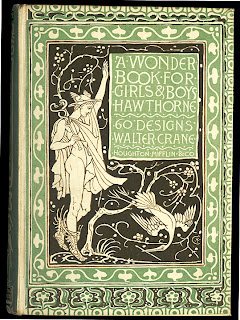
All academic libraries have within their holdings books bound in 19th century decorative bindings. These materials are significant in their place within the fabric of American history and culture, but efforts to present these bindings in a collection that is representative of the era as a whole and to make them available virtually, via the World Wide Web have been limited.
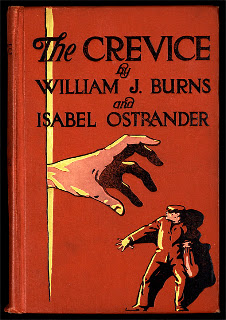
Over the past five years, PBO has developed into a significant searchable digital collection of decorative book bindings, along with an enormous body of value-added resources including a comprehensive glossary, galleries, bibliography and webliography, lesson plans and teaching tools, and so much more. It has strengthened the growing interest in and created a broader awareness of this “common” object called the book. And it has done it in so many ways!

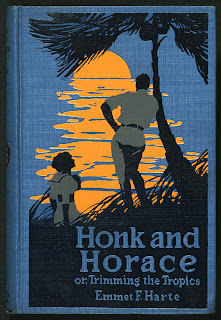
Publishers’ bindings cover many of the books that people have in their homes today, but their owners are often unaware of their cultural and historical significance. These bindings reflect not only social and cultural history, but bibliographic history as well. PBO informs users about the importance of publishers’ bindings as reflections of historical events, artistic styles and movements, 19th and early 20th century literature and writing, and the evolution of commercial binderies, and the 19th century book trade and other areas of research and scholarship. It also expands awareness of the book as artifact and of the role decorative bindings play in providing a window into historical, cultural, and industrial period of 1815-1930.

The project allows students, teachers, book artists, binders, and scholars in many different areas the opportunity to study these decorative bindings from two (and soon to be three – LSU is contributing one hundred Louisiana-centric titles to the project and will be added this spring) different physical collections in a single, virtual location. We are also looking at building beyond this scope and into the future. Those interested in PBO are encouraged to contact Jessica Lacher-Feldman, PBO project manager.

The project serves a model for collaborative digital projects, and offers education and inspiration to repositories and individuals. PBO greatly broadens a relatively unexplored scholarly field, and provides a venue for scholars of this field to further their interest and contribution. This resource will encourage interested parties to look at their own collections, and to gain an understanding of design movements and trends both within the United States as well as abroad, comparable to Jugendstil in Germany, Art Nouveau in France, Arts and Crafts in England, and Glasgow School in Scotland.

The additional resources and scholarship in PBO project serves a myriad of users and continues to grow. The Minsky Collection’s inclusion in PBO is a perfect example of collaboration and scholarship working together in new ways to serve a broad audience.
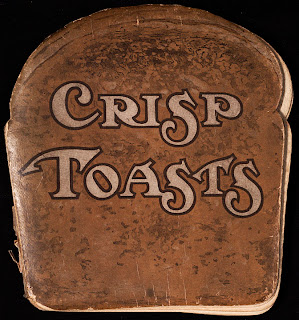
A toast to PBO and the Minsky Collection! The books themselves are an incredible asset to the W.S. Hoole Special Collections Library, and they are doing amazing double duty as part of the innovative and incredibly cool, Publishers’ Bindings Online project! They are also the subject and object of Richard Minsky’s incredibly beautiful book, American Decorated Publishers’ Bindings 1872-1929.

Richard Minsky and Jessica Lacher-Feldman will also be part of a symposium on the history, technology and conservation of nineteenth-century publishers’ bindings, sponsored by the Guild of Book Workers, New York Chapter at the Grolier Club in New York on February 22, 2008. It will be held in conjunction with the Grolier Club exhibition, The Proper Decoration of Book Covers: The Life and Work of Alice C. Morse From the collection of Mindell Dubansky.

This is all very, very cool — @ hoole and on the web too!
Laissez les bon temps rouler! Ou? A Mobile, bien sur!

Alabamians are quick to point out that New Orleans was not the first place, nor is it the only place that Mardi Gras is celebrated. While celebrations occur throughout the state of Alabama, it is Mobile’s Mardi Gras tradition, which dates back to 1703 (!!!) that really gives Alabamians bragging rights.

Featured here are images from sixty years ago – the 1948 Mobile Mardi Gras annual program. This program is especially cool because it features drawings by Mobile native and favorite son, Eugene Walter. Walter was a true Renaissance man — actor, poet, artist, editor, costume designer, playwright, puppeteer, translator, raconteur, author, chef, bon vivant, and so much more. Yes, really! He has also been called “the most famous man you never heard of”. He knew everyone, and counted people such as Truman Capote (who he knew as “Bulldog” Persons as a child), William Faulkner, Isak Dinesen, Judy Garland, and Frederico Fellini among his friends. His published works are featured in the Hoole Library’s Alabama Collection.

And though he lived for many years in New York, Paris and Rome, he always considered Mobile (which he fondly referred to as “North Haiti”) his home. So much so that he carried a shoe box of Alabama red clay dirt with him in his twenty-plus years in New York and Europe.

This program and its whimsical drawings offer a tiny glimpse into Walter’s incredible gift for caricature and humor. We should all raise a glass to celebrate North America’s oldest Mardi Gras and celebrate an Alabama favorite son, hero, and free spirit, who according to Dinesen, “ate the ripened heart of life”, Eugene Walter.

Cover and details from The Mobile Mardi Gras annual (Periodical)
Mobile : Rapier House (1948)
Hoole Library Alabama Collection Call Number: GT4211.M6 M6


The David Walker Lupton African American Cookbook Collection — So much more than recipes!


The University of Alabama Libraries holds one of the largest collections of African American cookbooks in the country – some 450 volumes (and growing!) covering the period from 1827, when the first book with recipes by an African American was published, through the year 2000. David W. Lupton, a distant cousin of former UA president Nathaniel Lupton (1871-1874), chose The University of Alabama as the ideal home for this collection, both geographically and institutionally. Mr. Lupton passed away in 2003, and his widow, Dorothy finalized arrangements for transferring the volumes in 2005. Mrs. Lupton, who resides in Oriental, North Carolina, recently stated, “David had a deep conviction that cookbooks compiled by individuals in America of African heritage needed to be identified and preserved.”

The David Walker Lupton African American Cookbook Collection strengthens the Hoole Special Collections Library’s holdings in African American history and culture. It is significant addition to the Libraries’ resources for many reasons — there are many rare and obscure books, many of them not widely published. The collection also allows for opportunities for creative research in food and ethnic identity, family and community life, social history, the roles of women and men, values, religion, and economics, as well as diet and nutrition, agriculture, and food history.

The beginnings of the soul food movement in 1960s are well documented and traced through the many subsequent volumes extolling dishes that can now be found in trendy restaurants around the country. Many of the cookbooks are community-based fund-raisers from churches, women’s clubs, and sororities. Such books can often be the most difficult to identify and locate because they usually do not receive wide publicity or distribution beyond their contributors.


Almost every title in the Lupton Collection suggests more than recipes: food is linked with music, humor, social satire (see the underground classic, Vibration Cooking, by Vertamae Grosvenor, published in 1970), cultural and religious celebrations (several Kwanzaa cookbooks, for example), and almost every other aspect of life. There are also several celebrity cookbooks — with such figures as Muhammad Ali, Johnny Mathis, Pearl Bailey, and Mahalia Jackson contributing to this collection.

“The Lupton Collection was avidly sought by more than one institution, and we are honored that the Lupton family has entrusted the result of David’s creative vision to us,” said Louis A. Pitschmann, Dean of Libraries. “We are eager to add to the Collection,” added Pitschmann, “and are hopeful that the arrival of this important gift will encourage people throughout Alabama and the Southeast to consider contributing their African American cookbooks and recipe collections to the Hoole Library.”

The collection was featured in the new book, Celebrating Research: Rare and Special Collections from the Membership of the Association of Research Libraries. It was also the topic of an interview with Jessica Lacher-Feldman on Join us at the Table on WKAT radio in Miami hosted by Nancy Ancrum and Robbie Bell.

Inscribed items by Alabama native Helen Keller: A Gift of Betsy Plank, 2007

A small exhibit is now on display in the lobby of the W.S. Hoole Special Collections Library. The items were part of a gift to The University of Alabama Libraries by Betsy Plank, UA alumna and pioneer in the field of Public Relations. These items are all inscribed by Alabama native, Helen Keller (1880 -1968), a longtime friend of Ms. Plank’s family.

The photograph and the book Midstream are inscribed to her aunt Adeline by Ms. Keller, her teacher Anne Sullivan, and Ms. Keller’s companion, Polly Thompson. The book, Helen Keller’s Journal is inscribed to Bettye Hood Plank, Ms. Plank’s mother.


Helen Adams Keller was an author, activist and lecturer and is known internationally for her courage and triumph over adversity. Her story was made famous through dramatic productions of the Miracle Worker, both on the stage and screen.


At the age of 24, Keller graduated magna cum laude from Radcliffe College, making her the first deaf-blind person to earn a Bachelor’s Degree.She went on to author numerous works, and to speak and advocate for numerous causes the world over. A prolific author, she was well traveled, and was outspoken in her opposition to war. She campaigned for women’s suffrage, workers’ rights and socialism, as well as many other progressive causes.


Fellow Alabamian Betsy Plank graduated from The University of Alabama in 1944 and went on to a stellar career in public relations, eventually becoming known as “public relations’ first lady” and garnering numerous awards. In 2004, the UA Board of Trustees adopted a resolution establishing the Betsy Plank Center for Public Relations Studies to promote “effective and ethical representation of institutions, organizations, ideas and individuals.” As donor for the Center and to University Libraries, Ms. Plank has demonstrated her continued dedication to the University, its students and society.

Photograph of these materials by Zach Riggins, UA Photography.

Remembering Dr. Martin Luther King and his Dream


Dr. Martin Luther King would have been 79 years old on January 15th. In April of 1968 when he was just 39 years old, he was taken from us. And his legacy of a quest for justice, peace, and equality lives on in so many ways.

Seen below is the first page and mailing envelope fom an early copy of Dr. Martin Luther King Jr.’s Letter from a Birmingham Jail. This letter was sent to Reverend Joe C. Higginbotham, a Birmingham minister, in April of 1963 and was given to the W.S. Hoole Special Collections Library by the Higginbotham family in memory of Reverend Higginbotham and in honor of UA’s Black Faculty and Staff Association.

We celebrate the birthday of Dr. King as an opportunity to remember his message and dream of justice, equality and peace, and not as a “day off” but a “day on”. In 1994 the US Congress passed the King Holiday and Service Act, designating the MLK Holiday as a national day of volunteer service. Instead of a day off from work or school, Congress asked Americans of all backgrounds and ages to celebrate Dr. King’s legacy by turning community concerns into citizen action. The King Day of Service brings together people who might not ordinarily meet, breaks down barriers that have divided us in the past, leads to better understanding and ongoing relationships, and is an opportunity to recruit new volunteers for your ongoing work. To learn more about MLK Day, visit http://www.mlkday.gov/
The image of Dr. King above is from the King Center website.